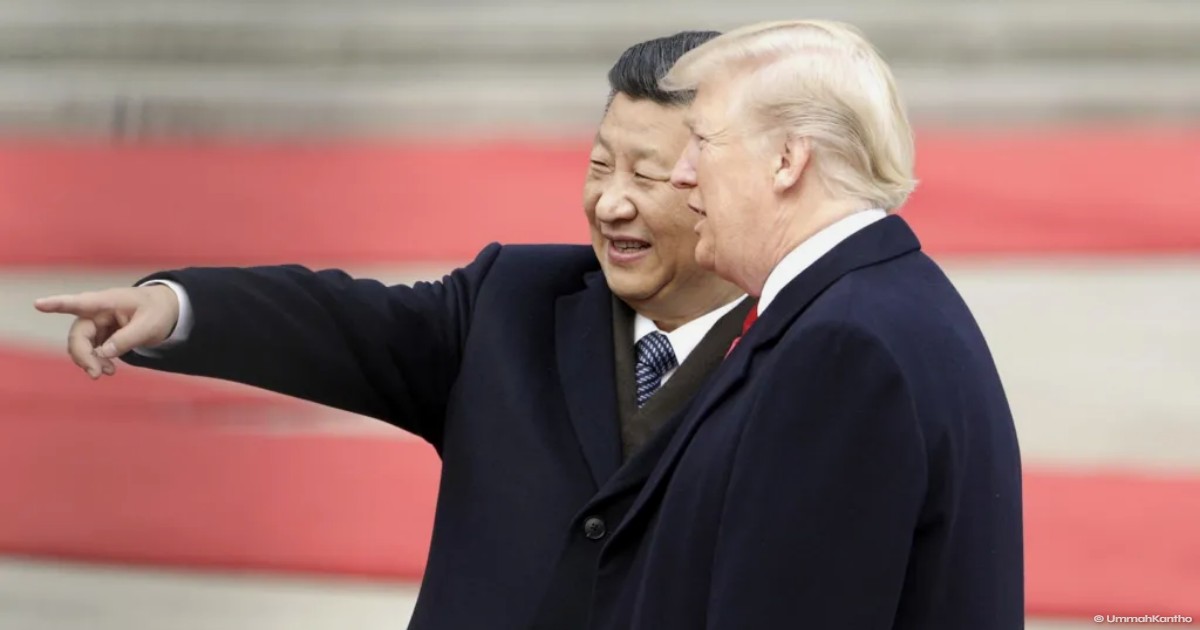
When Donald Trump arrived in Beijing in 2017, he was greeted with the ultimate diplomatic spectacle—a private dinner inside the Forbidden City, an unprecedented honor for an American president. As he returns nearly a decade later, the grandiosity of the reception remains, including a scheduled stop at the elite Zhongnanhai compound. However, the China he encounters in 2026 is fundamentally different from the one he left behind. Under the leadership of Xi Jinping, now firmly in his third term, Beijing has evolved from a rising power seeking recognition into a self-assured, assertive global peer.
The shift in the US-China relationship is palpable. While the 2017 visit was characterized by Beijing’s efforts to prove it was an equal to the United States, that assertion is no longer necessary. Washington now formally acknowledges China as a near-peer competitor, arguably the most formidable rival the US has faced in its history. Ali Wyne, a senior adviser at the International Crisis Group, notes that the Chinese delegation no longer needs to expend immense diplomatic effort to convey President Xi as Trump’s geopolitical equal; the reality on the ground speaks for itself.
Beyond the ceremonial heart of the capital, China’s technological landscape has been transformed by billions in state funding and a strategic focus on what Xi calls new productive forces. The rugged northern regions are now dominated by vast wind and solar farms, while the southern industrial hubs have embraced automation at a scale previously unseen. Cities like Chongqing have transitioned from gritty manufacturing centers into neon-lit megacities, earning the nickname of the world’s cyberpunk capital. For the Trump administration, these advancements in robotics, artificial intelligence, and green energy represent the very future Beijing has been building toward for the past decade.
The agenda for this visit is fraught with familiar tensions, such as trade, technology, and Taiwan, but it also includes emerging flashpoints like the escalating crisis in Iran. Trump remains a figure of intense curiosity and debate within China, where he is often referred to by the ironic nickname Chuan Jianguo, or Trump the nation builder. Many in China’s online spaces believe that his previous America First policies and trade wars inadvertently weakened US global influence, thereby accelerating China’s rise. This perception reflects a broader confidence among the Chinese public that their nation’s long-term strategies are outlasting Washington’s political shifts.
As the meetings unfold in Zhongnanhai, the contrast between the two leaders` approaches will be at the forefront. Trump’s mercurial diplomatic style faces a Chinese leadership that is more unified and ambitious than ever. While the hospitality is expected to be flawless, the underlying message from Beijing is clear: China is no longer just a participant in the global order but an architect of it. The technological and economic gaps that existed a decade ago have narrowed significantly, forcing the US delegation to navigate a relationship where the leverage is more evenly distributed.
This visit serves as a barometer for the next decade of international relations. Trump’s return to a stronger, more assertive China marks a departure from the era of engagement toward one of direct, peer-to-peer competition. In the neon-lit streets of Chongqing and the high-tech factories of the south, the evidence of China’s transformation is undeniable. For the United States, the challenge lies in addressing a competitor that is not only economically resilient but also technologically pioneering and ideologically resolute. The outcome of these discussions in Beijing will likely define the contours of global stability for years to come.