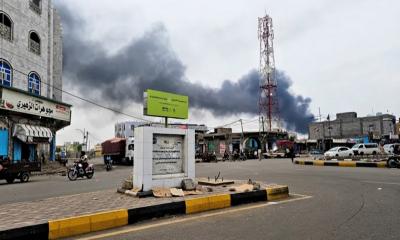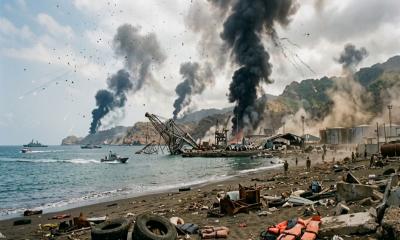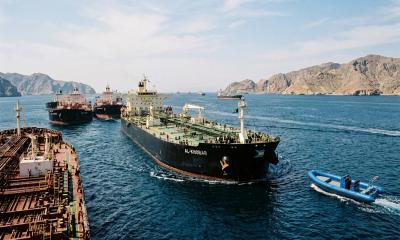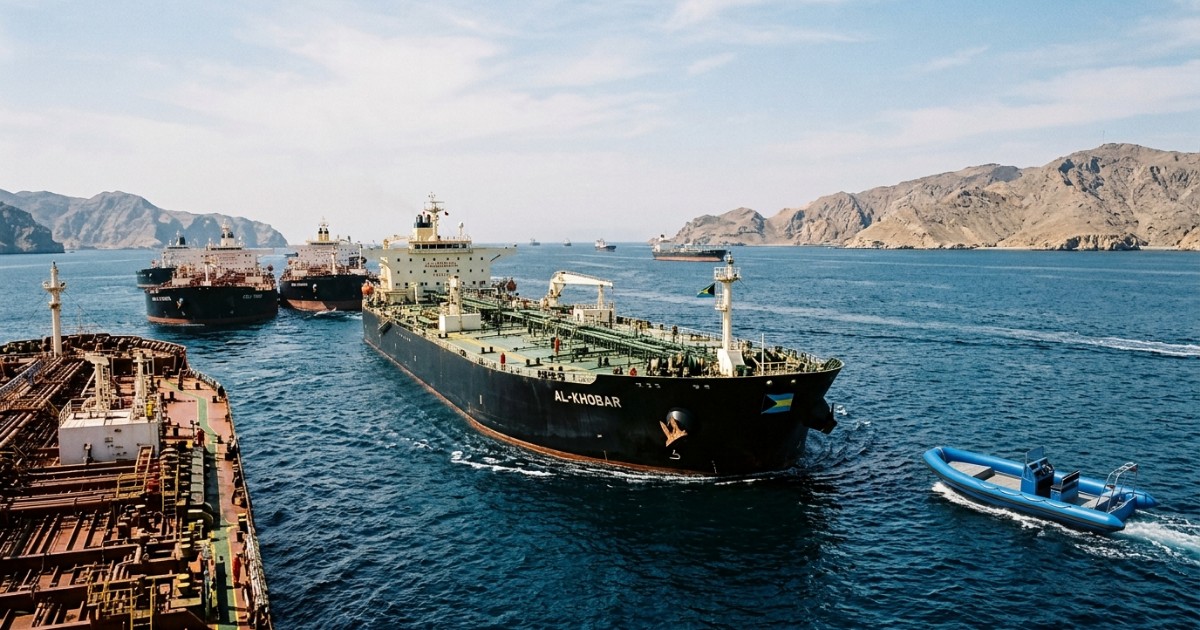
Unidentified projectiles struck two commercial oil tankers in separate incidents across the Strait of Hormuz, the United Kingdom Maritime Trade Operations reported. The maritime strikes coincided with escalating military exchanges across the region, where commercial waterways remain vulnerable to spillover violence. Yemeni government authorities also confirmed ongoing military operations targeting vital installations inside the Houthi-held capital of Sanaa.
Maritime security concerns continue to compound across strategic shipping lanes.
In the Palestinian territory, an Israeli pre-dawn aerial attack levelled apartments inside the al-Asala residential building in western Gaza City, killing one man and four women. Among those killed were a mother and daughter who lived in the complex. Officials from Hamas condemned the assault as an extension of systemic genocide against civilian populations. The group called upon international mediators and the United States to apply tangible diplomatic pressure on Israeli authorities to halt military strikes conducted during tentative diplomatic negotiations.
The Latin Patriarch of Jerusalem, Cardinal Pierbattista Pizzaballa, expressed profound grief over the killing of two Christian women in the Gaza City airstrikes. Church authorities identified the victims as Maysa Khader Ibrahim Abu Daoud and Mary Hafez Michel al-Najjar, whose funeral rites were arranged at the historic Church of Saint Porphyrius. Farther north, Syrian state television reported that Israeli ground units entered the town of Hamidiyah in the northern countryside of Quneitra, arresting a civilian resident during search operations.
Diplomatic channels mobilized to manage the expanding perimeter of hostilities, with Jordan`s King Abdullah II conferring by telephone with US Secretary of State Marco Rubio regarding regional containment and the conditional stabilization measures planned for Lebanon. In response to mounting disruptions to global energy distribution, the International Energy Agency confirmed that participating governments have distributed 325 million barrels of crude and refined petroleum from emergency strategic reserves. Group of Seven administrations simultaneously prepared an emergency release of up to 100 million barrels of diesel and crude supplies to insulate international supply chains from sudden shortages.