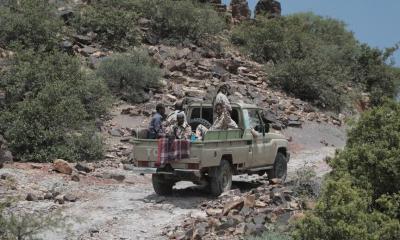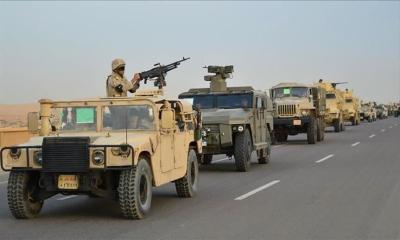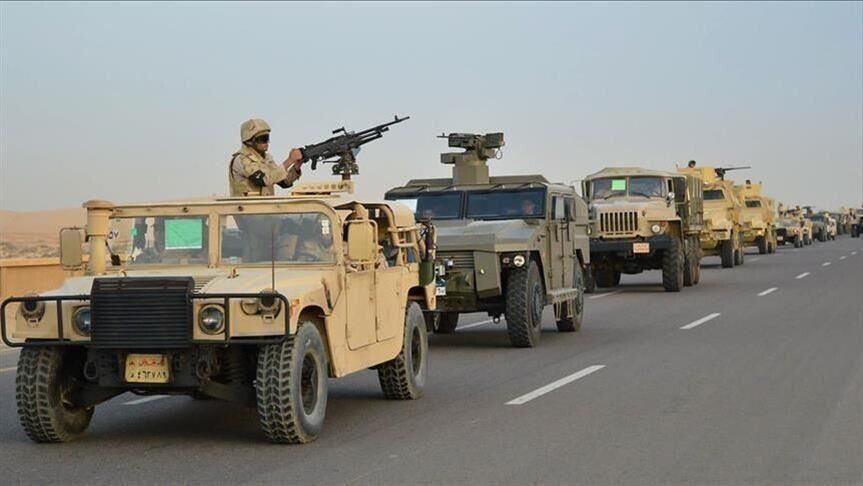
Two Egyptian border guard officers died during armed exchanges in the country’s southern region. Military spokesman Col. Ahmed Othman identified them as Col. Ahmed Samir, chief of staff of the Border Guard Forces in the southern sector, and Lt. Col. Ahmed Gouda, operations chief of a border guard battalion.
Col. Othman disclosed the fatalities during a press conference reviewing military sweeps against illicit gold extraction. He did not specify the exact date when the two officers were killed during the security operations.
The military campaign aims to safeguard national natural resources and dismantle illegal networks threatening state security. Col. Othman stressed that the armed forces did not target civilians during the crackdown.
Authorities conducted three earlier phases of operations between June 14 and Oct. 29. The first phase targeted two areas in the Eastern Desert, including a site west of Marsa Alam and the Jabal Iqat region.
The second phase ran from July 31 to Aug. 18 in Wadi Dabour and Al-Baramiya. The third phase involved renewed sweeps of previously targeted areas between Oct. 12 and Oct. 29.
A fourth phase of military operations will begin on Saturday and continue until its objectives are achieved. Forces also carried out preemptive operations to sever weapons and ammunition supply routes used by criminal elements operating across the border.
The initial three phases resulted in the detention of 691 individuals, consisting of 151 Egyptian citizens and 540 foreign nationals. Another 6,614 people surrendered to authorities before the operations began.
Security forces seized 34 weapons, 6,307 rounds of ammunition, 317 vehicles, and 19 motorcycles. Officials also confiscated 916 pieces of engineering equipment, 73 metal detectors, 433 generators, and satellite communications gear.
Other seizures included 4,488 tents and makeshift shelters, alongside 860 tons of quarried material containing gold ore and undisclosed sums of money. Col. Othman stated that illegal gold extraction had become connected to transnational criminal rings and arms trafficking.
Competitor armed groups in some mining territories possessed light weapons, heavy machine guns, sniper rifles, and anti-aircraft weapons. These announcements followed an October directive by Sudanese Sovereign Council Chairman Abdel Fattah al-Burhan to form a fact-finding committee regarding the deaths of Sudanese gold miners near the border.
After those events, Egypt and Sudan reaffirmed their bilateral ties and warned against efforts to generate friction between the two nations.