The history of Al-Aqsa Mosque is not merely a chronicle of stone and mortar; it is a living epic of the rise, fall, and heroic resilience of Islamic civilization. For centuries, this sacred land has transitioned through various rulers, but the conquests of Caliph Umar ibn al-Khattab (RA) and Sultan Saladin (Salahuddin Ayyubi) stand as the most luminous chapters. Through these two figures, Al-Aqsa did not just find liberation; it attained a unique spiritual and political status that continues to define the Muslim identity today.
The first Muslim conquest of Al-Aqsa took place in 638 CE. When the Islamic forces under the leadership of the second Caliph, Umar (RA), reached the gates of Jerusalem, the city`s Christian Patriarch, Sophronius, set a unique condition: he would only hand over the keys if the Caliph himself came to receive them. Umar (RA) traveled from Madinah with a single servant, alternating turns on a camel—a display of humility that shocked the Byzantine world. As documented by Al Jazeera, this conquest was entirely bloodless. Umar (RA) signed the "Covenant of Umar," guaranteeing religious freedom and protection for all inhabitants. Upon entering the city, he searched for the site of Al-Aqsa, which had been turned into a wasteland by the Romans. The Caliph himself began cleaning the site with his cloak, a gesture that established the Noble Sanctuary as the heart of the newly expanded Islamic world.
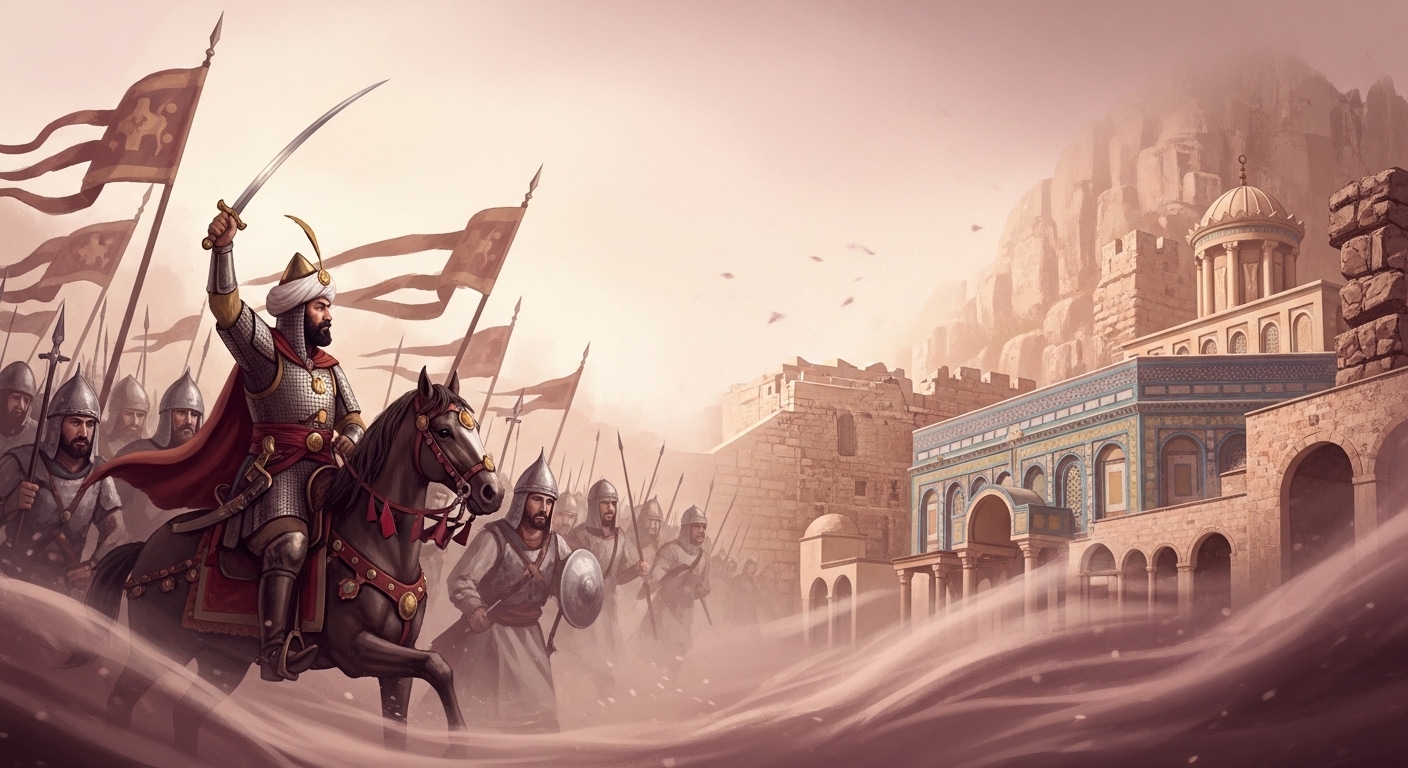
Nearly 500 years later, in 1099 CE, the First Crusade led to the brutal fall of Jerusalem. The Al-Aqsa compound was desecrated, used as a palace and stable by the European forces. The 88-year dark period of Crusader rule ended in 1187 CE through the valor of Sultan Saladin. Following his decisive victory at the Battle of Hattin, Saladin entered Jerusalem, mirroring the mercy and justice of Caliph Umar (RA). He refrained from seeking revenge, instead offering a general amnesty to the defeated inhabitants.
Following his victory, Saladin undertook a magnificent restoration of Al-Aqsa. To cleanse the mosque, he ordered several tons of pure rosewater to be brought from Syria to wash the entire compound. One of Saladin’s most cherished acts was fulfilling the legacy of his predecessor, Nur al-Din Zangi. Nur al-Din had commissioned an exquisite wooden minbar (pulpit) specifically for Al-Aqsa, hoping one day it would be placed there. Saladin brought this historic "Nur al-Din Minbar" from Syria and installed it within the mosque. According to Britannica, this liberation served as a massive awakening for the Muslim world, laying the groundwork for a cultural and political Golden Age.
Today, Al-Aqsa stands as a symbol of the justice and bravery of these two monumental figures. Umar (RA) taught the world how to be a humble victor and respect religious diversity, while Saladin demonstrated how to win hearts through mercy and nobility after decades of conflict. Their leadership was anchored in "Insaf" (Justice). As Al-Aqsa once again faces occupation and turmoil, the history of these two heroes serves as more than just a story; it is a powerful inspiration for the global Ummah. The stones of Al-Aqsa still bear the spiritual touch of Umar (RA) and the lingering scent of Saladin’s rosewater.