The holy Al-Aqsa Mosque is more than just a monument of stone and history; for Palestinians, it is the root of their existence and the epicenter of their struggle for national liberation. However, for the past several decades, this sacred site has been at the heart of an intense modern crisis. Since the 1967 June War (Naksa), Al-Aqsa has remained under Israeli military control. Over the last 59 years, while the compound has witnessed numerous bloody incursions, the unwavering faith and courage of the Palestinian people have consistently stood firm against sophisticated military might.
The current situation within the Al-Aqsa compound is extremely complex. According to reports from Al Jazeera and Amnesty International, Israeli authorities regularly impose strict restrictions on access for Palestinian Muslims. Often, during Friday prayers or the holy month of Ramadan, younger Palestinian men—typically those under the age of 50—are barred from entering the gates. Simultaneously, armed Israeli settlers frequently conduct provocative tours within the mosque courtyards under heavy security protection, disrupting the sanctity and peace of the site.
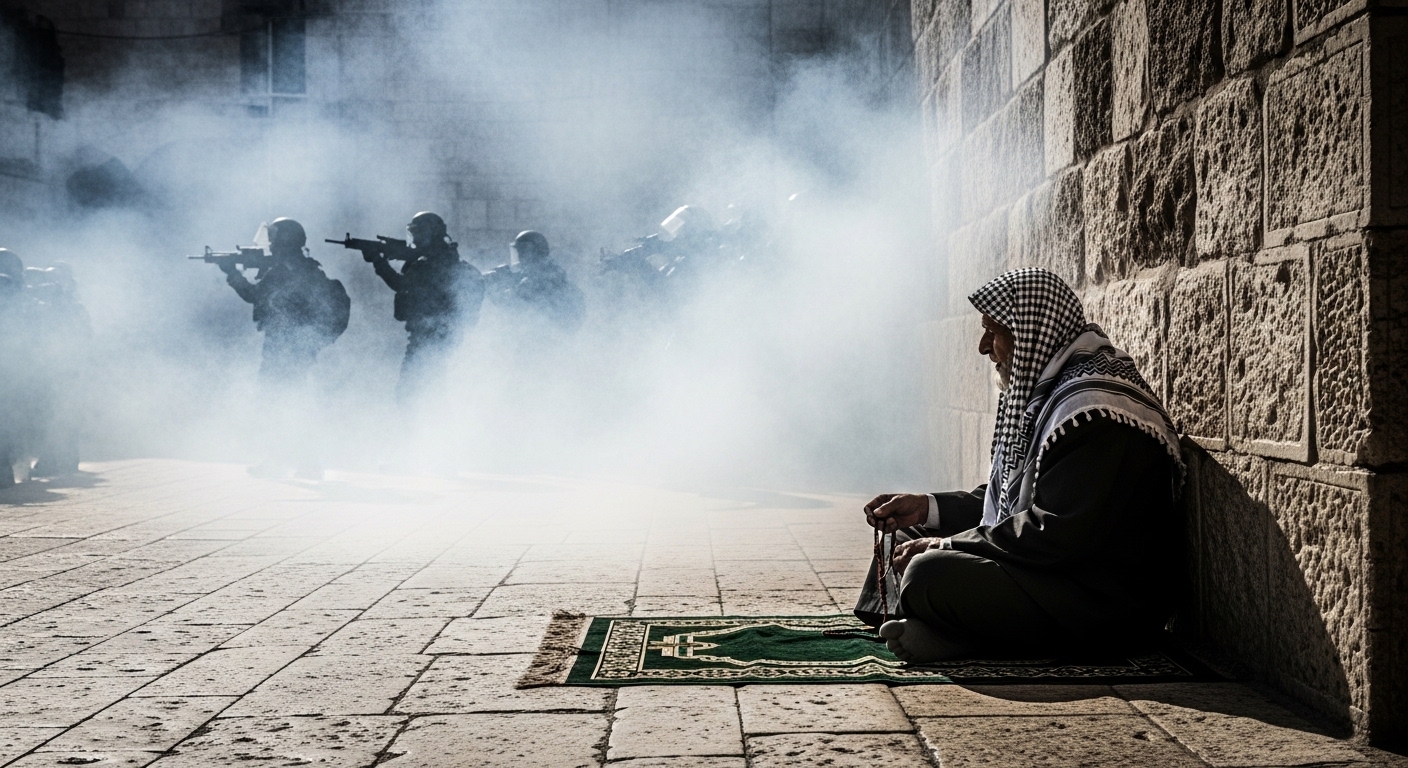
Despite these barriers, tear gas, and sound grenades, the Palestinian resolve has not faltered. Every day at Fajr, while the alleys of Jerusalem are still shrouded in darkness, the elderly and the youth begin their journey toward Al-Aqsa. They stand for hours at Israeli checkpoints, enduring humiliations and physical barriers, just to register their presence in the mosque. For Palestinians, this is not merely a religious obligation; it is a silent, persistent protest to maintain the ownership of their land and their first Qibla. To them, Al-Aqsa is a fortress of faith that no military power can truly conquer.
The role of Palestinian women, known as the `Murabitat` (Guardians of Al-Aqsa), is particularly unique in this struggle. These women spend their days in the mosque courtyards, engaging in Quranic recitation and remembrance. When Israeli forces attempt to forcefully remove them, the air of Jerusalem resonates with their cries of `Allahu Akbar.` These mothers and sisters believe that safeguarding the sanctity of Al-Aqsa is a primary tenet of their faith. Their sacrifice serves as a profound inspiration for the global Muslim Ummah.
In this modern crisis, worshippers at Al-Aqsa are subjected to psychological pressure through drone surveillance, extensive CCTV networks, and metal detectors at every entrance. Frequent raids involving tear gas canisters often damage the ancient carpets and the historic mihrab of the mosque. Nevertheless, Palestinians continue to bring their children to the compound, ensuring the next generation is raised with an awareness of their rights and the sanctity of this soil. They share Suhoor and Iftar on the stone floors, finding moments of joy and communal strength amidst overwhelming adversity.
Ultimately, the modern crisis of Al-Aqsa is not just a Palestinian concern; it is a crisis for the conscience of the entire world. Yet, the unwavering faith displayed by the Palestinians is rare in human history. They have proven that when faith is as solid as a mountain, no wall or weapon can effectively imprison it. Al-Aqsa continues to stand today because of the sacrifices of those believers who risk their lives every day to uphold the dignity and sanctity of their first Qibla.