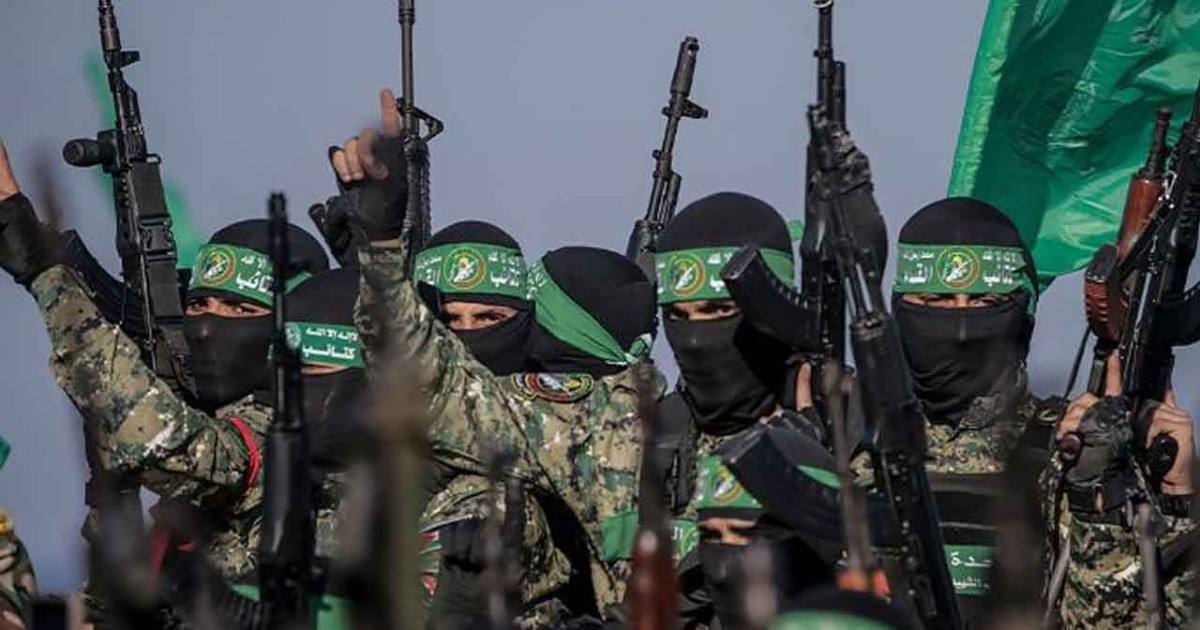
The Palestinian militant group Hamas has stated that it will not surrender its weapons. However, the group indicated that in the future, only official Palestinian police weapons will be visible in the Gaza Strip. The organization maintains that it will no longer display weapons in public. The final future of its military arsenal will be decided after detailed discussions with other Palestinian factions.
In an exclusive interview with Al Jazeera, Hussam Badran, a member of Hamas’s political bureau, addressed the stalled ceasefire negotiations, the debate over disarmament, and the future administrative structure of Gaza. He also proposed the concept of a long-term hudna or ceasefire. Badran explained that once the National Committee for the Administration of Gaza takes control of the strip, no weapons other than those of the official police will be visible on the streets.
Badran emphasized that the armed presence previously observed in Gaza will no longer have a public existence. He clarified that this does not imply handing over weapons. The group intends to ensure that apart from official Palestinian police forces, no other arms will be visible. He noted that detailed discussions on this matter would occur within a national framework.
Amid this stance, sources familiar with the situation told Al Jazeera that Hamas is preparing to send a delegation to Cairo to resume negotiations. The talks are expected to begin over the weekend. Hamas had previously suspended its participation, citing the need for Israel to end its military operations, including the recent killings of commanders Izz al-Din al-Haddad and Mohammad Odeh.
The disarmament of Hamas and the withdrawal of Israeli forces remain the primary obstacles to the ceasefire plan proposed under US mediation. Eight major Palestinian groups are scheduled to meet in Cairo to forge a unified national position. Badran confirmed that representatives from Hamas, the Palestinian Islamic Jihad, the Popular Front for the Liberation of Palestine, and various factions associated with Fatah will participate.
United Nations representative Nicolai Mladenov recently presented a 15-point roadmap for the ceasefire. During a briefing at the UN Security Council in May, he stated that the plan is built on strict policies of reciprocity and verification. Mladenov explained that the roadmap clearly specifies that no Palestinian armed group is required to hand over their weapons to Israel. The disarmament process would be phased, orderly, and led by Palestinians.
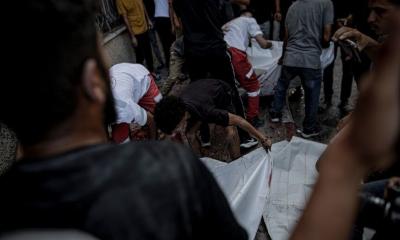
However, Palestinian political analyst Wisam Afifa told Al Jazeera that the roadmap is viewed as a stalling tactic. He alleged that Israel is using the negotiation period to exacerbate tensions and exhaust the population. Afifa argued that the resistance is being cornered into making major concessions without concrete guarantees. Meanwhile, the humanitarian cost continues to rise. According to UN briefings, 85 percent of Gaza’s buildings are damaged or destroyed. Total casualties since October 2023 have reached 72,942 deaths and 172,967 injuries. Observers warn that without an agreement, Gaza faces continued division and instability.