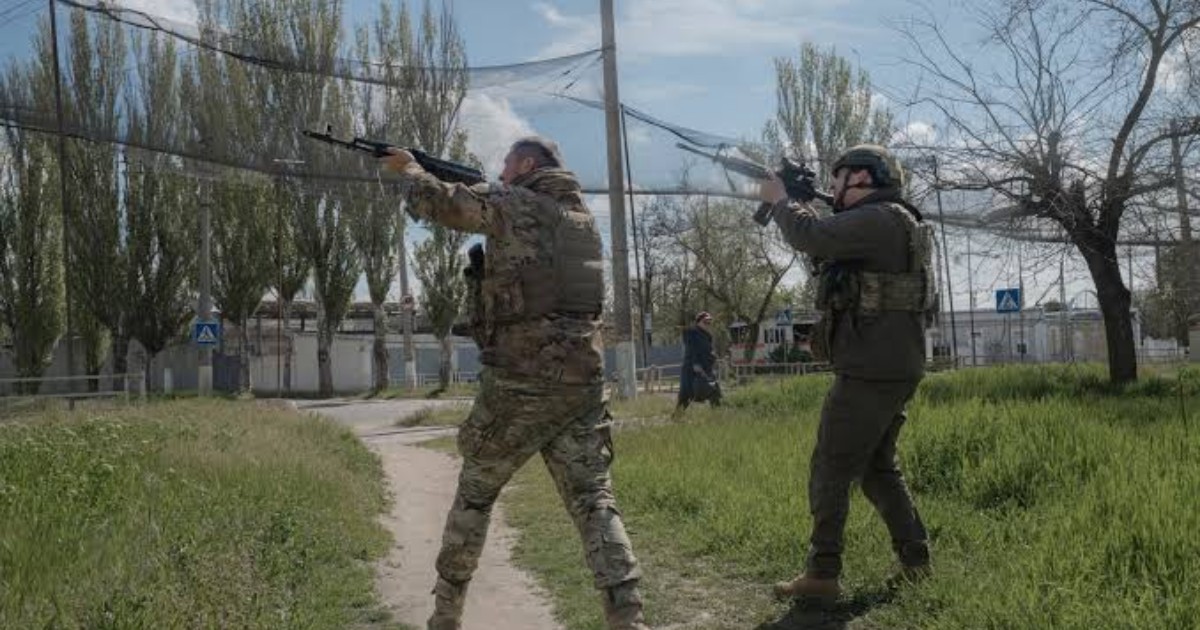
Russian troops have recently infiltrated the strategic city of Kostyantynivka in eastern Ukraine and are actively attempting to encircle it, according to reports from BBC News and Reuters. Ukrainian soldiers operating on the front lines stated that the entire urban area has effectively entered a fluid grey zone that is no longer under complete control of either side. Drone operators in the sector, speaking on the condition of anonymity, revealed that Russian forces are slipping into neighborhoods behind frontline positions, making it extremely difficult to repel them in close urban combat. As the primary gateway to the remaining parts of the broader Donbas region, the defense of this city is critical for the stability of the entire eastern front.
The complete seizure of the Donbas region remains one of the primary strategic objectives of the Kremlin in this full-scale conflict. If Kostyantynivka falls to the advancing forces, the Russian army will gain a direct pathway to target Ukraine`s last remaining strongholds in the east, specifically the heavily fortified cities of Kramatorsk and Sloviansk. This sudden surge in urban fighting comes after months during which the war had largely stalled along a static front line, with Ukrainian commanders asserting that they had actually recaptured more territory this year than they had lost. Those previous counteroffensives had successfully disrupted critical logistics lines connecting the Russian border to occupied Crimea, leading Russian-appointed officials there to suspend public fuel sales due to severe shortages.
Kyiv had also launched successive long-range drone strikes on major oil refineries in Moscow and Saint Petersburg to bring the economic reality of the war closer to the Russian population. Despite those disruptions deep within Russian territory, the tactical situation inside Kostyantynivka has shifted rapidly as Russian soldiers advanced from the southern suburbs and appeared on the northern outskirts. The Russian defense ministry claimed that its units were executing swift maneuvers in the southwestern districts and had successfully trapped several Ukrainian military detachments. This claim of encirclement was rejected by Ukrainian military officials, who maintained that their defensive lines were still holding against the intense pressure.
Brigadier General Oleksandr Bakulin, the commander of Ukraine`s 19th Corps overseeing the defense of the city, insisted that the situation remains under control and that the opposing forces have achieved no significant success. However, the general acknowledged that approximately 130 Russian soldiers managed to remain positioned within the municipal boundaries. Frontline officers operating inside the city suggested that the ground situation is significantly more serious than what is being officially admitted to the public. They reported that while specialized cleanup and assault groups continue to clear buildings, Russian forces are successfully accumulating greater numbers of infantry within the city center.
Every structure within the urban layout serves as a potential shelter for the invading troops, while the thick summer foliage provides additional concealment from aerial surveillance. This environment has allowed Russian forces to find paths through the dangerous fields where Ukrainian reconnaissance drones typically spot and target any moving infantry. To counter this, Russian drone pilots have prioritized locating and destroying Ukrainian drone launch sites to give their assaulting infantry room to maneuver. What remains unclear is whether the Ukrainian military can deploy sufficient reinforcements and ammunition to stabilize the sector before the logistics network collapses entirely. Observers note that the Russian advance remains painstaking, with troops sometimes moving only 100 meters a day or crawling from one building to the next to avoid detection.