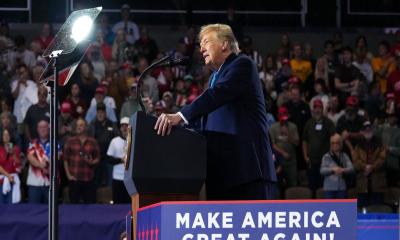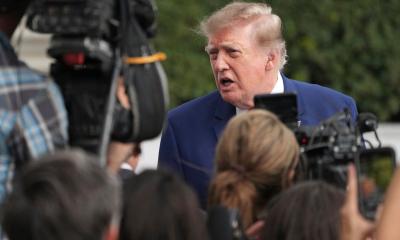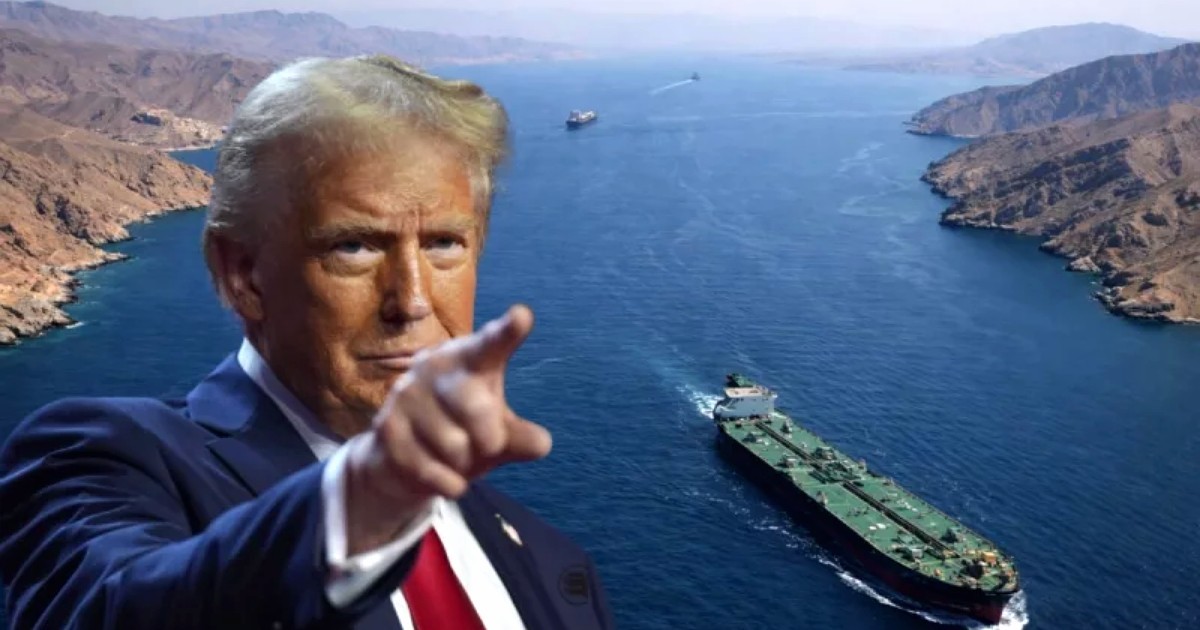
US President Donald Trump announced that no fees or tolls will be collected in the Strait of Hormuz during the ongoing 60-day interim ceasefire, Al Jazeera and Dinajpur TV confirmed from Washington on Sunday. However, he issued a stern warning that the United States might unilaterally impose these fees in the future if a final bilateral agreement is not successfully executed. Trump shared this new administration policy on Saturday evening through a social media post on his platform, Truth Social. The president explicitly warned that there is no legal opportunity for any foreign power to collect tolls in the Strait of Hormuz without considering American strategic interests.
Trump explained in his statement that Washington would immediately pursue alternative measures if a permanent bilateral treaty is not finalized after the expiration of this special interim period. He suggested that imposing a maritime transit fee could be seriously considered to recover the actual costs incurred by the US military while maintaining its protective role over Middle Eastern security. This sharp reaction from the American president followed a recent provocative declaration from Iran`s Khatam al-Anbiya Central Headquarters. Tehran had claimed that the American side completely violated the terms of the regional agreement, threatening to shut down the Strait of Hormuz entirely due to alleged Israeli ceasefire violations in Lebanon.
The United States Central Command, widely known as CENTCOM, completely rejected the military threats and claims issued by Tehran. CENTCOM spokesperson Commander Tim Hawkins stated that American forces remain fully alert and highly active in the Persian Gulf region to ensure the flawless implementation of all treaty conditions. He further noted that commercial shipping traffic through the Strait of Hormuz remains entirely normal without any active disruptions or security impediments. The military official firmly asserted that the sole control of the Strait of Hormuz does not belong exclusively to Iran, emphasizing that international maritime laws guarantee free passage for all nations. Because a significant portion of global petroleum and liquefied natural gas passes through this vital channeling route, any escalation can severely impact international energy markets.
What remains unclear is how a potential unilateral American decision to impose transit fees on an international waterway would affect long-term regional stability and global maritime commerce. Such a forced financial measure could ignite complex legal and political disputes regarding the right of free navigation under the United Nations Convention on the Law of the Sea. Military analysts in Tehran view this policy as an extension of Western economic imperialism, which could face intense resistance from various Islamic nations in the Middle East. Furthermore, neighboring countries such as Oman and the United Arab Emirates have maintained a cautious silence, creating diplomatic ambiguity regarding their official alignment.
Geopolitical experts express concern that the ongoing rhetorical escalation between Washington and Tehran could trigger a sudden spike in crude oil prices, destabilizing fragile post-conflict economic recoveries worldwide. The persistent diplomatic friction raises fears among international observers about the possibility of a renewed conventional military confrontation in the strategic gulf waters. The Pentagon is currently evaluating options to deploy additional naval vessels and marine detachments to secure trade corridors against asymmetric threats. The unyielding stances adopted by both administrations threaten to derail multilateral peace initiatives, leaving the vital energy corridor in a state of prolonged suspense.