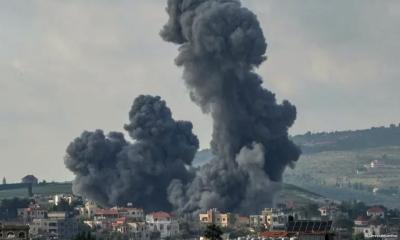
The ongoing conflict involving Iran has triggered a critical Ukraine Patriot missile shortage, leaving the Eastern European nation vulnerable to an intensified Russian military campaign, Al Jazeera and Reuters confirmed on Sunday. As Washington struggles to supply ammunition to multiple global fronts simultaneously, its Middle Eastern allies are rapidly expending US-made Patriot air defense interceptors to neutralize Iranian ballistic missiles and drone swarms. This massive diversion of high-tech military hardware has depleted stockpiles originally earmarked for Kyiv, providing Russian President Vladimir Putin with a strategic opening to launch devastating strikes against Ukrainian infrastructure. Military experts warn that the defense industrial base of the United States cannot sustain the machine-gun deployment rate of these interceptors across two active warzones without compromising its own national security reserves.
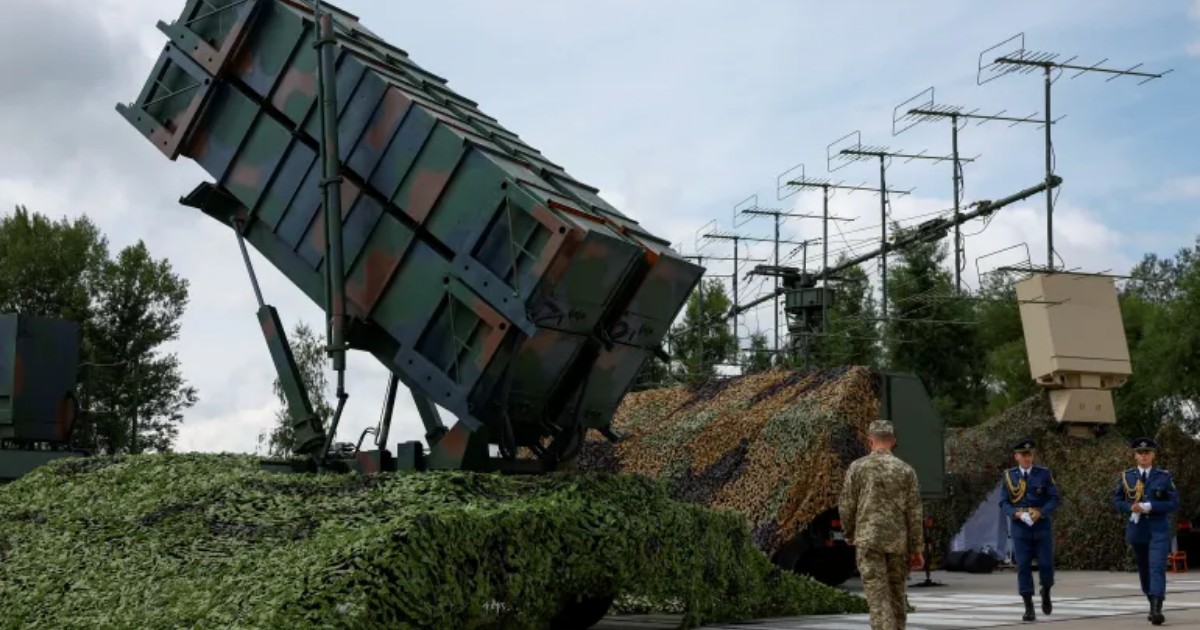
Reporting from the Ukrainian capital of Kyiv, Al Jazeera correspondent Mansur Mirovalev noted that defense analysts expect Moscow to swiftly capitalize on the defense vulnerabilities created by this supply chain disruption. The truck-mounted Patriot air defense systems have been instrumental in safeguarding Ukrainian cities, firing interceptor missiles at high speeds to down Russia`s advanced ballistic capabilities, which Putin had previously boasted were entirely indestructible. However, the unexpected outbreak of the regional war in the Middle East has forced the Pentagon to prioritize the immediate defense requirements of Israel and other regional partners. This shift in foreign policy priorities has left Ukrainian commanders with a dwindling supply of guided ammunition, severely limiting their capacity to protect vital electrical grids and civilian centers from incoming Russian aerial assaults.
According to international defense research institutions, a single Patriot interceptor missile costs approximately four to five million dollars to manufacture, and the production process requires sophisticated technology and substantial time. Ukraine has relied almost exclusively on these Western systems to defend against Russia`s hypersonic Kinzhal and ballistic Iskander missiles over the past several years. Internal documents from the Pentagon indicate that domestic manufacturing pipelines are severely strained, rendering Washington unable to fulfill its prior long-term military commitments to Kyiv. Ukrainian military officials privately express fear that if a fresh shipment of specialized interceptor ammunition does not arrive within weeks, the national integrated air defense umbrella could face catastrophic collapse, enabling the Russian air force to operate with total impunity over sovereign skies.
What remains unclear is how the current American administration intends to balance its domestic political pressures and international strategic obligations while addressing Ukraine`s desperate military requirements. Many policymakers in Washington argue that containing Iran`s regional influence and protecting energy corridors in the Middle East is of higher strategic importance to American national interests than sustaining the stalemate in Eastern Europe. This geopolitical divergence has forced Ukrainian President Volodymyr Zelenskyy to deliver increasingly urgent public appeals to his Western allies for supplemental defensive assistance, though these requests have yielded minimal practical support. While European NATO members have pledged to expand their independent defense manufacturing capacities, acute material shortages and technological bottlenecks mean these facilities will require several years to reach full production capacity, offering no immediate relief to Kyiv.
The Russian military command has already begun adapting its operational strategies to exploit the emerging gaps in Ukraine`s defensive perimeter, increasing the volume of strikes in the eastern and southern provinces. Intelligence assessments indicate that Moscow has successfully reconstituted its stockpiles of ballistic weaponry and is waiting for definitive signs of absolute Patriot depletion before launching a coordinated, large-scale air offensive. Historical examples from modern conventional conflicts demonstrate how severe ammunition deficits invariably force well-organized armed forces into defensive retreats, erasing hard-won territorial gains. The civilian population of Ukraine now faces the prospect of an exceptionally difficult season, as the lack of adequate air defenses leaves the country`s damaged energy grid exposed to systematic destruction.
International military strategists suggest that unless the United States and its European allies can immediately source alternative air defense platforms, such as the NASAMS or IRIS-T systems, Ukraine`s defensive capabilities will degrade rapidly. However, these alternative platforms lack the specific range and power required to intercept heavy ballistic or hypersonic threats, rendering them insufficient substitutes for the highly capable Patriot network. Russian policymakers are fully aware that Western defense production lines cannot easily scale up to satisfy the ammunition consumption rates of two separate, high-intensity international conflicts simultaneously. Utilizing this geopolitical leverage, the Kremlin is actively attempting to transform the war into a prolonged war of attrition where the absolute availability of industrial manufacturing determines the eventual winner.
Local residents and strategic experts in Kyiv emphasize that the ramifications of this supply crisis will extend far beyond the geographical borders of Ukraine, threatening the collective security framework of the entire European continent. If the lack of defensive ammunition leads to a systemic breach of the Ukrainian lines, Russian forces would position themselves directly along the eastern flank of NATO, profoundly altering global balance-of-power calculations. Thus, the unfolding war involving Iran is not merely reshaping the political landscape of the Middle East, but is indirectly tilting the trajectory of the conflict in Eastern Europe in favor of Moscow. International diplomatic observers are closely monitoring Washington`s next tactical moves as the administration attempts to navigate this dual-front military dilemma without triggering an unmanageable global escalation.