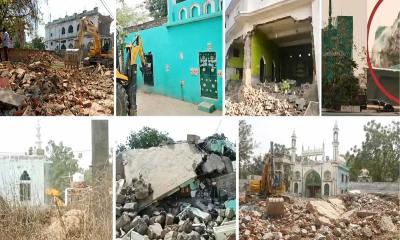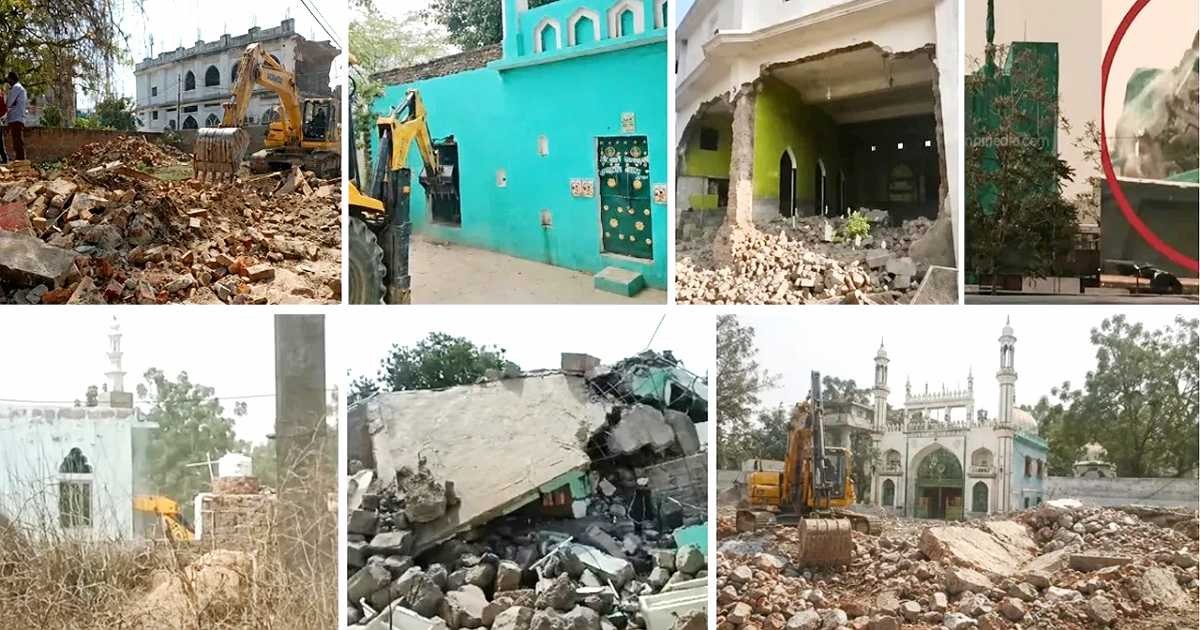
The ruling Bharatiya Janata Party government in India has demolished more than 23 historic Muslim religious structures over the past 45 days, according to an investigative report confirmed by Reuters and Al Jazeera on Sunday. This highly controversial administrative campaign has been carried out predominantly across states governed by the right-wing nationalist party. Over the last six weeks, local municipal authorities have systematically targeted and removed prominent mosques, Islamic seminaries, Eidgahs, and shrines. The sudden intensification of these mosque demolitions in India has triggered profound anxiety and sharp condemnation among global human rights organizations and minority rights advocates.
Local state administrations and municipal high officials have strongly defended the operations, claiming the primary objectives are reclaiming government land, removing unauthorized encroachments, and executing modern urban development projects. However, local Muslim community leaders and legal experts have completely rejected these official justifications, counter-arguing that long-standing, legally documented religious properties are being forcefully included in these destructive campaigns. Affected residents emphasized that several of the destroyed historical mosques and shrines had served as the central hubs for religious, cultural, and social activities for multiple centuries. The execution of these operations, often conducted overnight without prior warning or legal notice, represents a severe assault on the community`s fundamental religious freedoms.
The abrupt nature of these demolitions has generated intense social friction and widespread public outrage across several sensitive regions in the country. Muslim religious leaders and international human rights activists have issued formal statements characterizing the campaign as highly discriminatory and politically motivated. They argue that the local administration completely lacked the required sensitivity regarding historical and religious heritage while enforcing law and development agendas. Political analysts observe that such unilateral state actions are severely damaging the secular reputation of the nation on the global stage. Affected families and religious trusts are demanding an impartial judicial investigation into the events, administrative accountability for the officers involved, and immediate rehabilitation for the destroyed properties.
What remains unclear is whether the central administration is utilizing these municipal clearance drives to bypass the established judicial system and permanently institutionalize a biased bulldozer culture. Right-wing administrations in states such as Uttar Pradesh, Madhya Pradesh, and Haryana have previously established a pattern of destroying minority homes and businesses under the guise of administrative efficiency. Despite explicit protective guidelines issued by the Supreme Court, local authorities continuously violate statutory legal frameworks to sustain this dangerous campaign against religious properties. Human rights watchdogs warn that these continuous communal provocations could destabilize domestic law and order, leading to widespread civil unrest. International diplomatic circles are closely monitoring these domestic developments due to growing concerns over regional stability.
Conversely, senior administrative officials continue to reiterate that these eviction drives do not target any specific religious group and that the law applies equally to all citizens. The situation has split the public sphere into deeply polarized camps, with hardline nationalist groups vocally supporting the state`s aggressive measures. In response, members of the secular civil society are attempting to organize nationwide demonstrations to defend the constitutional right to religious freedom. This ongoing legal and religious crisis is projected to exert a long-lasting negative impact on the country`s communal harmony and democratic framework in the coming years.