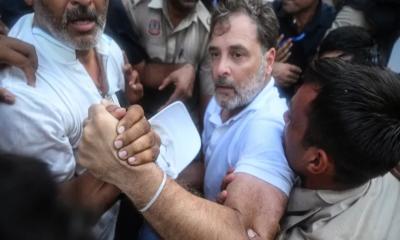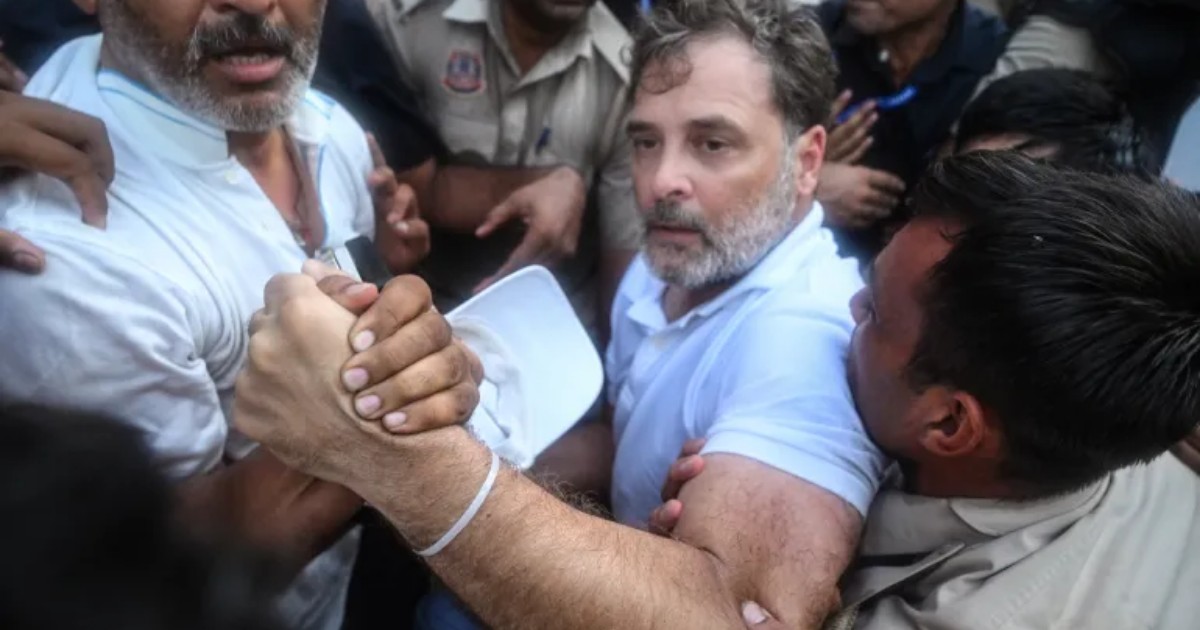
Indian police detained opposition leader Rahul Gandhi on Tuesday as youth-led protests against the government continued to expand despite a heavy-handed crackdown by authorities, according to Al Jazeera and The Associated Press. Gandhi and several other prominent opposition leaders were taken into custody during a sit-in demonstration outside Prime Minister Narendra Modi`s official residence in New Delhi. The protest was organized to condemn the violent police response to student demonstrations that have shaken the capital over educational reforms and government accountability.
Security personnel forcibly bundled Gandhi into a vehicle after he staged a picket demanding the resignations of top government officials, including Prime Minister Modi, Home Minister Amit Shah, and Education Minister Dharmendra Pradhan. Witnesses reported chaotic scenes outside the prime minister`s residence as supporters attempted to shield Gandhi from police officers who moved in to clear the area. Congress party officials confirmed that Gandhi, along with his sister Priyanka Gandhi and other senior politicians, were removed from the site and taken to a local police station.
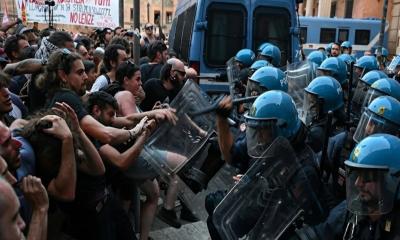
The high-profile detentions came on the second day of escalating unrest driven by the student-led movement, which has gained massive momentum across the country. On Monday, thousands of demonstrators marched toward parliament, prompting police to deploy tear gas, batons, and cane charges that injured more than one hundred people. The severe police response drew widespread public condemnation and triggered an outpouring of solidarity from various professional groups and families, turning the localized grievances into a broader national challenge for the administration.
The protest movement emerged in response to widespread anger over compromised entrance exams, widespread unemployment, and institutional failures. Protesters have steadfastly demanded sweeping educational reforms and concrete accountability from the federal government. Following his detention, Gandhi took to social media to denounce the government`s refusal to engage in parliamentary debate or take responsibility for the deteriorating situation, accusing leadership of destroying the future of India`s youth through suppression and intimidation.
Human rights organizations and international observers have sharply criticized the government`s heavy reliance on police force to quell peaceful dissent. Amnesty International and other watchdogs noted that the aggressive tactics deployed against demonstrators violate fundamental rights to peaceful assembly and free expression. Despite the arrests and ongoing security clampdowns, movement leaders have vowed to maintain their presence at designated protest sites in New Delhi until their core demands are fully met by federal authorities.
Political analysts note that the unfolding crisis represents one of the most formidable domestic challenges faced by Prime Minister Modi`s administration in recent years. The convergence of student activism, opposition political backing, and widespread public sympathy has intensified pressure on the ruling coalition. The local administration has defended its security measures, citing the need to maintain public order and prevent traffic disruptions in high-security zones. However, opposition lawmakers maintain that executive overreach and intolerance toward peaceful criticism are undermining democratic institutions. With protests persisting across multiple neighborhoods and student groups refusing to back down, the political stalemate shows no immediate signs of resolution, leaving the capital on high alert.