The government of Greece is attempting to balance its military and economic assistance to Ukraine while actively opposing proposed European Union sanctions on Russian liquefied natural gas shipping, Al Jazeera and Associated Press reported on Wednesday. The European Commission has been working to reconfigure its 21st package of sanctions against Russia after opposition from Greece and other member states halted the initial draft last week. Greece currently owns approximately 60 percent of the commercial shipping fleet in the European Union, making its maritime sector uniquely vulnerable to proposed transport bans. Because shipping and tourism collectively generate more than 25 percent of the Greek economy, officials in Athens argue that the new measures would disproportionately penalize domestic businesses.
Tensions between Athens and Kyiv surfaced earlier after a Ukrainian explosive naval drone was discovered off the coast of the Greek island of Lefkada in the Ionian Sea. Ukraine has routinely deployed maritime drones against Russia`s shadow fleet, but Greek authorities expressed alarm over potential oil spills and environmental hazards within their sovereign waters. Following diplomatic exchanges, Ukraine`s Ministry of Foreign Affairs issued an official apology and pledged greater operational caution in maritime zones near Greek territory. Shortly thereafter, Greek Deputy Foreign Minister Haris Theoharis signed a formal memorandum establishing framework assistance for Ukraine`s post-war reconstruction, enabling Greek firms to undertake key infrastructure projects including hydroelectric station repairs.
Data compiled by the Kiel Institute for the World Economy indicates that Greece has provided 170 million euros in bilateral military aid to Ukraine, alongside 1.14 billion euros in combined military and financial support through European Union institutions. Additionally, Athens has disbursed 9 million euros in humanitarian assistance despite recovering from severe sovereign debt challenges and adhering to strict fiscal targets. However, growing concerns over Russian hybrid warfare, cyber threats, and potential election interference have caused Greek leadership to proceed cautiously with further military commitments. With national elections scheduled between autumn 2026 and early 2027, policymakers remain acutely sensitive to foreign disinformation campaigns and retaliatory measures.
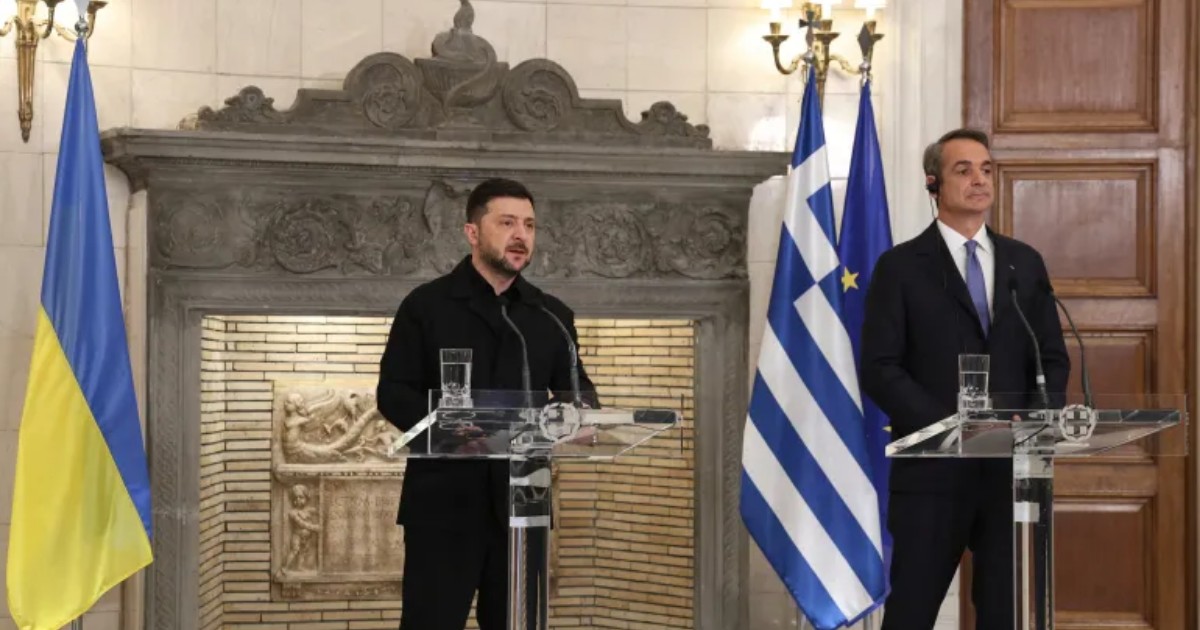
In November 2025, Ukrainian President Volodymyr Zelenskyy and Greek Prime Minister Kyriakos Mitsotakis issued a joint declaration pledging to deepen defense cooperation, specifically focusing on maritime drone development and joint naval exercises. Despite that public commitment, formal implementation has stalled as Greece weighs the geopolitical consequences of direct military manufacturing agreements against Moscow. Senior Greek officials admitted that producing drones where half the output would be deployed against Russian forces could trigger severe hybrid retaliation. Furthermore, uncertainty surrounding potential diplomatic negotiations between Washington and Moscow has encouraged Athens to adopt a wait-and-see strategy before formalizing new defense contracts.
What remains unclear is how the European Union will resolve its internal contradictions regarding energy policy and shipping sanctions. During the first six months of 2026, the European Union actually increased its own imports of Russian liquefied natural gas by 11 percent compared to the same period in 2025, even as it sought to restrict commercial transport to third parties. While this incremental approach has drawn quiet frustration from Ukrainian representatives seeking more aggressive support, Greece continues to prioritize its national economic security while maintaining core commitments to European solidarity.