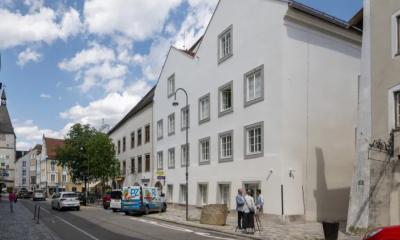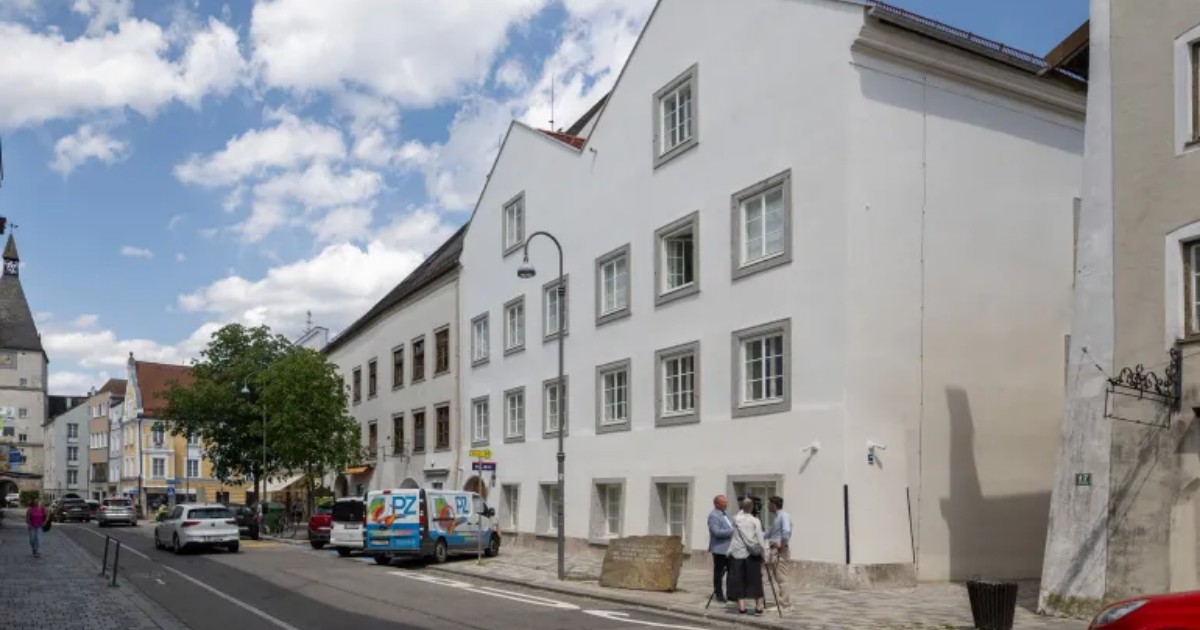
The Austrian government officially opened a new police station inside the building where dictator Adolf Hitler was born, aiming to neutralize its potential appeal to neo-Nazi groups, Reuters, AFP, and DPA reported on Wednesday. Located in the border town of Braunau am Inn near Germany, the historic property underwent extensive structural remodeling costing approximately 20 million euros, or roughly 22.8 million US dollars. District and local police officers have now established their operational headquarters inside the multi-story structure, marking the conclusion of a long-standing national debate over the site`s future. Authorities hope that converting the building into an active law enforcement facility will permanently strip the location of any extremist symbolism and public fascination.
The transformation follows a 2017 decision by the Austrian government to expropriate the house after years of legal disputes with its former private owner. Comprehensive renovation plans were formally announced in 2019, specifically designed to alter the architectural appearance of the structure so that it no longer attracts right-wing extremists. During the official opening ceremony, Mayor Johannes Waidbacher emphasized that the project demonstrates the local community`s willingness to confront its historical responsibility openly and transparently. Interior Minister Gerhard Karner attended the event alongside senior officials and uniformed police personnel, while a local musical ensemble performed in the inner courtyard.
According to historical records, Adolf Hitler was born in the house on April 20, 1889, although his family resided there for only a few weeks before moving away. During the Nazi era, the building was converted into a public art gallery as part of a state-sponsored cult of personality around the dictator. Stephan Mlczoch, head of the history department at the Ministry of the Interior, informed journalists during a guided tour that the overhaul aimed to eliminate any ideological mystique surrounding the property. While passersby still occasionally stop to photograph the exterior, local officials noted that extremist incidents near the premises have decreased significantly compared to previous decades.
Despite government assertions, the project has drawn criticism from several human rights organizations and local residents in Upper Austria. Robert Eiter, representing the Mauthausen Committee and the Network Against Racism and Right-Wing Extremism, argued that altering the building`s administrative function cannot erase its historical reality. He stated that international historical records will continue to identify the site as Hitler`s birthplace, suggesting that right-wing visitors might still travel to the town. Furthermore, some local residents expressed disappointment that the property was not allocated to a charitable organization, which had previously leased space in the building. Mayor Waidbacher clarified that housing a charity would have maintained public access, contradicting the primary objective of securing the site.
What remains unclear is whether the permanent presence of law enforcement will completely deter unauthorized ideological gatherings around the town perimeter over the long term. Nevertheless, municipal leaders believe that establishing a functioning police facility provides a practical and sober resolution for Braunau am Inn. A memorial stone from the Mauthausen concentration camp bearing an inscription rejecting fascism remains situated on the sidewalk directly outside the main entrance. By integrating law enforcement into the premises, Austrian officials hope to foster a peaceful atmosphere while upholding historical awareness without providing a platform for totalitarian ideology.