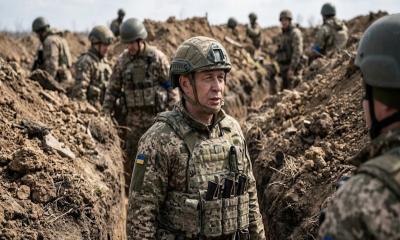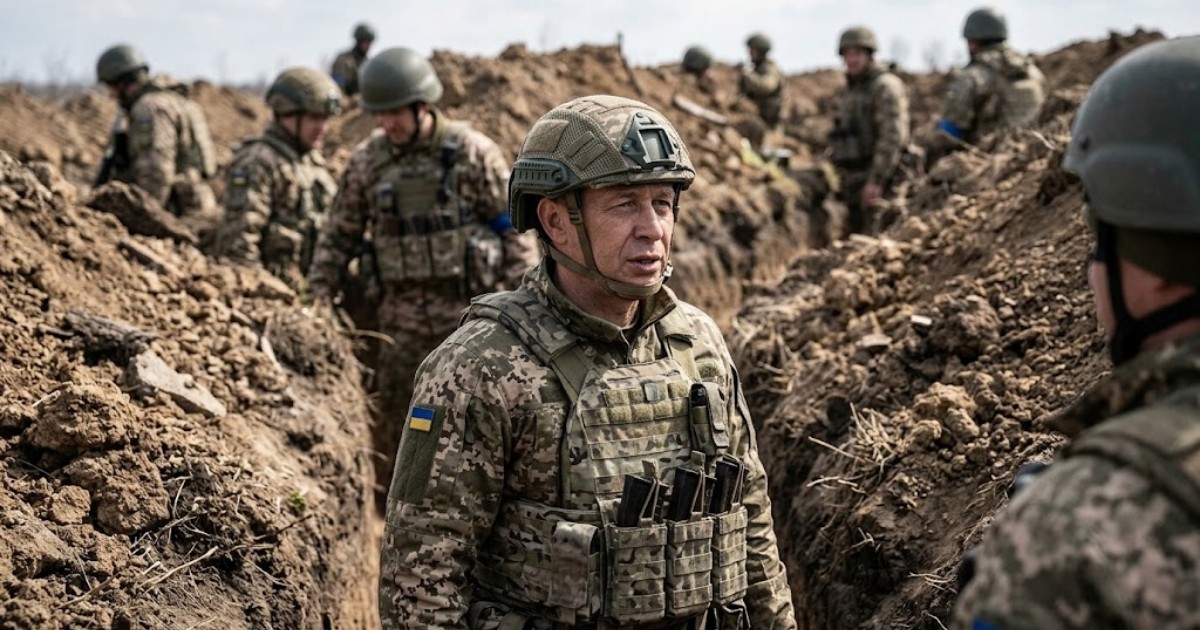
Russia`s offensive capability across the contact zone has been effectively broken, with the front line stabilising following unsustainable personnel losses incurred by Moscow, Ukraine`s former commander-in-chief Oleksandr Syrskyi has stated. The retired general made the remarks in his first major international interview since being removed from the country`s top military post earlier this year. He argued that the current static nature of the fighting reflects a deliberate strategy of attrition and targeted defensive maneuvers.
Moscow`s casualty count remains several times greater than Kyiv`s losses.
According to Syrskyi, Russia`s overall casualty tally in the ongoing war is six times larger than that of Ukraine, climbing up to eleven times higher when counting fatalities exclusively. Neither government releases verified official figures for combat deaths. Intelligence assessments from the United Kingdom suggest roughly half a million Russian soldiers have died since the full-scale conflict began in 2022, while Washington-based research from the Center for Strategic and International Studies estimates Ukrainian troop fatalities reached approximately 150,000 by mid-2026.
Territorial control data similarly illustrates the operational plateau currently dominating the front. Ukrainian records cite Russian forces capturing an aggregate of only 61 square kilometres across the opening six months of 2026. Independent assessments from the Institute for the Study of War corroborate this trajectory, noting that Moscow relinquished more physical terrain than it secured during counter-actions recorded in September 2026.
Syrskyi defended the contentious August 2024 Kursk cross-border operation.
Syrskyi assumed leadership of the armed forces in 2024, having previously earned recognition for the defense of Kyiv in 2022 and subsequent Kharkiv advances. President Volodymyr Zelensky removed him over the summer following prolonged friction with former defence minister Mykhailo Fedorov, culminating in public demonstrations before Maj Gen Mykhailo Drapatyi was appointed to the post.
The former commander explained that procurement decisions by the defence ministry triggered deep disagreements between military planners and civilian administrators. Syrskyi contended that excessive focus was directed toward aerial drones at the expense of crucial ground transports, pick-up trucks, and all-terrain motorcycles, leaving fighting formations under-resourced despite receiving only half of requested aerial drone units. Nevertheless, he emphasised that the establishment of the dedicated Unmanned Systems Forces occurred under his tenure, attributing 80 percent of Russian asset attrition directly to unmanned systems.
Addressing troop grievances regarding costly late withdrawals from eastern strongholds including Avdiivka and Vuhledar, Syrskyi acknowledged tactical strains while highlighting severe hardware imbalances. Moscow held an 18-to-one superiority in airframes and ordnance throughout 2025, supported by artillery stocks outmatching Ukraine two-and-a-half to one and a mobilisation pool of four million men. Warning of future escalation, Syrskyi called on European governments to abandon complacency and accelerate defense investments as military technology increasingly relies on automated systems and artificial intelligence.