Skyrocketing inflation is severely jeopardizing food security across households in conflict-hit Iran, according to new economic data released on Sunday. The sharp increase in prices comes as the country grapples with a deepening economic crisis exacerbated by military conflict and a US-enforced naval blockade. As the war launched by the United States and Israel intensifies, the purchasing power of ordinary Iranians has plunged, making even basic sustenance a luxury for many.
The Statistical Center of Iran (SCI) reported that Farvardin, the first month of the Persian calendar year ending on April 20, saw an inflation rate of 73.5 percent compared to the same month last year. The data indicates that the monthly inflation rate alone grew by five percent. Concurrently, the Central Bank of Iran, utilizing a different methodology, reported a 67 percent inflation rate for the same period. Regardless of the slight statistical variance, both figures place Iran among the countries with the highest inflation rates globally, leading to widespread impoverishment.
President Masoud Pezeshkian addressed a gathering of officials in Tehran on Sunday to discuss the urgent need for reconstruction. Pezeshkian called for national cohesion, stating that citizens must understand the restrictions and difficulties currently facing the country. He noted that while the path toward rebuilding damaged structures is arduous, the problems can be solved through cooperation and reliance on national unity. His comments highlight the government’s struggle to maintain domestic stability while managing a war-torn economy under severe international pressure.
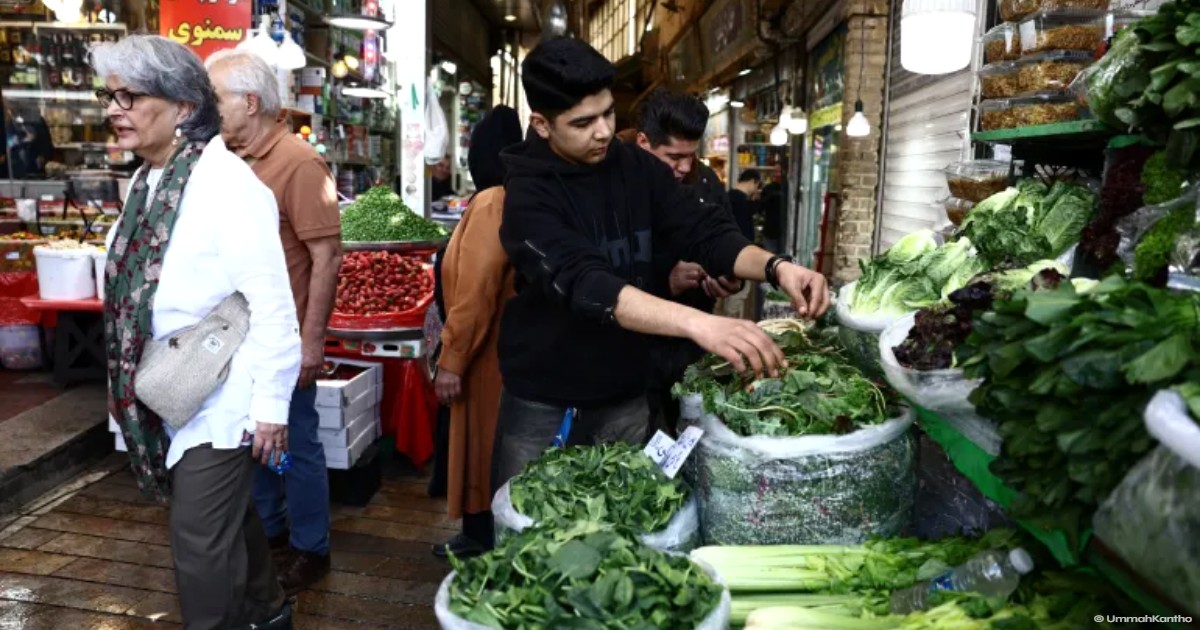
The daily reality for Iranians is increasingly grim. A resident of Tehran shared that she can no longer afford items that were accessible just a month ago, reflecting a sentiment shared by a majority of the population. The US-enforced naval blockade has severely restricted the import of essential goods, leading to shortages and further driving up the cost of fresh produce and imported commodities. The rapid devaluation of the national currency has only worsened the situation, leaving households unable to keep up with the pace of rising prices.
On the diplomatic front, efforts to de-escalate the conflict are moving forward with renewed intensity. The United Nations Security Council recently adopted a draft resolution submitted by Gulf countries. Meanwhile, Egypt has expressed readiness to host talks aimed at easing the regional tension. In a surprising development, Lebanese and Israeli ambassadors have reportedly begun direct negotiations in the United States. Despite these high-level diplomatic moves, the immediate concern for millions of Iranians remains the crushing weight of food inflation and the uncertainty of their next meal.