A fragile ceasefire in the US-Israel war on Iran is facing an existential threat as multiple Gulf nations reported a series of drone attacks within their territories. On Sunday, Qatar confirmed that a cargo ship was struck by a drone in its waters, causing a localized fire. Simultaneously, Kuwait and the United Arab Emirates (UAE) announced that they had successfully repelled hostile drone incursions into their respective airspaces. These incidents have placed immense pressure on the truce that has been in effect since April 8, following the outbreak of hostilities on February 28, 2026.
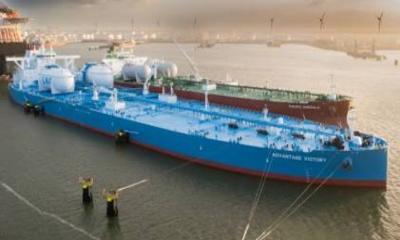
The Qatari Ministry of Defence provided details on the maritime incident, stating that a freighter arriving from Abu Dhabi was targeted northeast of Mesaieed Port. While the drone strike ignited a fire on the vessel, the ministry confirmed that the crew managed to bring the situation under control, allowing the ship to complete its journey. The United Kingdom Maritime Trade Operations (UKMTO) echoed these reports, noting that a bulk carrier was hit by an "unknown projectile." Fortunately, no casualties or significant environmental damages were reported from the scene.
In Kuwait, the military was placed on high alert as "hostile drones" were detected in national airspace at dawn. A spokesperson for the Kuwaiti Defence Ministry stated on social media that the threats were neutralized in accordance with established defense protocols, though the point of origin for these drones was not specified. However, the UAE was more direct in its assessment, claiming its air defense systems intercepted two unmanned aerial vehicles (UAVs) launched from Iranian territory. This follows previous claims by the UAE of missile and drone attacks attributed to the Islamic Revolutionary Guard Corps (IRGC).
The political landscape surrounding the conflict remains volatile. While the Trump administration maintains that the ceasefire is technically still in effect, a clandestine naval battle appears to be unfolding across the Persian Gulf. The United States continues to enforce a strict naval blockade on Iranian ports, while Tehran has severely restricted traffic through the strategic Strait of Hormuz. Just last Friday, US forces targeted two Iranian oil tankers, alleging they were attempting to breach the blockade.
Tehran’s response to these developments has been one of defiance. The IRGC Navy reiterated its warning on Sunday, stating that any further aggression against Iranian commercial vessels would be met with a "heavy assault" on US military bases in the region. Ebrahim Rezaei, a spokesperson for the Iranian parliament’s foreign policy committee, stated that Iran’s period of restraint is over. He warned that the "clock is ticking" against American interests and advised Washington to concede to a new regional order. As the war of words intensifies alongside physical skirmishes, the stability of the global energy market and regional security hangs in a delicate balance.