Spain has launched a high-stakes evacuation of passengers from the MS Hondius, a cruise ship currently anchored off Tenerife in the Canary Islands following a deadly hantavirus outbreak. According to Reuters, the operation began before dawn on Sunday as the vessel pulled into the port of Granadilla. Health Minister Mónica García confirmed that the evacuation is proceeding under strict medical protocols, noting that all passengers currently on board remain asymptomatic.
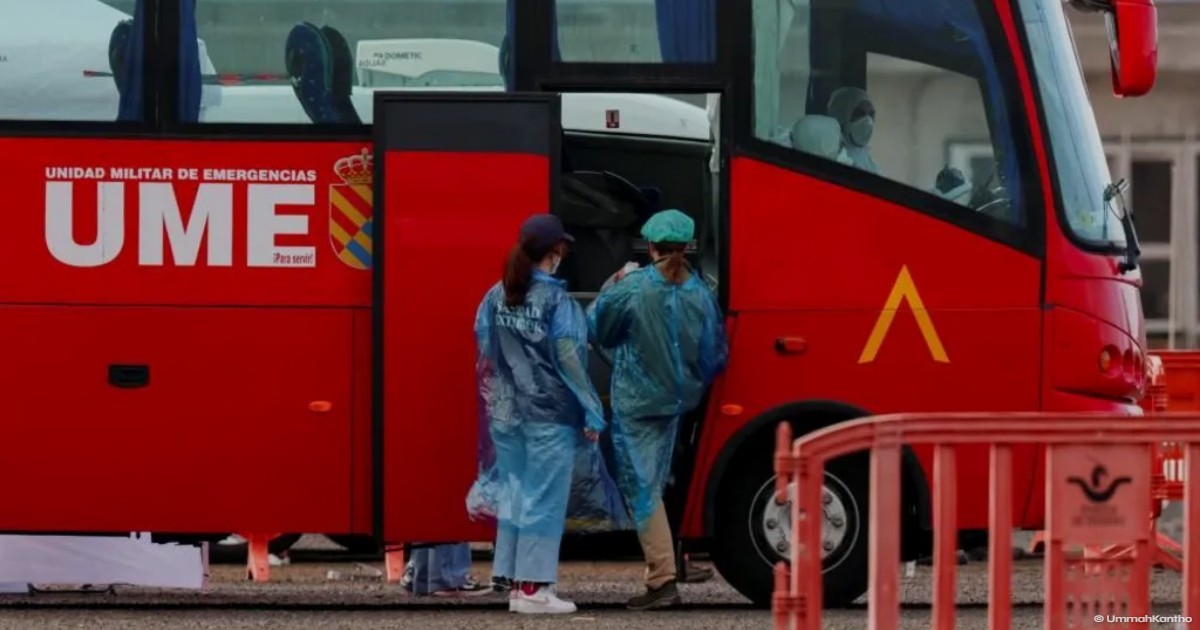
The scene at the port is one of intense precision and security. Passengers wearing white medical face masks were seen on the ship’s decks as the first group, consisting of 14 Spanish nationals, was ferried to shore. Upon reaching land, they were met by officials dressed in full-body protective suits. These passengers are being grouped by nationality and transported by bus to the local airport, where charter planes wait to repatriate them to their respective home countries. Following the Spanish group, citizens from the Netherlands, Greece, and Germany are scheduled for departure, with UK and US flights to follow.
This complex operation is aimed at containing the rare Andes strain of the hantavirus, which is unique for its ability to pass between humans. Spain’s health minister described the logistical effort as "unprecedented" but urged the public to remain calm, stating that the risk of contagion to the general population is exceptionally low. To ensure maximum safety, a security perimeter of one nautical mile has been enforced around the vessel, preventing unauthorized access while the transfer takes place.
Medical facilities on the island have been put on high alert. At the Candelaria hospital in Tenerife, dozens of intensive care specialists are on standby, and a specialized isolation unit equipped with ventilators and testing kits has been prepared. Dr. Mar Martin, a chief intensive care physician, stated that while the local medical community has not encountered this specific virus before, they are fully trained and equipped to manage potential complications. The virus is known to have an incubation period of up to nine weeks, making the monitoring process a long-term commitment.
The World Health Organization (WHO) has taken a direct interest in the situation, with Director-General Tedros Adhanom Ghebreyesus arriving in Tenerife to personally oversee the disembarkation process. Tedros praised the Spanish authorities for their "solid and effective" response to the crisis. The outbreak has been linked to a site in southern Argentina where rodents carry the virus. While three passengers have tragically died since the ship’s journey began, the current evacuation focuses on ensuring the safety of the remaining 100 passengers and crew. British passengers are expected to undergo isolation on the Wirral upon their return to the UK, while Spanish citizens will be quarantined at the Gomez Ulla military hospital in Madrid.