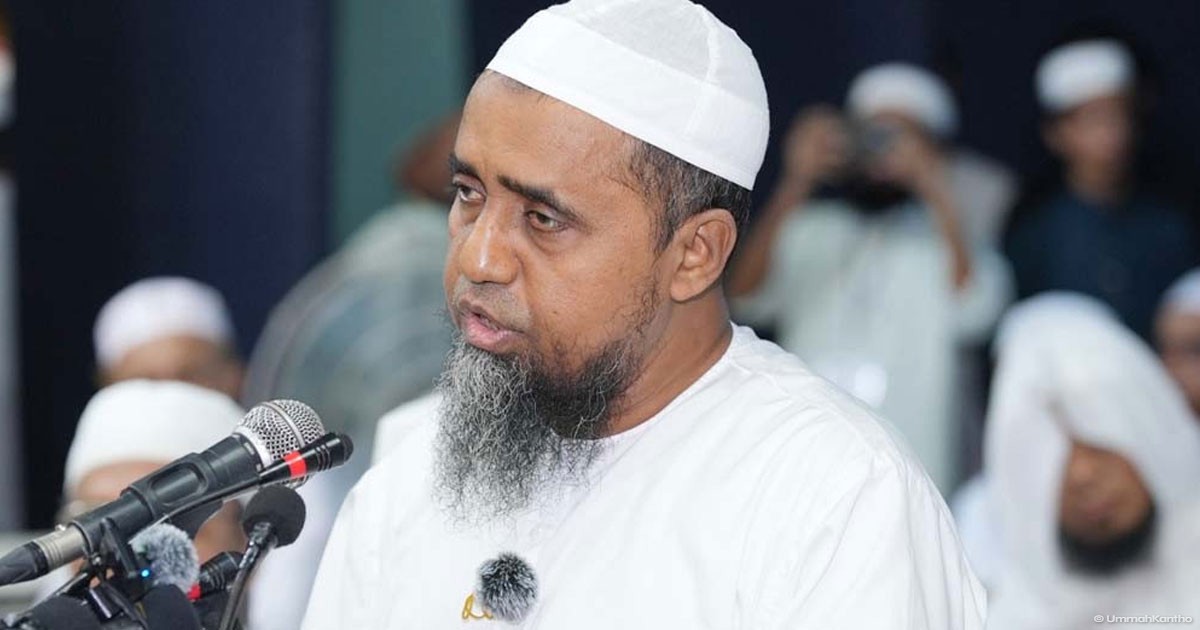
Mufti Abdul Malek, the Khatib of the National Mosque Baitul Mukarram, has characterized the demand for observing Ramadan and Eid on the same day globally as groundless from both religious and scientific perspectives. Speaking at a national seminar held on Saturday, May 9, 2026, at the Engineers Institution Bangladesh (IEB) auditorium in Dhaka, the senior cleric provided a detailed explanation regarding the Shariah requirements for Islamic months. He asserted that according to Islamic jurisprudence, the beginning of a lunar month is strictly based on the physical sighting of the new crescent or reliable testimonies, rather than astronomical calculations aimed at global uniformity.
The Khatib emphasized that replacing the traditional method of moon sighting with an astronomically predetermined calendar constitutes an interference with established Shariah principles. He argued that for Muslims, Eid is not merely a social festival or a celebration but a significant act of worship, known as Ibadah. As an act of worship, it must be governed by the methods demonstrated by Prophet Muhammad (peace be upon him). According to his assessment, if the moon is not sighted locally or in a verifiable manner, the current month must be completed to 30 days, as prescribed by Islamic law.
Addressing the situation in Bangladesh, Mufti Abdul Malek noted that the country has long followed the decisions of the National Moon Sighting Committee. This system is supported by the vast majority of local scholars and has ensured a sense of order and unity within the nation for decades. He warned that moving away from this established tradition could lead to unnecessary confusion and social fragmentation. The Khatib also pointed out the scientific reality of different time zones and geographical locations, which naturally results in the moon being visible at different times in different parts of the world. Therefore, forcing a single day for Eid across the globe contradicts both nature and science.
The seminar was chaired by Mufti Mahmudul Hasan and attended by leading Islamic scholars and researchers from across the country. Many speakers echoed the Khatib`s sentiments, stating that the local sighting of the moon remains the most authentic way to preserve the integrity of Islamic rituals. They collectively argued that the pursuit of a unified global date should not come at the expense of following the prophetic traditions. Scholars at the event also mentioned that while modern technology can assist in moon sighting, it should only serve as a secondary tool and not replace the primary requirement of physical observation or reliable witnessing.
In his concluding remarks, Mufti Abdul Malek urged the religious community to stay vigilant against ideologies that seek to reform fundamental Islamic practices without proper Shariah backing. He stressed the importance of educating the younger generation about the logical and religious foundations of Islamic calendar systems to prevent them from being swayed by online debates. The seminar concluded with a consensus among the attendees to continue following the current moon-sighting protocols in Bangladesh, viewing them as the most reliable and religiously sound method for the community. This announcement is expected to have a significant impact on upcoming religious observances in the country.