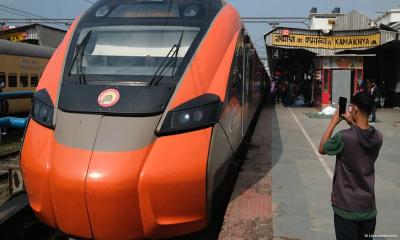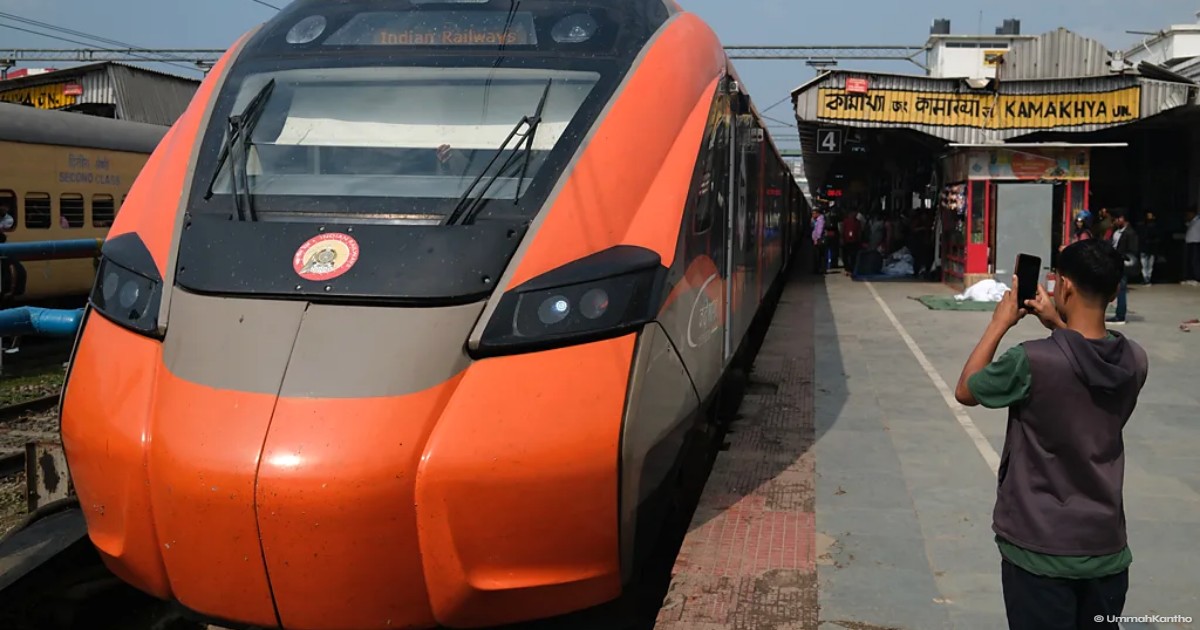
The atmosphere at Kolkata’s Howrah Junction station was electric despite the torrential rain lashing against the platforms. As lightning flickered above, passengers and onlookers were not deterred. Instead, they crowded around platform six, maneuvering their smartphones to capture the perfect selfie with the sleek, orange, black, and grey machine that has become a national phenomenon. This is the Vande Bharat Express sleeper train, the latest addition to the fleet of Indian Railways, representing a significant shift in the country`s transportation narrative.
Launched in January 2026, this is the first sleeper variant in the semi-high-speed Vande Bharat series. Since the chair-car versions debuted in 2019, they have been a source of national pride, but the introduction of sleeper coaches was what many long-distance travelers had been waiting for. Even months after its inauguration, the excitement remains palpable. The 823 berths on the Kolkata-Guwahati route are consistently booked out weeks in advance, proving that there is a massive appetite for premium rail travel in the world’s most populous nation.
The name Vande Bharat translates to Salute to India in Sanskrit. Designed and manufactured entirely within the country under the "Make in India" initiative, the train serves as a showcase of indigenous engineering. It features an aerodynamic nose reminiscent of bullet trains, automatic sliding doors, and modular interiors that feel lightyears ahead of the aging stock traditionally seen on Indian tracks. Media outlets like The Times of India have described the sleeper carriages as stunning and swanky, adjectives rarely associated with long-distance rail journeys in South Asia.
Analyzing the economics of the journey provides insight into who this service is designed for. Tickets for the full 14-hour route between Kolkata and Guwahati are priced strategically. A third-class berth costs approximately 2,400 rupees, offering an open-plan compartment shared by six people. Second-class tickets, which include curtains for privacy in four-berth sections, are priced at 3,100 rupees. For those seeking maximum comfort, the first-class cabins cost 3,800 rupees, offering a closed-off environment shared with three others.
This price point is a subject of debate. With India’s average monthly wage hovering around 21,000 rupees, the fare for even the cheapest berth is quite high for a significant portion of the population. Consequently, the train is largely positioned as a high-end alternative for business travelers and upper-middle-class tourists who might otherwise choose domestic flights. The train cuts down the travel time from 18 hours on older expresses to just 14, making it a viable competitor to aviation when considering airport commute times and security checks.
Beyond business, the route holds immense cultural and religious significance. Guwahati is the location of the hilltop Kamakhya Temple, one of the most revered Hindu pilgrimage sites in India. The temple draws millions of devotees annually, and the new sleeper service provides a dignified and comfortable way for pilgrims to travel from West Bengal and beyond. The train also acts as a vital bridge to the Northeast, a region that has historically faced connectivity challenges compared to the rest of the country.
For international and domestic tourists alike, the train serves as a gateway to some of India`s most breathtaking landscapes. It stops at New Jalpaiguri Junction, the primary access point for the world-famous tea gardens of Darjeeling. From Guwahati, travelers can easily reach Shillong, often referred to as the "Scotland of the East" due to its rolling hills and waterfalls. The proximity to the Pobitora Wildlife Sanctuary, home to the endangered one-horned rhinoceros, adds further appeal for nature enthusiasts.
Inside the train, the attention to detail is evident. The berths are designed with improved ergonomics, featuring better cushioning and integrated reading lights. The bio-toilets are cleaner and more modern than those on standard trains, and the overall noise levels inside the coaches have been significantly reduced. These improvements aim to address the long-standing complaints about the quality of sleeper travel in India, where hygiene and comfort have often been compromised.
While the Vande Bharat sleeper is a triumph of engineering, the challenge lies in its expansion. The Indian government plans to roll out dozens more of these trains across various long-distance routes, such as Delhi to Mumbai and Bangalore to Chennai. However, maintaining the high standards of cleanliness and technical efficiency on a massive scale remains a daunting task for the railway authorities. There are also concerns about whether the focus on premium trains might lead to the neglect of the affordable, non-air-conditioned services that millions of low-income citizens rely on daily.
Ultimately, the Vande Bharat Sleeper Express is more than just a train; it is a symbol of a changing India. It represents an aspiration to move away from the image of overcrowded, slow-moving rail networks toward a future of speed, efficiency, and modern design. As it glides through the lush green landscapes of West Bengal and Assam, it carries with it the hopes of a nation striving to modernize its infrastructure. Whether it can maintain its luster in the face of heavy usage remains to be seen, but for now, it is the undisputed star of the Indian tracks.