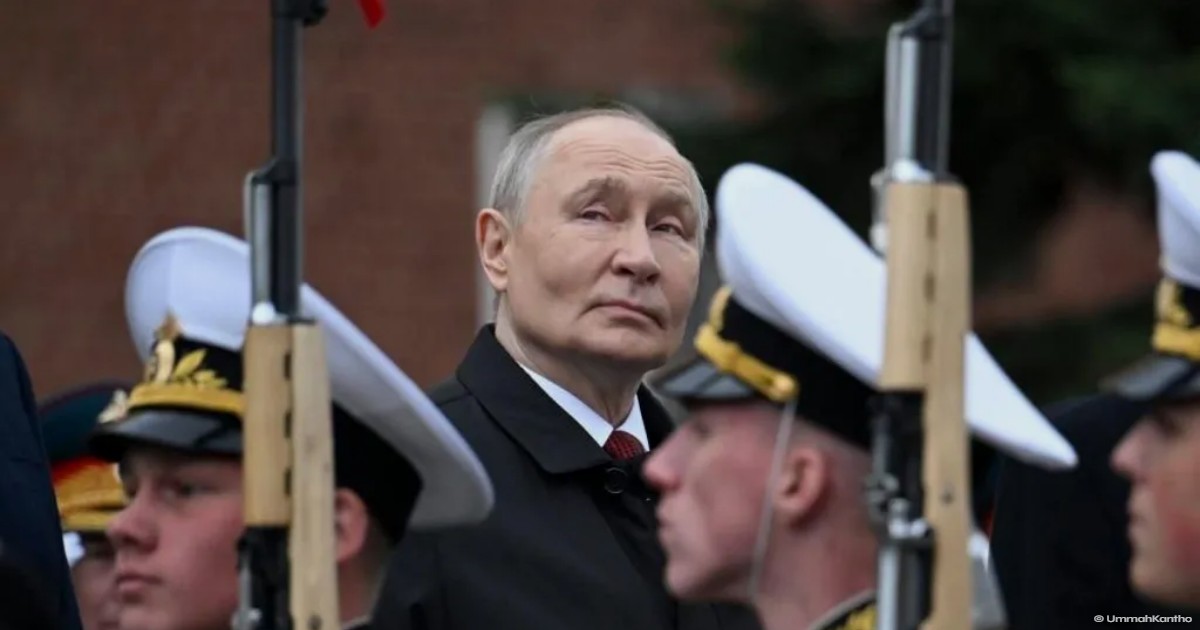
Russian President Vladimir Putin utilized his annual Victory Day address in Moscow’s Red Square on Saturday to launch a sharp critique of the NATO alliance. Speaking before hundreds of military personnel to mark the 81st anniversary of the Soviet victory over Nazi Germany, Putin described the ongoing conflict in Ukraine as a "just" struggle. According to reports from the BBC, the Russian leader characterized Ukraine as an "aggressive force" that remains supported and armed by the collective strength of NATO.
The 2026 celebrations appeared notably more modest compared to previous years. For the first time in recent history, the traditional display of heavy armored vehicles and ballistic missiles was absent from the Red Square parade. Instead, the event focused on marching infantry units under heightened security protocols. While the atmosphere remained solemn, Russian fighter jets performed a flyover, painting the sky with the national colors. The scaled-back nature of the event reflects the shifting priorities and security concerns as the conflict in Ukraine continues.
What made this year`s parade particularly significant was the context of a fragile three-day ceasefire. Announced on Friday by U.S. President Donald Trump, the truce was intended to provide a window of calm for the national holiday. However, immediately following the ceremony, the Russian Defense Ministry accused Ukrainian forces of violating the agreement. Reuters noted that the Kremlin did not provide specific details regarding the alleged breach, and there has been no official response from Kyiv at this time.
In his speech, Putin drew parallels between the sacrifices made during World War II and the current military operations. He stated that the "great feat of the generation of victors" continues to inspire soldiers on the front lines today. Beyond the military aspect, the President praised the resilience of Russian citizens, including scientists, doctors, and teachers, asserting that the future of the nation rests in the hands of its people regardless of changing military tactics.
The international attendance at the event was noticeably thinner than in previous years. High-profile guests included Belarus’s Alexander Lukashenko, the King of Malaysia, and the President of Uzbekistan. Notably, Slovak Prime Minister Robert Fico was the only European Union representative present. In a significant shift in military cooperation, North Korean soldiers were also seen participating in the march. Similar, albeit smaller, celebrations took place across Russia’s vast territory, from Vladivostok to St. Petersburg, though many regions opted for virtual commemorations due to ongoing security threats.