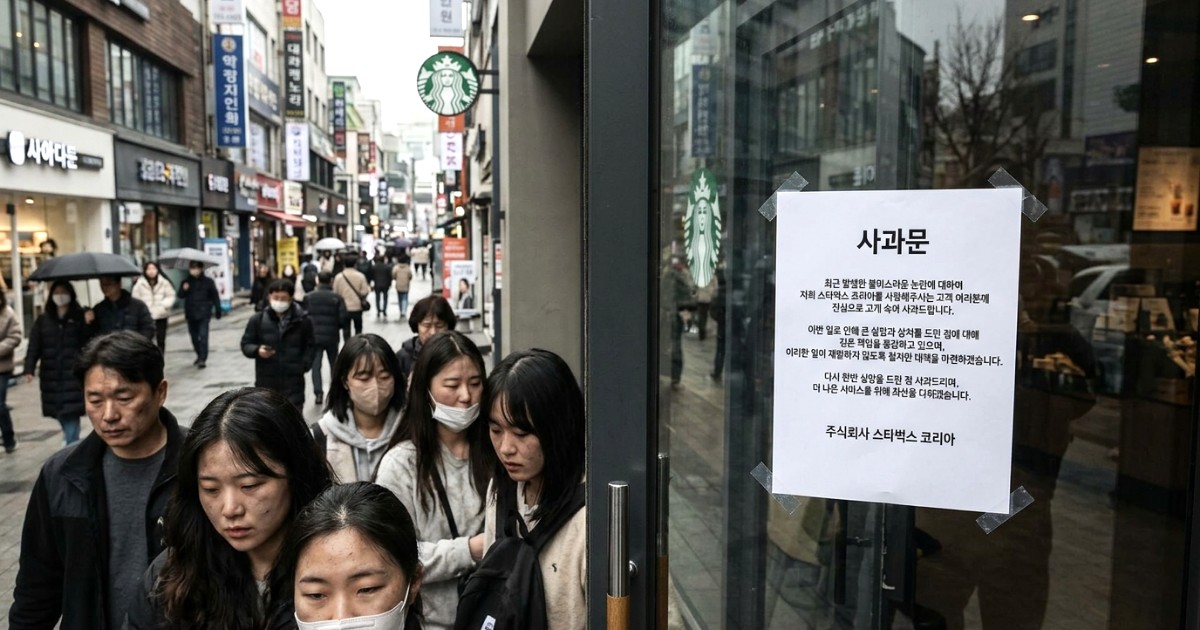
The corporate branch of Starbucks Korea has abruptly dismissed its chief executive officer following immense public outrage over an insensitive marketing campaign. The administrative fallout occurred mere hours after the brand launched a specialized drink tumbler promotion titled "Tank Day" on a highly sensitive national anniversary. The immediate public backlash triggered a synchronized call for a nationwide consumer boycott against the multi-billion-dollar beverage franchise.
South Korean President Lee Jae Myung led the condemnation, labeling the corporate strategy an insult to historic democratic struggle.
The commercial promotion directly coincided with the official anniversary of the 1980 Gwangju Uprising, a foundational pro-democracy movement that was violently suppressed by the ruling military junta. The deployment of army tanks to crush civilian demonstrators in Gwangju remains a profound source of national trauma across South Korea. By utilizing the specific English phrase "Tank Day" to promote large-capacity beverage containers, the marketing division inadvertently evoked memories of the military vehicles sent to subjugate local populations. Recognizing the severity of the misstep, executives pulled the advertisement within hours of its digital publication.
Shinsegae Group, the massive domestic conglomerate that maintains the controlling majority stake in the regional coffee franchise, issued a formal apology. The parent entity characterized the promotion as inappropriate marketing and confirmed the immediate removal of Starbucks Korea Chief Executive Sohn Jeong-hyun. Concurrently, the international headquarters of the corporation located in the United States released a separate statement expressing deep regret over the pain caused to the victims` families. The overseas executive board acknowledged that while entirely unintentional, the problematic campaign should never have passed internal review mechanisms.
Online public forums quickly became saturated with intense criticism from citizens who interpreted the promotional vocabulary as a callous commercial gimmick. Historians note that the Gwangju massacres resulted in the deaths of hundreds of peaceful demonstrators under the dictatorial regime of Chun Doo-hwan. The historical date remains a heavily protected memory in South Korean public life, frequently commemorated through cinema, television, and annual state ceremonies. Consequently, utilizing the tragic backdrop for standard corporate capitalism provoked immediate bipartisan denunciation from political figures.
Furthermore, regional analysts observed that the promotional material included specific linguistic double entendres that recalled a separate 1987 police torture scandal. The inclusion of the phrase "tak on the table" inadvertently mimicked historical cover-up statements used by military-era investigators to explain away the custody death of a prominent student activist. Shinsegae Group Chairman Chung Yong-jin explicitly stated that the marketing campaign was an inexcusable mistake that trivialized the immense sacrifices made for the nation`s democratization. Despite the sweep of swift dismissals, social media networks continue to mobilize coordinated boycott actions against all linked subsidiaries.