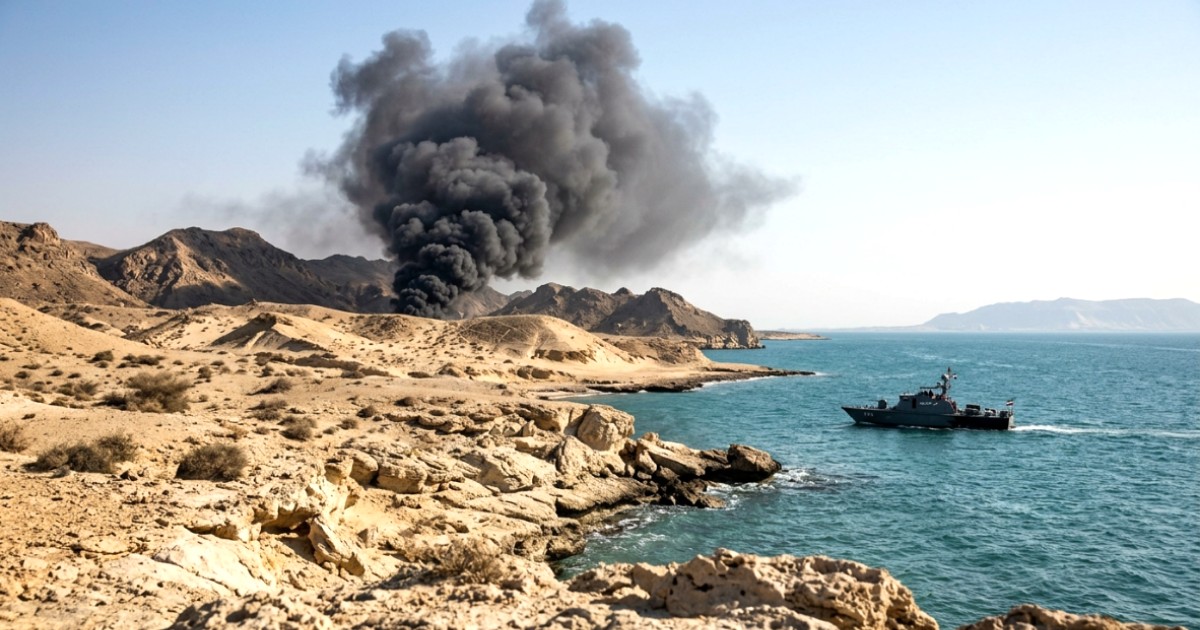
A powerful explosion has been reported across Iran’s strategically vital Qeshm Island, positioned directly at the entry bottleneck of the volatile Strait of Hormuz. The sudden blast within a high-security military zone triggered widespread international concern regarding potential unilateral strikes from the United States or regional adversaries. However, Iran`s semi-official Tasnim News Agency rapidly citing armed forces commands confirmed that the incident did not stem from external aggression or a functional technical disaster.
The localized detonations were caused by the controlled disposal of unexploded legacy munitions.
According to regional administrative statements, defense technicians initiated the controlled disposal of unexploded ordnance originally deposited during previous military confrontations. While local media networks first broadcasted reports of the loud acoustic reverberation, their initial inability to isolate the operational catalyst generated transient geopolitical panic across global shipping tracking rings. The island, located a few kilometers outside the primary port hub of Bandar Abbas, houses extensive radar stations and air defense systems managed by the Islamic Revolutionary Guard Corps.
The tactical maintenance comes amidst separate reports published by Western outlets indicating that the Pentagon has engineered operational contingencies to seize crucial Iranian maritime positions if direct warfare re-emerges. These strategic assessments specifically designate Qeshm and Kharg islands as high-value interception targets to neutralize the state`s capacity to bottleneck international crude oil transit lines. Because the regional security baseline remains tightly coupled with global energy markets, any structural anomaly across the coastal parameters draws immediate scrutiny from international naval tracking forces.