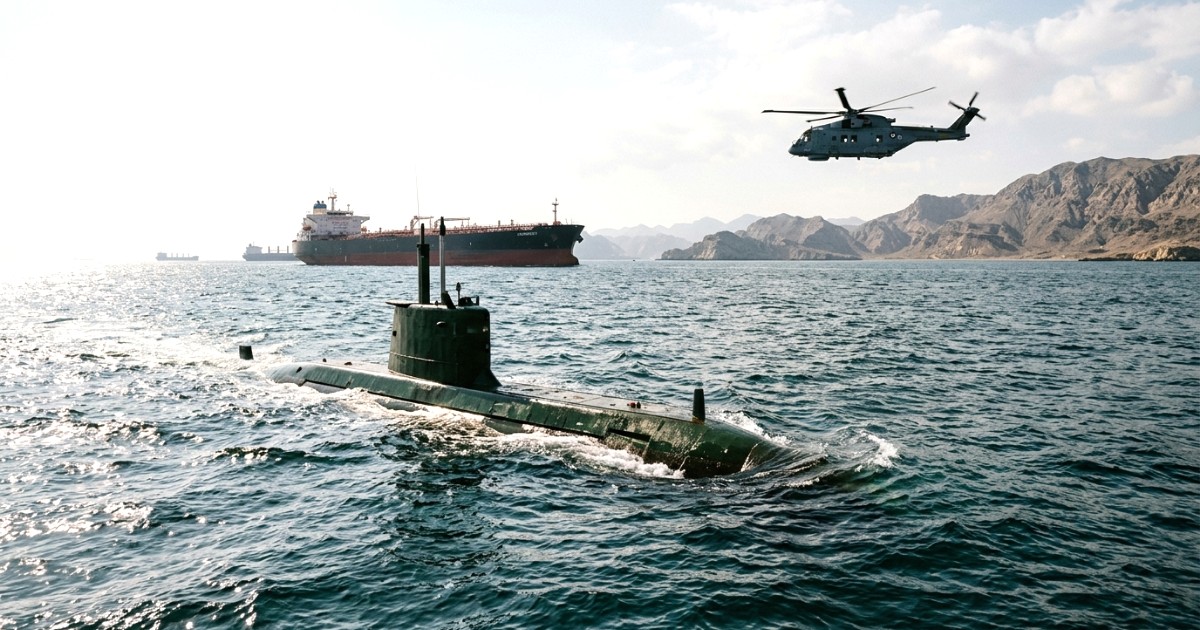
The strategic shipping corridors of the Strait of Hormuz have entered a state of intense naval alert following the deployment of specialized underwater warfare assets by regional military forces. The Islamic Republic of Iran Navy has formally stationed its stealthy "Ghadir" class diesel-electric mini-submarines directly within the busy commercial transit lanes. Rear Admiral Shahram Irani, the top commander of the state’s regular naval forces, publicly characterized these compact vessels as the "dolphins of the Persian Gulf" during a regional briefing.
The quiet mobilization introduces a highly lethal underwater variable into an already contested international choke point.
The state currently maintains an active fleet of approximately twenty of these specialized compact vessels, which are structurally distinct from the fast attack surface craft operated by parallel paramilitary units. Measuring just twenty-nine meters in length and displacing roughly one hundred fifty tons, each craft operates with a minimal crew complement of seven personnel. Despite their small dimension, these mini-subs can maintain standard underwater operations for up to ten days, frequently sitting motionless on the seabed to preserve battery reserves. Each vessel carries two heavyweight torpedoes and a full complement of sea mines, giving them the structural capacity to entirely sink large commercial cargo carriers with a single strike.
Former Western naval commanders who previously directed anti-submarine operations for coalition carrier strike groups note that these vessels are exceptionally difficult to track once deployed to the open sea. Historical intelligence gathering executed by nuclear-powered attack submarines like HMS Turbulent confirmed that the Iranian units do not operate as isolated entities, but rather coordinate their tactical patterns in tight formations. The micro-submarines routinely travel just below the surface water level as semi-submerged vessels, allowing them to run their quiet diesel engines to refresh batteries while keeping their visual and acoustic profiles minimal. Their specific marine hull coloration allows them to blend flawlessly into the native coastal environment, frustrating conventional airborne radar sweeps.
Neutralizing these highly localized underwater targets within shallow littoral zones presents immense technical challenges for standard international frigate flotillas. Traditional air-dropped lightweight torpedoes frequently suffer tracking failures or premature detonations due to the narrow target dimensions and proximity to the shallow marine floor. To counter these specific structural constraints, maritime defense squads must rely on older tactical configurations, including main gun bombardments or traditional depth charge patterns. However, the non-nuclear Iranian craft possess clear operational limits, as increased tactical speed dramatically accelerates their battery depletion and forces the hull to surface for air intake.
The modern deployment pattern suggests that the Ghadir units could be stationed within the shallow waters off the coast of Oman to intercept commercial shipping lines seeking to bypass surface drone and missile corridors. While standard coalition warships possess advanced anti-missile defense shields to neutralize surface-to-surface aerial threats, localized miniature submarines remain the single most volatile threat to regional freedom of navigation. Even if the state`s official declarations regarding active deployments incorporate an element of strategic misinformation, the psychological deterrent effect successfully complicates corporate maritime insurance parameters across the globe.