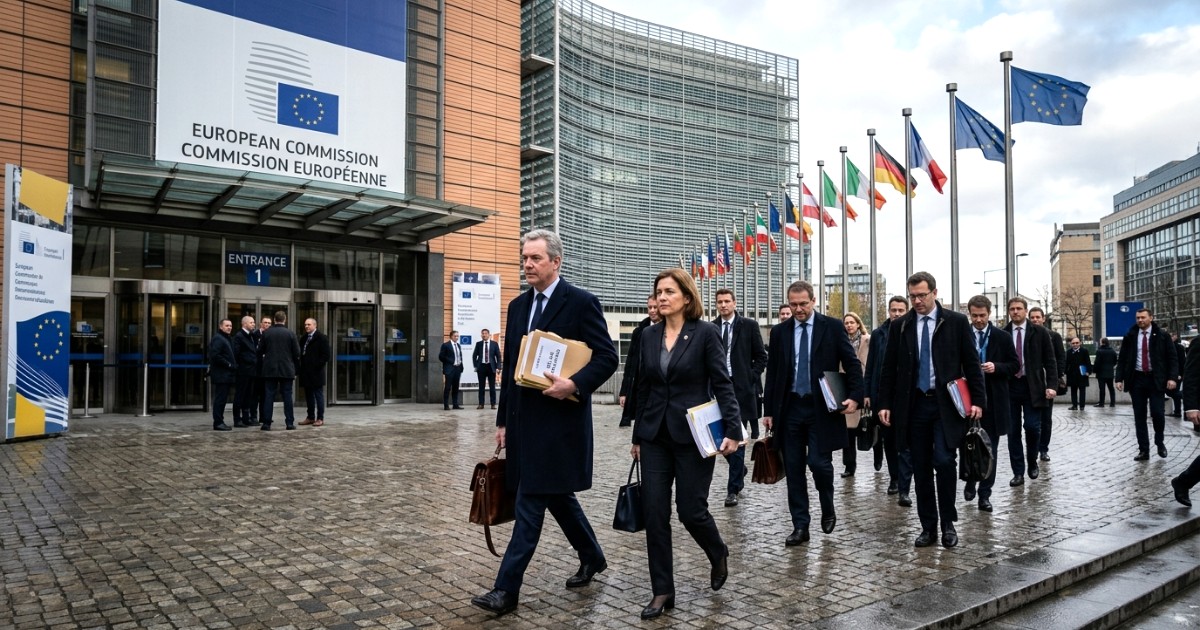
The European Union would require the United Kingdom to contribute billions of pounds in annual membership fees to secure reentry into the continental trading bloc. Ten years after the historic Brexit referendum, senior diplomatic officials confirmed that any return to the trading union would require accepting standard regulatory terms without previous exceptional treatments. The administrative warning comes as domestic political shifts renew public discourse regarding closer long-term alignment with continental structures.
Sir Julian King, the final British representative to serve within the European Commission, emphasized that special exemptions are completely off the table.
King noted that any formal application for Britain to rejoin EU networks would mandate the complete abandonment of the historic financial rebate originally negotiated by Margaret Thatcher in 1984. Without the structural protection of that mechanism, the British treasury would be forced to deploy at least five billion pounds more each year than its pre-Brexit membership baseline. While European Parliament President Roberta Metsola stated that the institutional door remains open to the United Kingdom, continental lawyers reiterate that reentry necessitates accepting the core tenets of the single market. This foundational criteria explicitly includes the restoration of the free movement of persons across domestic borders and substantial net contributions to the joint European budget.
The prospect of surrendering legacy opt-outs has drawn cautionary statements from senior political figures who initially opposed the 2016 departure. Former Europe Minister Sir David Lidington observed that while he views Brexit as a significant act of self-harm, returning on standard modern terms remains a massive political hurdle. During the UK`s previous tenure, the state maintained critical exemptions regarding the adoption of the single Euro currency, participation in the passport-free Schengen zone, and specific asylum frameworks. Because no external nation has ever successfully secured customized institutional opt-outs prior to joining the modern bloc, Brussels remains highly unlikely to grant special favors that could disrupt parallel integration tracks for newer candidate countries.
The financial scale of the membership fee has expanded significantly since London`s official departure in 2020. At the point of exit, the bloc`s seven-year collective financing framework was established at approximately one trillion euros. However, modern proposals for the upcoming 2028–2034 financial cycle are tracking closer to two trillion euros, meaning any recalculated British baseline contribution would likely double its previous departure metric. The original rebate system was designed by Thatcher to remedy imbalances where British agricultural sectors received minimal subsidies relative to their massive economic inputs. The mechanism successfully refunded close to sixty-six percent of the variance, saving the domestic economy up to five point six billion pounds annually.
The ongoing political friction has complicated regional electoral strategies as various factions evaluate long-term geopolitical re-alignment. Prime Minister Sir Keir Starmer has downplayed the immediate feasibility of a membership vote, suggesting that any definitive debate regarding a full structural return remains years down the line. Down Street remains focused on negotiating a strategic relationship reset deal with Brussels ahead of an international summit scheduled for July. The immediate diplomatic objectives center on establishing targeted youth mobility frameworks, streamlining agri-food trade protocols, and coordinating defense aid packages for eastern European corridors. While regional allies like the Irish government have voiced verbal support for an eventual British return, the immense underlying fiscal demands ensure that any real integration remains a distant fiscal reality.