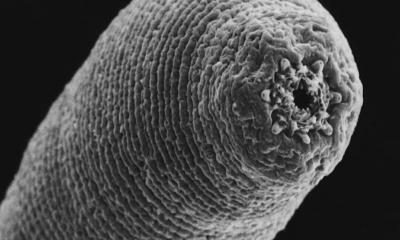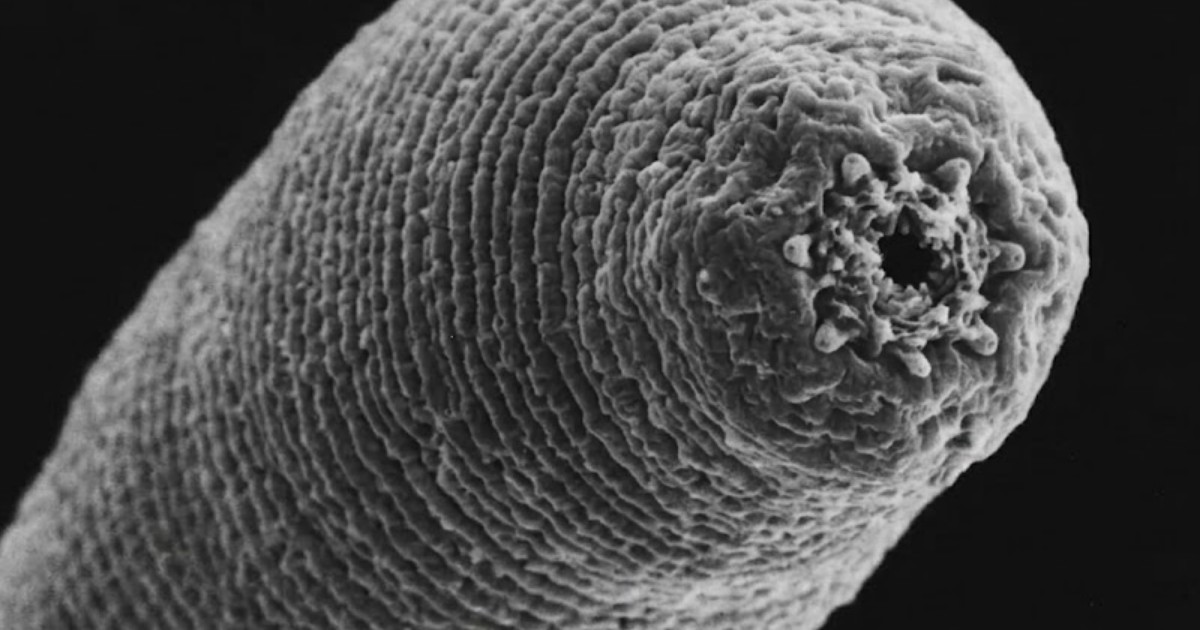
Scientists have discovered the deepest-living animal known to date, a microscopic nematode dubbed the devil worm, residing more than a kilometer beneath the Earth`s surface in South Africa, according to BBC News and scientific reports. The groundbreaking discovery challenges previous biological assumptions about where multicellular life can survive, proving that complex organisms can thrive in extreme subterranean environments completely devoid of sunlight and oxygen.
The tiny creature, scientifically named Halicephalobus mephisto, was found 1.3 kilometers, or 0.8 miles, underground in the Beatrix gold mine. Researchers reported that the environment at this extreme depth is intensely hostile, with groundwater temperatures reaching approximately 37 degrees Celsius. Despite the torrid conditions, the worm survives by grazing on the vast bacterial mats that grow along the subterranean rock walls.
Belgian researcher Gaetan Borgonie, founder of the Extreme Life Isyensya institute, spearheaded the ambitious underground expedition. For decades, conventional science maintained that animal life could not exist further than a few dozen centimeters below the topsoil. Borgonie, however, suspected that resilient organisms like nematodes might adapt to deeper zones. His team filtered more than 6,000 liters of hot groundwater from deep boreholes in the mine before finally capturing a single devil worm.
The discovery of this lone specimen proved exceptionally fortunate for the research team. During the extensive water filtration process, the worm`s tail was damaged, which typically constitutes a fatal injury for a nematode. However, the captured individual was a parthenogenetic female, meaning she could reproduce without needing a mate. Before dying, she laid eight viable eggs, allowing scientists to cultivate generations of her offspring in laboratory settings.
Researchers studying the descendants, including genomics expert John Bracht at American University, have observed unique survival adaptations. Unlike related surface-dwelling species that thrive at cooler temperatures, the devil worm favors extreme heat. It reproduces rapidly at 37 degrees Celsius, a temperature that would easily kill many common surface nematodes. Instead of swimming freely, the devil worm prefers to anchor itself firmly to surfaces, an evolutionary trait likely developed to avoid being washed away in strong subterranean water flows.
The discovery represents a seismic shift in subsurface biology. Most biologists previously assumed that the crush of pressure and the total absence of light made complex life impossible at such extreme depths. Instead, researchers found an entire Lilliputian ecosystem operating entirely independent of the surface world. When the microscopic worms eventually die, they are consumed by the same bacterial mats they once fed on, continuing a strange cycle of life completely isolated from the sun.
The existence of Halicephalobus mephisto has forced the scientific community to reconsider the absolute limits of biology. This resilience echoes previous biological findings; for instance, nematodes were the only known survivors when the space shuttle Columbia disintegrated upon reentry in 2003, falling 64 kilometers to Earth. What remains unclear is how far down into the Earth`s crust this deep biosphere extends, and whether similar organisms might be hiding in the extreme environments of other planets.