According to reports from Al Jazeera and AP News, the world football governing body has confirmed that FIFA charges Argentina, several prominent players, and coaching staff following chaotic scenes after their defeat in the 2026 World Cup final. The extensive disciplinary proceedings aim to address severe misconduct from the national team, which marred the conclusion of the prestigious international tournament.
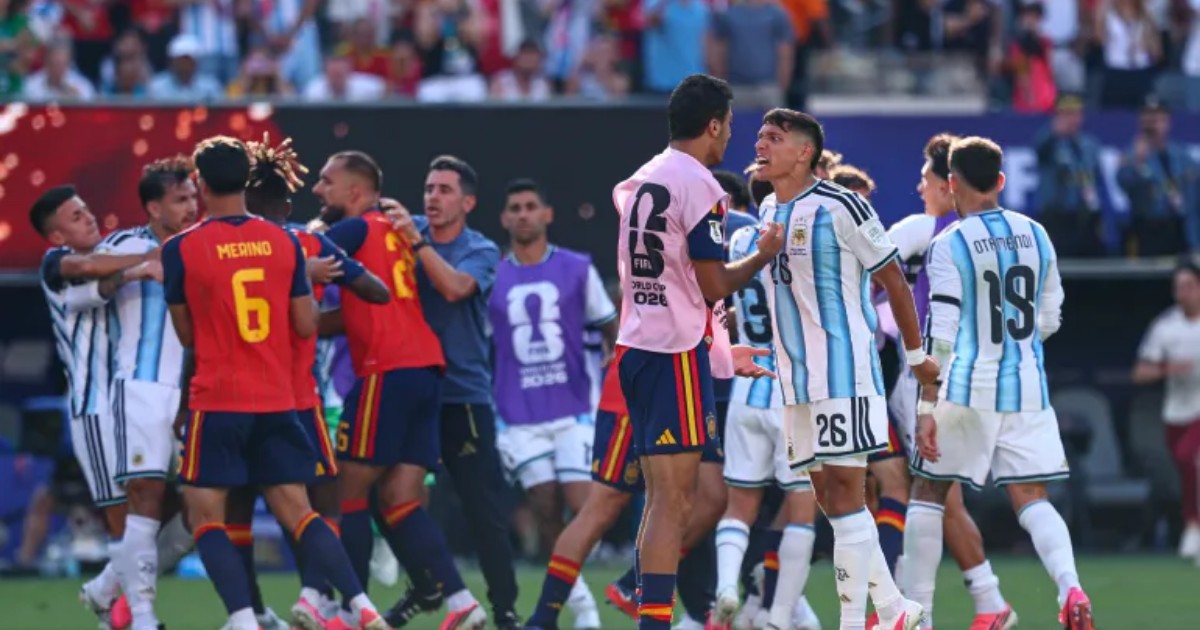
The most serious charges stem from a massive post-match altercation that erupted immediately after Argentina lost 1-0 to Spain in extra time. The highly anticipated final, which took place on July 19 at the New York New Jersey Stadium, saw a struggling Argentine side fail to register a single shot on target. The frustration evidently boiled over at the final whistle when several Argentine players physically confronted the celebrating Spanish squad, turning a poor sporting performance into an unprecedented display of on-field indiscipline.
Midfielder Leandro Paredes faces the most severe disciplinary action from the governing body. According to the official charging documents, Paredes has been cited with three counts of assault under Article 14 of the FIFA Disciplinary Code. During the extensive melee, he allegedly grabbed Spanish defender Eric Garcia by the throat and violently shoved teenage midfielder Gavi to the ground, resulting in a red card. Defender Nahuel Molina has also been heavily implicated, facing two counts of assault and an additional charge of unsporting behavior after video footage appeared to show him throwing a punch at Spanish captain Rodri.
The disciplinary sweep extends to the Argentine technical staff as well. Assistant coach Roberto Ayala has been charged with one count of physical assault for his direct involvement in the violent confrontation with Spanish players. Additionally, Argentine winger Thiago Almada and Spanish midfielder Gavi are both facing individual charges for unsporting behavior, making this a highly complex cross-border investigation for the FIFA ethics committee.
Beyond the physical chaos of the final, the Argentine Football Association is facing massive institutional charges relating to a politically sensitive incident during their earlier knockout match. After defeating England 2-1 in the semifinal, Argentine players controversially paraded around the pitch displaying a large banner that read "Las Malvinas son Argentinas," which translates to "The Malvinas are Argentine." This explicit messaging refers to the disputed Falkland Islands, a British overseas territory that was the center of a deadly seventy-four-day armed conflict between the two nations in 1982 that claimed over nine hundred lives.
Following extreme diplomatic pressure from British government officials demanding a swift response, FIFA charged the Argentine federation for violating strict rules that prohibit using international sporting events for political demonstrations. This is not the first time the association has faced such accusations, having been fined previously in 2014 for a nearly identical political display before an international friendly match.
Furthermore, FIFA`s expansive investigation includes multiple counts of widespread fan misconduct recorded throughout the month-long tournament across North America. The governing body has officially cited the Argentine federation for failing to control their traveling supporters, specifically highlighting the repeated use of discriminatory chants, aggressive gestures, and the dangerous throwing of objects onto the pitch during several group and knockout stage matches.
All charged individuals and representatives from the Argentine Football Association have been granted a brief window to submit their official defense statements to the disciplinary committee. Assault offenses under FIFA regulations carry mandatory minimum suspensions of three international matches, while unsporting behavior typically warrants at least a one-match ban. What remains unclear is exactly how heavily the organization will fine the national federation, or if they will impose strict stadium bans for upcoming World Cup qualification matches as a final deterrent.