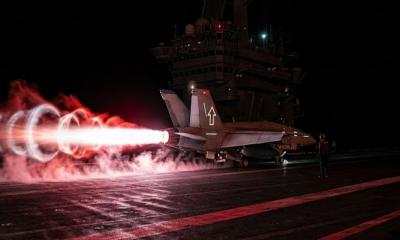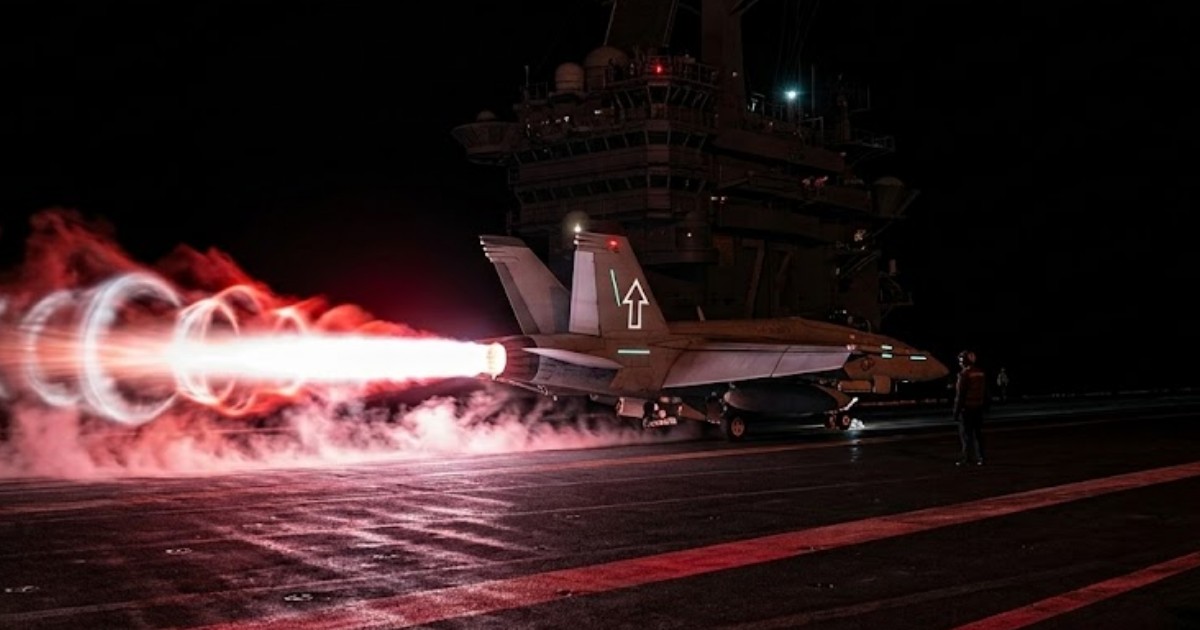
The United States carried out a heavy wave of airstrikes against military targets belonging to the Islamic Revolutionary Guard Corps in Iran early Thursday, the Pentagon confirmed, according to Reuters and BBC News. The operation was launched in direct retaliation for recent Iranian ballistic missile attacks aimed at American forces stationed in Jordan.
US Central Command stated that the operation lasted approximately one hour and successfully hit dozens of facilities. The military strikes primarily focused on command centers, drone launch sites, and coastal surveillance systems. American military officials also noted that all incoming Iranian missiles from the previous day had been successfully intercepted before reaching their intended targets.
Iranian state media outlets confirmed that multiple locations in the southern and western parts of the country were struck during the bombardment. The attacks caused significant damage in areas including Abadan and Qeshm Island. According to Fars news agency, a strike on a residential neighborhood on Qeshm Island resulted in the deaths of three family members, including a two-year-old child.
Local residents on the island reported hearing massive explosions in the middle of the night, followed by widespread power outages and internet disruptions. Speaking to reporters at the White House before the strikes, US President Donald Trump warned that the military was preparing to hit Iran very hard in response to the Jordan incident.
The prolonged conflict has seen the United States blockade several Iranian ports while repeatedly bombing strategic sites across the country. In response, Iran has consistently launched drones and missiles at American assets scattered throughout the Middle East. The hostilities have particularly threatened commercial shipping in the Strait of Hormuz, a critical global waterway connecting the Gulf to the Arabian Sea.
This escalating warfare is rapidly spilling over into neighboring nations across the region. Earlier this week, joint military strikes conducted by the United States and Saudi Arabia targeted the Popular Mobilization Forces in Iraq, killing at least twenty members of the Iran-backed militia, according to BBC News.
The Iraqi presidency strongly condemned the joint strikes on its soil, describing the military action as a blatant violation of national sovereignty. However, Trump publicly claimed in a media interview that the operations were fully coordinated with the Iraqi government beforehand. What remains unclear is whether regional diplomatic channels can effectively halt this dangerous cycle of violence.
Recent reports from Axios, citing an unnamed US official, suggested that Saudi Arabia has expressed a strong desire to de-escalate the situation during high-level meetings. Meanwhile, the Jordanian armed forces confirmed they successfully shot down five Iranian missiles over their territory on Thursday.
The widespread use of drones and ballistic missiles in this current wave of conflict has introduced a new level of military threat to the region. Defense analysts suggest that both sides have adopted a strategy of demonstrating air superiority while avoiding direct ground combat. Consequently, the immediate risk to civilian populations has multiplied significantly.
Further complicating the regional security crisis, the Egyptian government reported a significant fire at one of its ports caused by a drone attack. This recent surge in hostile military actions, abruptly ending a brief period of relative calm, has reignited intense fears of a full-scale war across the Middle East.