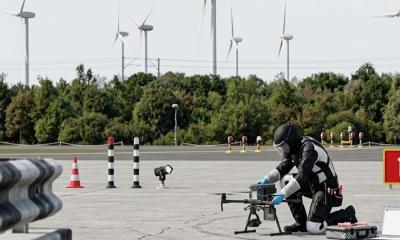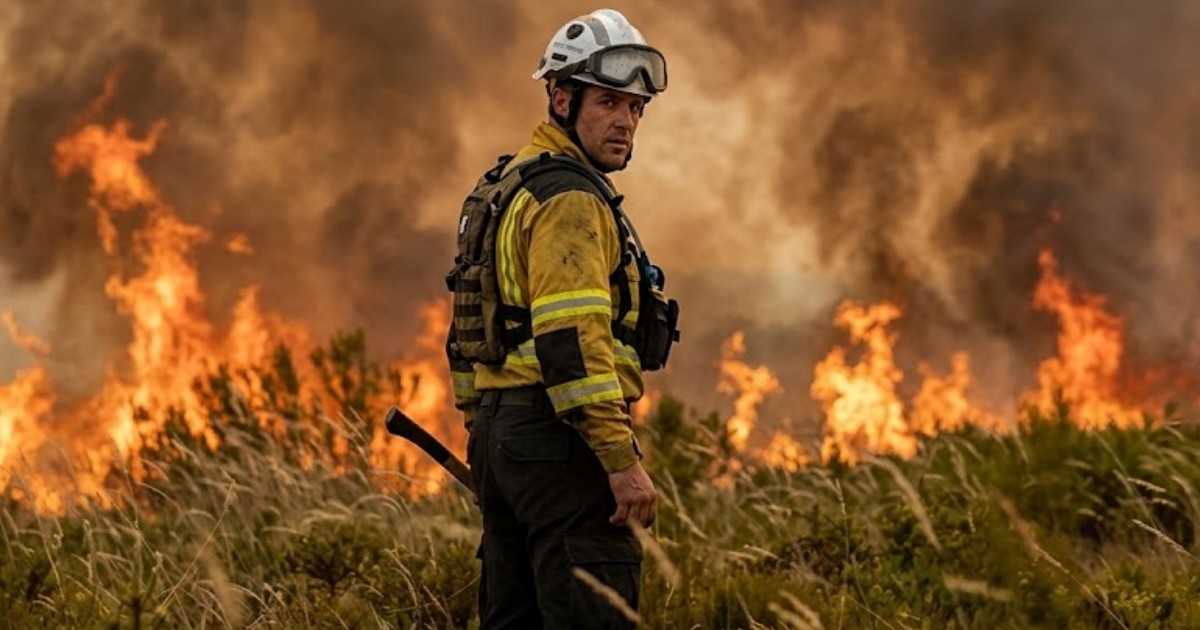
Artificial intelligence is stepping up as a critical tool in the fight against devastating wildfires across Europe, replacing human lookouts with advanced thermal and optical cameras. Hundreds of thousands of people have been forced to evacuate their homes across France, Spain, and Portugal as intense summer blazes tear through forests. In France’s Gironde region alone, massive fires recently scorched 162 square miles of pine forest and resort areas, the Associated Press reported.
While traditional firefighting techniques remain largely unchanged, the technology used to detect outbreaks is evolving rapidly, according to BBC News. In the heavily impacted Gironde department, AI-assisted cameras have completely replaced the university students and volunteers who typically staffed watchtowers during the high-risk summer months.
Guillaume Millet, a veteran firefighter of 24 years and head of the Fire and Rescue Service branch for the CFDT union, noted that the technological shift has dramatically reduced false alarms. The new cameras can spot fires up to 12 miles away and are capable of distinguishing between actual smoke and dust kicked up by farm equipment.
The deployment of this technology comes at a steep human cost. Four people have already lost their lives fighting the French wildfires this summer, and another 150 have sustained injuries. To mitigate these risks, regional authorities contracted a company called Midgard to install the AI infrastructure in Gironde, while another French startup, FireTracking, is managing similar systems in other parts of the country.
Jean-Simon Chaudier, chief executive of FireTracking, explained that the system sends an immediate alert to firefighters` mobile devices the moment a blaze is detected. Through a dedicated application, emergency responders can view real-time video with a 40x zoom capability. The software also generates a predictive map showing the exact location of the flames, nearby residential structures, and a minute-by-minute simulation of how the fire is expected to spread based on real-time weather and humidity data.
In wildfire management, early detection is the difference between a minor incident and a full-scale catastrophe. According to Chaudier, the systems have been detecting fires up to 15 minutes before the first emergency phone call is placed by a bystander.
"After one minute you can put out a fire with a glass of water, after two you need a tank of water, after three minutes you need to send a Canadair," Chaudier told BBC News, referring to the amphibious water-bombing planes that act as the spearhead of aerial firefighting. Saving those crucial 15 minutes allows crews to contain fires to just a few hectares rather than letting them consume entire forests.
Islamic teachings place a profound emphasis on the preservation of life and the environment. The Quran states, "Whoever saves a life, it is as if he had saved mankind entirely" (Surah Al-Ma`idah, 5:32). Utilizing cutting-edge technology to prevent environmental devastation and protect human populations aligns deeply with this ethical mandate to act as responsible stewards of the earth.
As Europe faces what experts describe as the continent`s fastest-warming climate, the integration of artificial intelligence into emergency response networks is no longer just an experiment. With rising temperatures and prolonged droughts leaving vegetation highly combustible, these early warning systems are becoming the most reliable frontline defense against an increasingly volatile natural threat.