Robot arms and self-checkout kiosks across the United States are increasingly soliciting gratuities on digital checkout screens, triggering widespread consumer resistance and intense regulatory scrutiny. Industry disclosures indicate that automated hospitality concepts are prompting customers for tips on drinks, meals, and retail purchases previously unburdened by service charges. The development has raised critical questions regarding whether these electronic gratuities genuinely benefit low-wage backroom employees or merely augment corporate operating margins.
Automated payment prompts have dramatically broadened the boundaries of conventional tipping.
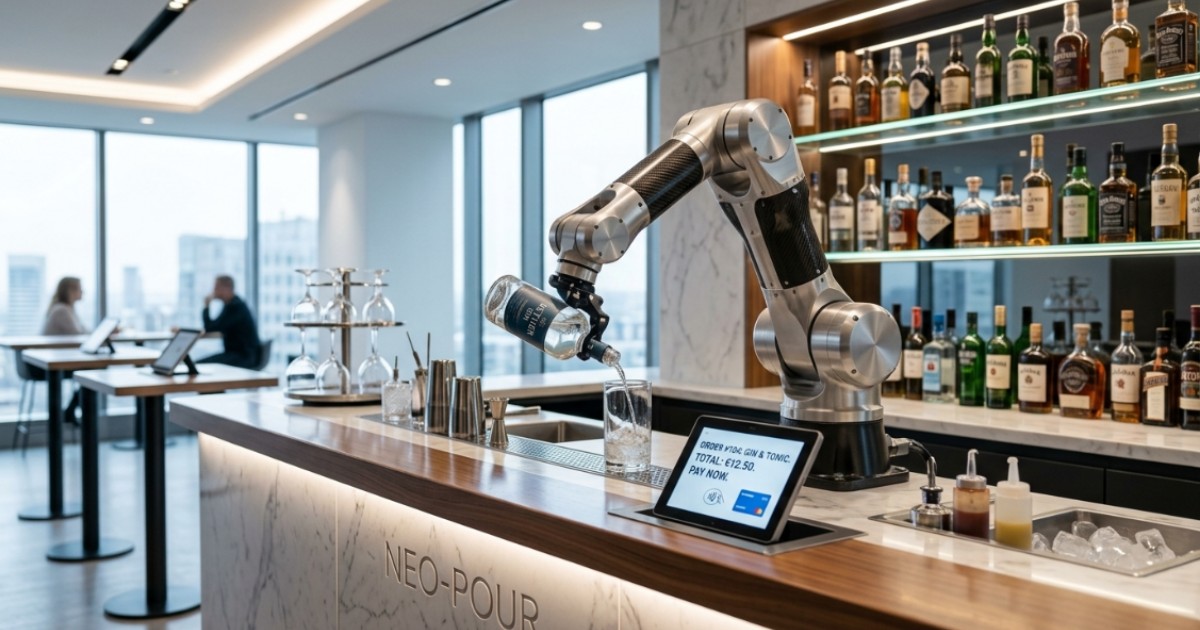
At The Tipsy Robot lounge within the Venetian Hotel in Las Vegas, automated mechanical limbs assemble cocktails while the terminal levies an additional 10 percent service fee. Similar interactions are unfolding at Artly Coffee in New York, where robotic baristas prepare beverages beside digital tip prompts, and at Newark Liberty International Airport, where unattended convenience kiosks suggest gratuities on bottled water. At dining venues like Top Burmese in Portland, Oregon, human personnel manage customer intake while wheeled autonomous machines convey food to tables. While patrons routinely tip human servers, automated prompts generate distinct unease among consumers uncertain about the destination of their funds.
United States labor statutes strictly bar business owners and supervisors from taking cuts from employee tips.
However, legal frameworks currently contain no established standard governing gratuities solicited by non-human machines. Holona Ochs, an associate professor at Lehigh University specializing in the politics of compensation, confirmed that unscrupulous operators can easily divert machine-generated gratuities to corporate coffers without detection. Under federal regulations, hospitality businesses can pay tipped staff an hourly base of just $2.13 compared to the standard $7.25 minimum wage, relying on customer tips to make up the difference. Administrative hurdles and fears of workplace reprisal frequently prevent staff from pursuing claims, leaving the public with no reliable way to verify where payments end up.
Enterprise representatives maintain that their automation serves to support human livelihoods rather than exploit loopholes.
Abigail Smathers, content director at Artly, confirmed that the coffee chain disabled automated tip prompts and raised wages after receiving negative customer feedback, while ensuring all physical jar donations flow directly to support staff. Smathers argued that targeted robotics addresses persistent service industry labor shortages without displacing personnel, though she acknowledged artificial intelligence is frequently deployed indiscriminately by bad actors across the hospitality sector. Conversely, labor advocacy organizations including One Fair Wage argue that introducing machines alongside tip prompts is simply a maneuver by corporate executives to perpetuate sub-minimum wages.
Consumer psychology reveals sharp resistance to extending customary service etiquette to mechanical interfaces.
Michael Lynn, professor emeritus at Cornell University and a leading researcher on consumer tipping behavior, noted that people tip to reward exemplary service, alleviate low pay, or avoid social embarrassment. Because none of those interpersonal dynamics apply to inanimate computer programs, Lynn argued there is no functional justification for tipping a machine. Research conducted by hospitality technology scholar Katerina Berezina shows that while barely 11 percent of patrons initially intend to tip a robotic bartender, approximately 42 percent will do so if informed the proceeds go to human personnel.
Industry specialists emphasize that long-term corporate adoption will be dictated entirely by collective consumer pushback.
Lynn noted that tipping conventions are established from the bottom up rather than dictated by corporate fiat. If widespread frustration with algorithmic panhandling leads patrons to abandon automated venues, businesses will rapidly discontinue the prompts to protect overall trade. As technological interfaces continue to permeate daily retail environments, customer refusal to reward mechanical transactions may ultimately halt the expansion of automated gratuities.