The historic 163-year-old sento or public bathhouse known as Konparu-yu, located in the heart of Tokyo`s upscale Ginza district, serves as a living embodiment of Japan`s unique blend of ancient tradition and modern innovation, BBC Travel reported on Tuesday. Hidden amidst a dense landscape of shimmering glass towers, Michelin-starred culinary establishments, and premium international department stores, this legendary institution offers a rare sanctuary from the relentless pace of contemporary urban life. Every day, a diverse mix of local residents and international travelers discover this secluded landmark to seek relief from physical fatigue and mental stress. Despite the rapid modernization that has reshaped the metropolis around it, the bathhouse preserves a tranquil environment that connects patrons directly with chapters of classical history. It stands not merely as a functional facility for hygiene but as a monumental social hub where community bonds are forged and maintained.
Public bathhouses, known locally as sento, have played a vital role in the cultural and spiritual framework of Japanese society for more than 1,200 years. The historical origins of this practice trace back to the propagation of Buddhism across the Japanese archipelago during the 8th century, a period when cleansing the body and spirit was considered a sacred duty to serve Buddha. Over time, these ritual structures evolved into popular community fixtures, experiencing an unprecedented boom during the iconic Edo period which spanned from 1603 to 1868. Because the vast majority of ordinary citizens during this era lacked private bathing facilities in their modest wooden homes, the neighborhood public bathhouse became an essential destination. It allowed people to wash thoroughly for a nominal fee while simultaneously serving as a lively venue for neighborhood gossip and genuine socialization.
Mainstream historical analyses indicate that during the highly structured Edo period, when Japanese society was strictly segregated by rigid class lines, public bathhouses represented one of the very few spaces where social equality prevailed. Historical records show that even the elite samurai warriors were required to leave their swords and titles outside the bathing chambers before entering the hot water pools. Once inside the steaming rooms, all artificial signs of wealth, political power, and military rank completely vanished, reducing every individual to their fundamental humanity. Centuries later, this profound philosophy of social equality remains fully alive inside the walls of Konparu-yu through a cultural concept known as hadaka no tsukiai, which translates directly to naked friendship. Within this serene space, designer watches, luxury handbags, and corporate salaries disappear entirely into wooden storage lockers, allowing corporate executives, aging regulars, and young creatives to converse on equal terms.
Locating Konparu-yu can prove to be an unexpected challenge for first-time visitors navigating the neon-lit avenues of the luxurious Ginza shopping district. Tucked away at the end of a narrow side street, the discreet entrance of this historic bathhouse is marked only by a traditional paper lantern and a weathered blue noren curtain. Originally established in 1863, the facility underwent a major renovation in 1957 that transformed its exterior structure to fit within the lower floor of a modern building, yet the inner sanctuary completely retains its authentic retro charm. Upon pushing past the entrance, visitors encounter vintage wooden shoe lockers, a traditional elevated reception desk known as a bandai, and a remarkably high lattice ceiling that instantly transports them back to old Tokyo. The name of the bathhouse itself possesses deep roots in classical Japanese performance art, derived from the historical residence of Noh theater actors who once occupied the land.
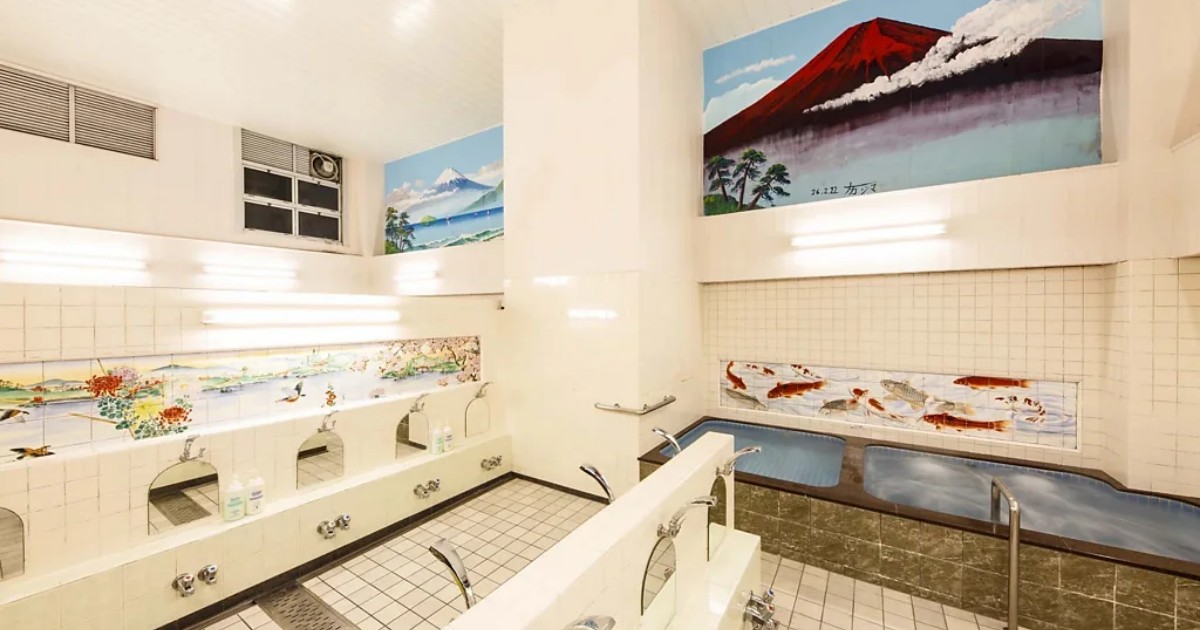
The interior aesthetic of Konparu-yu is heavily defined by stunning wall murals that elevate the traditional bathing experience into an artistic journey. A magnificent painting of Mount Fuji dominates the back wall of the bathing area, created by the meticulous brushstrokes of Morio Nakajima, who is widely recognized as one of Japan`s last remaining master sento artists. In the men`s bathing chamber, Mount Fuji is depicted in a striking shade of red to symbolize a brilliant sunrise, while the women`s chamber showcases a serene blue landscape reminiscent of the scenic Miho Pine Grove. Complementing these central volcanic landscapes are intricate displays of traditional Kutani porcelain tile art featuring twelve vibrant carp swimming alongside seasonal blossoms and exotic birds. Soaking in the steaming hot water while admiring these vivid cultural masterpieces provides patrons with an extraordinary sense of psychological peace and deep relaxation.
To maintain the pristine condition and sacred atmosphere of this historic establishment, visitors must strictly adhere to a time-honored system of public bathhouse etiquette that brooks no exceptions. Before entering the communal washing areas, individuals must place all clothing and personal effects inside secure lockers and enter the gender-divided bathing rooms entirely nude. It is mandatory for every person to scrub and rinse their body thoroughly at the individual washing stations before stepping into the shared hot pools, ensuring the communal water remains free of contaminants. Long hair must be securely tied up to avoid contacting the water, towels must never be submerged inside the bath, and conversations must be kept to a hushed whisper. By following these unwritten rules of social decorum, patrons actively participate in a collective effort to preserve the quietude and harmony of the shared space.
The temperature of the therapeutic water at Konparu-yu is precisely regulated between 42 and 43 degrees Celsius, providing significant physiological benefits such as improved blood circulation and complete muscle relaxation. In recent decades, the widespread introduction of modern residential plumbing and private bathtubs has caused a dramatic decline in the total number of traditional sento operating across Japan. Despite these modern pressures, Konparu-yu continues to thrive due to the unwavering loyalty of local residents and its celebrated position as a treasured historical landmark. Twice every month, the owners host a highly anticipated flower-floating event where hundreds of fresh blossoms are scattered across the surface of the water, creating a multi-sensory experience that delights both the eyes and the mind. The sanctuary remains a favored destination for white-collar office workers seeking to melt away their professional anxiety before embarking on their evening commute.
What remains unclear is how many more decades these fragile bastions of ancient heritage can survive amidst the rapidly shifting lifestyles of the younger Japanese generation. While an explosion of global interest in traditional Japanese culture has brought a welcome influx of foreign tourists to the bathhouse, rising operational costs and a shortage of traditional artisans present long-term challenges. Maintaining the delicate balance between welcoming curious outsiders and protecting the peaceful routine of elderly regulars will require careful management from the current operators. This hidden gem in the center of Tokyo reminds us that even within the world`s most advanced megalopolis, humanity still craves spaces dedicated to historical memory, community solidarity, and absolute simplicity. The quiet steam of Konparu-yu remains an essential portal for anyone wishing to truly understand the spiritual heart of Tokyo beneath its flashing neon facade.