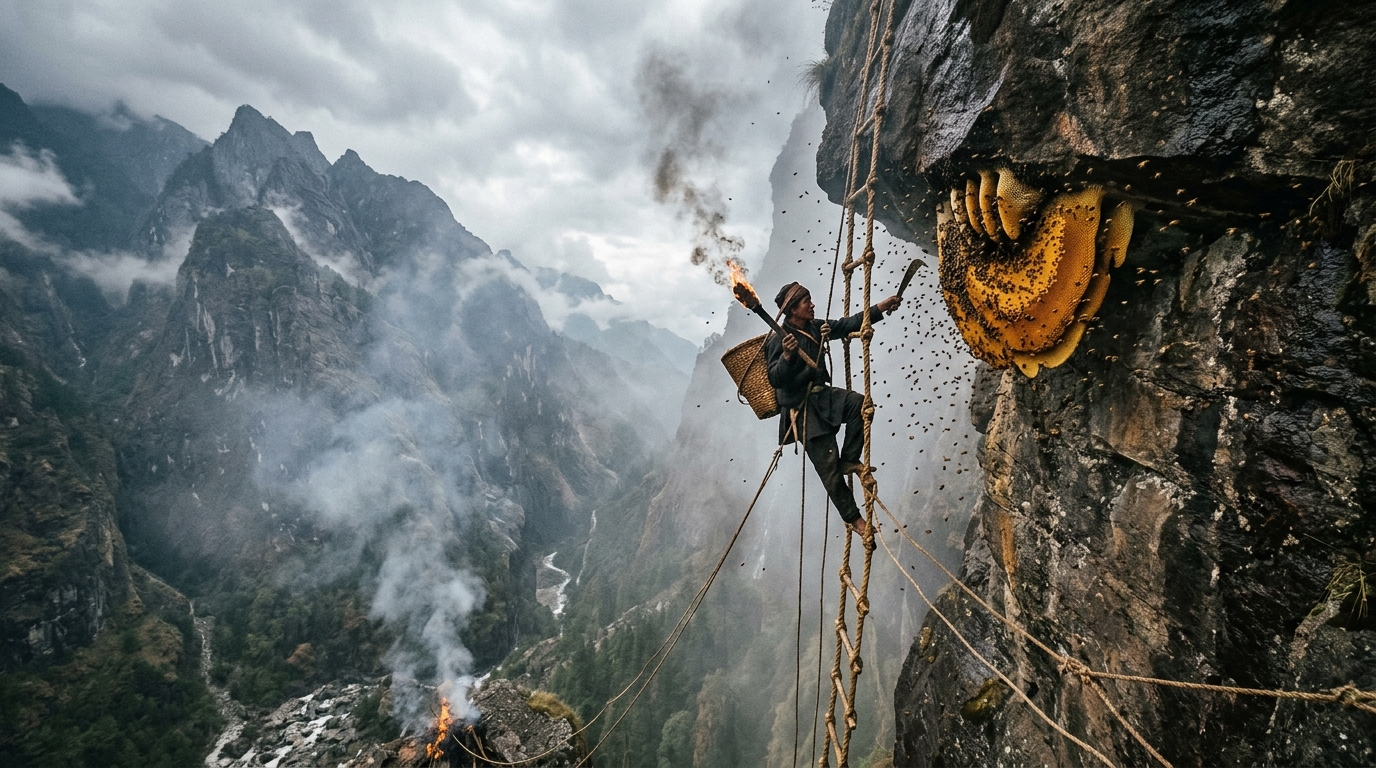
High in the precipitous cliffs of the Nepalese Himalayas, a spectacular and exceedingly dangerous annual ritual unfolds over a brief window of time. For just about two weeks every year, local indigenous hunters risk their lives to harvest a unique type of wild honey that has fascinated the world for centuries. Known globally as mad honey, this rare substance is far more than a sweet natural treat; it is a potent hallucinogenic compound deeply intertwined with the ancient heritage and survival stories of the region. The Gurung tribe of Nepal has preserved this hazardous tradition across generations, offering a rare glimpse into an ancient way of life that remains largely untouched by modern civilization. The distinct properties of this honey, along with its therapeutic uses and profound physiological risks, place it in a category entirely of its own.
The physical demands and sheer terror of harvesting this honey from vertical rock walls are difficult for an outsider to fully comprehend. Experienced honey hunters scale cliffs rising hundreds of meters above rocky gorges using nothing but rudimentary ladders hand-woven from forest vines and ropes. A single misstep or a sudden loss of grip means a fatal fall into the abyss below. Amidst these vertical challenges, the hunters must confront the largest honeybee on the planet, scientifically known as Apis laboriosa. These formidable insects grow up to three centimeters in length and possess a powerful sting capable of piercing through multiple layers of thick clothing. To mitigate the onslaught of thousands of angry bees, the hunters rely on a primitive yet effective defense strategy, lighting fires at the base of the cliffs to produce dense billows of smoke that temporarily disorient and calm the swarm.
The scientific explanation behind the chemical potency of this honey lies in the unique flora that blankets the high altitudes of the Himalayan mountain range. During the spring season, vast forests of rhododendron flowers bloom across the hillsides. Certain species of these vibrant flowers contain a class of naturally occurring neurotoxins known as grayanotoxins. When the massive wild bees forage on the nectar of these specific rhododendrons, the toxic compounds are carried back to the hives and concentrated into the honeycombs. The resulting honey acquires a distinct chemical profile capable of inducing altered states of consciousness and profound physical sensations in humans. This chemical reality explains why the substance has been treated with a mixture of reverence and extreme caution since antiquity.
Consuming mad honey is a sensory experience that bears little resemblance to tasting commercial table honey. The initial taste is notably less sweet, accompanied by a distinct bitterness and a sharp, burning sensation at the back of the throat. Within minutes of ingestion, the neurotoxins begin to take effect on the human nervous system. Early symptoms frequently include a sudden and dramatic drop in body temperature, accompanied by a peculiar numbness or tingling sensation spreading through the fingertips and toes. As the substance integrates further into the bloodstream, individuals often experience severe headaches, acute dizziness, and persistent bouts of nausea. In many instances, overconsumption leads to immediate and violent vomiting, which serves as the body’s primary defense mechanism against grayanotoxin poisoning.

For centuries, the local communities of the Himalayas have utilized mad honey as a traditional medicine and a natural aphrodisiac, though always under strict guidelines. Within traditional healing frameworks, the recommended dosage is exceptionally small, usually limited to a fraction of a teaspoon. Exceeding this minute threshold introduces severe cardiovascular and neurological dangers, as the toxins can drastically lower the heart rate and reduce blood pressure to critical levels. Medical experts and local experts warn that consuming more than a single tablespoon can result in temporary paralysis, severe respiratory distress, or prolonged periods of unconsciousness lasting up to twelve hours. In extreme cases, without proper medical intervention, the severe drop in heart function can prove fatal to vulnerable individuals.
Despite the life-threatening conditions endured by the indigenous honey hunters, the economic rewards of their labor remain starkly disproportionate. The men who brave the high cliffs and endure the painful stings of the giant bees receive a meager wage for their dangerous work. Meanwhile, when the harvested honey is exported to international markets and high-end boutiques in major global cities, it commands astronomical prices. This traditional practice highlights a profound narrative of cultural endurance mixed with modern economic disparity and exploitation. Preserving this ancient Himalayan tradition while ensuring fair compensation and safety measures for the hunters, alongside global education regarding its chemical risks, is essential for the future of this unique cultural heritage.