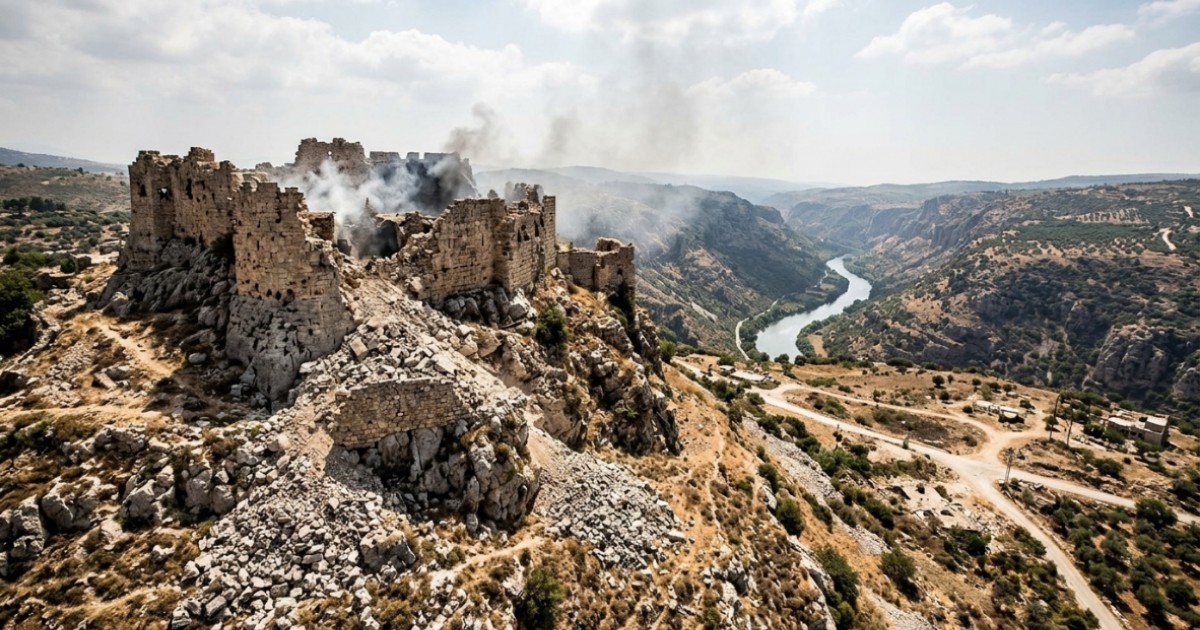
Lebanon`s multi-layered ancient landscape faces unprecedented destruction as the expanding Israeli offensive in Lebanon places several of the country`s most treasured cultural and archaeological sites directly in the line of fire. Disregarding a nominal ceasefire agreement, Israeli ground forces on Saturday captured the historic Beaufort Castle, a 900-year-old Crusader fortress situated on a strategic hilltop near the southern city of Nabatieh. The seizure followed days of intense block-by-block combat and marks the deepest military incursion by the state into Lebanese territory in 26 years.Its mechanized columns have now advanced north of the Litani River toward the Zahrani River.
The Ministry of Culture in Lebanon issued an urgent warning stating that ongoing military operations have placed premier historical landmarks, including the ancient Phoenician port city of Tyre, in critical danger. Located approximately 52 miles south of the capital city of Beirut, Tyre contains some of the most significant architectural remains of antiquity, including sprawling Roman-era ruins and one of the largest Roman hippodromes in existence. Heavy aerial bombardment and mandatory evacuation orders issued by the military have forced nearly 200,000 residents to flee Tyre and its immediate periphery. Across the wider geography of the nation, the escalating conflict has displaced over one million citizens, compounding an already severe humanitarian crisis.
Dating back to the third millennium BC, Tyre historically evolved into a dominant maritime superpower in the Mediterranean before flourishing under Greek, Roman, and Byzantine administrations. Culture Minister Ghassan Salame confirmed that high-explosive ordnance has detonated dangerously close to the protected ruins, while Beaufort Castle sustained direct artillery impacts during the assault. Lebanon currently holds six distinct UNESCO World Heritage sites, alongside 39 cultural properties granted enhanced international legal immunity. This special humanitarian designation provides the highest tier of legal safety under the 1954 Hague Convention, making unauthorized military utilization a clear violation of international law.
UNESCO Assistant Director-General for Culture, Lazare Eloundou Assomo, emphasized that the deliberate destruction of historic architecture erodes the psychological resilience and social cohesion of local populations. He stated that the loss of physical heritage actively undermines moral standards and erases the shared cultural backbone of a society`s modern identity. Perched 2,300 feet above sea level, Beaufort Castle has historically functioned as an essential defensive stronghold for successive empires, including the Ottomans, and was previously occupied by Israeli forces from 1982 until their withdrawal in 2000.
The modern degradation of these monumental sites threatens to permanently alter the historical cartography of the eastern Mediterranean region. Observers fear that without immediate diplomatic intervention, these thousands-of-years-old links to human civilization may be permanently lost to regional warfare. The ongoing military actions continue to draw sharp condemnation from cultural preservation organizations globally, who warn that the collateral damage to history is absolute and irreversible.