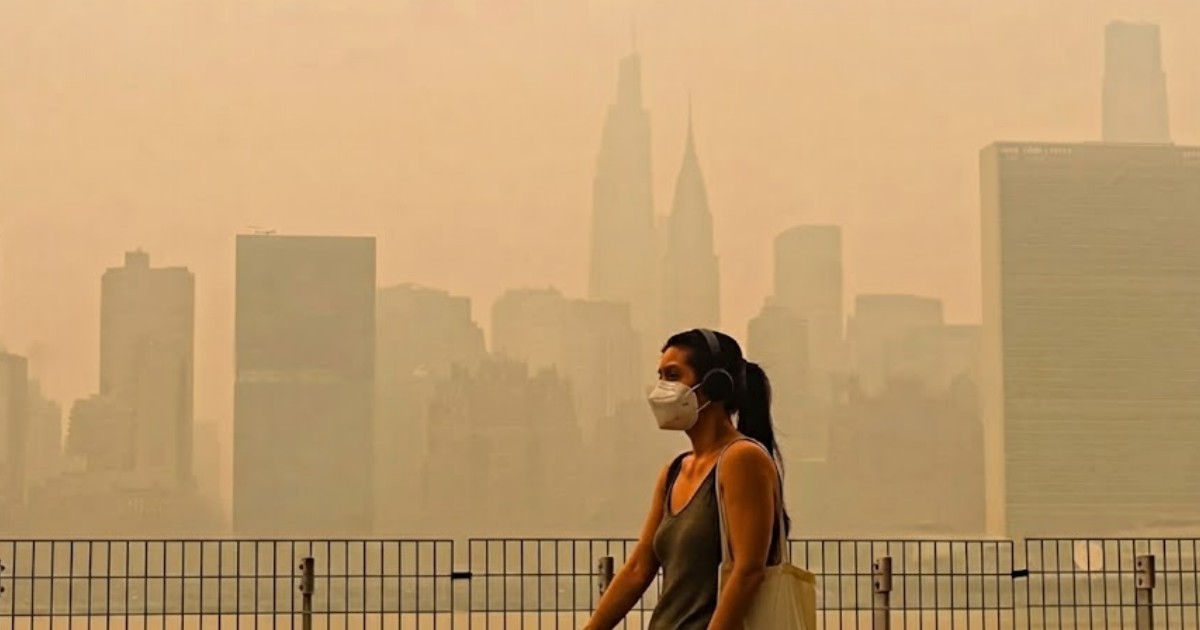
US President Donald Trump has threatened to impose new tariffs on Canada following widespread wildfires that have blanketed northern US cities in smoke. Trump accused Canada of "willful negligence," claiming the smoke has resulted in "filthy, polluted, and unhealthy air" affecting American citizens. The threat follows mounting frustration among US lawmakers regarding the air quality crisis, which has triggered hazardous air alerts across several states.
According to the Canadian Wildland Fire Information System, there are currently 888 active fires burning across Canada. More than 190 of these blazes are located in Ontario, with many remaining out of control. The environmental impact has been severe, with smoke spreading across Minnesota, Michigan, Pennsylvania, Ohio, and New York. Swiss air quality tracker IQAir reported that air quality in Detroit and Chicago reached the worst levels globally, leading to the cancellation of numerous outdoor events.
A group of US lawmakers, including John James and John Moolenaar, issued an open letter to Canadian officials, stating that their patience has reached its limit. The lawmakers demanded urgent action rather than apologies, warning that the US might explore direct involvement in cross-border wildfire protection if Canada fails to address the crisis. They argued that chronic under-investment in forest management and fuel reduction has exacerbated the situation, leaving American residents to suffer the consequences.
In response to the accusations, Canada`s emergency management cabinet minister stated that the two nations remain in constant communication. The minister emphasized a long history of collaboration, citing a reciprocal firefighting agreement from 1982 and further assistance protocols established during the 2025 G7 summit. Canada has reportedly invested approximately C$12 billion in forest sustainability and fire prevention, officials noted. They maintained that wildfire management is a shared challenge that transcends borders.
Climate scientists argue that the situation is driven by complex environmental factors. Dr. Patrick James of the University of Toronto noted that weather patterns ignore international borders, meaning smoke naturally drifts with wind currents. Experts highlight that many of the current fires are burning in vast, remote Canadian forests, making early detection and containment extremely difficult. Both US and Canadian experts agree that sustained heatwaves in late June, combined with below-average rainfall, have created ideal conditions for the rapid spread of fires. Scientists maintain that climate change is a global issue, making it inaccurate to suggest that Canada alone could have prevented the disaster.