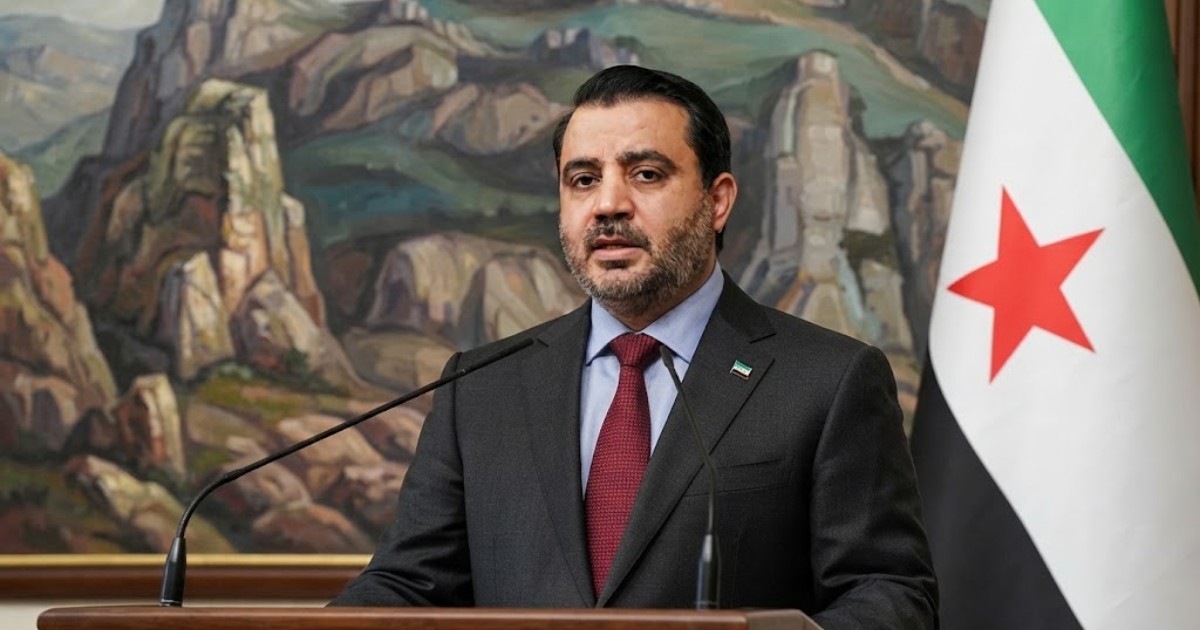
Syrian Foreign Minister Asaad al-Shaibani stated that the door for diplomacy with Israel remains open, urging regional leaders to seize what he described as a historic opportunity for stability.
In an interview published on Sunday, al-Shaibani indicated he expects negotiations regarding a comprehensive security agreement to resume soon. Such an accord is intended to facilitate Israel`s eventual withdrawal from Syrian territory following months of regional friction.
Talks concerning the proposed security framework were previously frozen during the onset of the conflict involving Iran, and officials have not yet established a definitive date for formal discussions to restart. Damascus maintains that its primary objective is the immediate cessation of military incursions, emphasizing the necessity of foundational confidence-building measures.
The United States has spent more than a year attempting to mediate a viable security arrangement between Israel and the government of Syrian President Ahmed al-Sharaa. Despite ongoing diplomatic efforts, an agreement has remained elusive as military forces continue to operate inside Syrian borders.
Al-Shaibani expressed skepticism regarding current diplomatic channels while noting that ongoing dialogue remains necessary to address active security threats. He added that the administration in Damascus does not currently place full trust in Israeli commitments given recent ground and aerial operations.
The Israeli prime minister`s office did not immediately respond to requests for comment regarding the foreign minister`s remarks. Syrian leadership has repeatedly maintained that the country poses no offensive threat to neighboring nations, focusing instead on domestic reconstruction after years of internal conflict.
Tensions escalated recently when military strikes targeted the Abu al-Duhur airbase amid unverified claims regarding foreign military deployments. Syrian officials categorically denied those allegations while asserting that national airspace and sovereignty must be respected by all regional actors.
What remains unclear is whether international mediators can successfully bridge the gap between the two sides before further military escalations occur.
Al-Shaibani noted that Washington continues to exert diplomatic pressure on regional capitals to return to the negotiating table. Analysts suggest that any future framework will likely depend heavily on establishing mutually agreed buffer zones and strict monitoring mechanisms along the border.