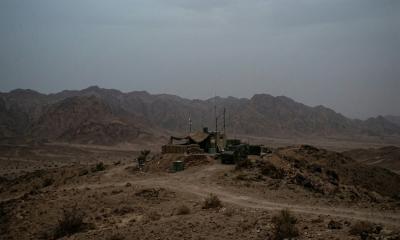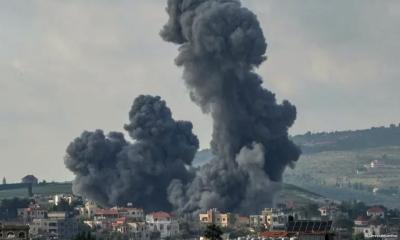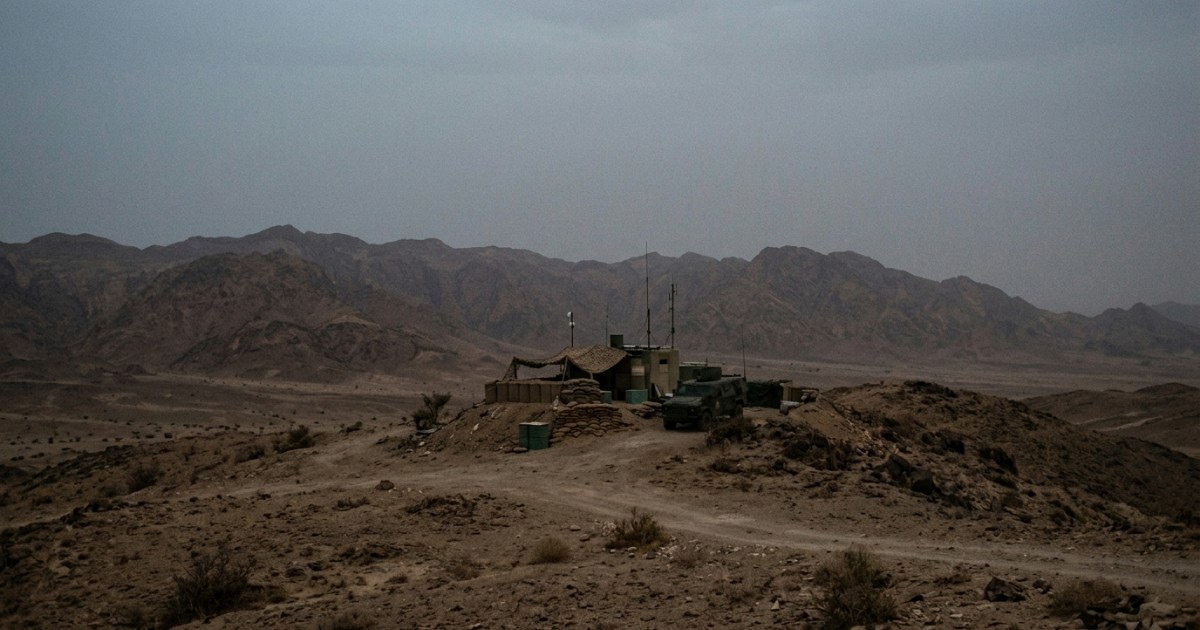
Yemen’s Houthi movement announced on Monday that it launched a coordinated barrage of ballistic missiles and armed drones targeting King Khalid Air Base in southwestern Saudi Arabia. The group asserted that its long-range munitions scored direct hits against military installations inside the facility near Khamis Mushait. Saudi authorities offered no immediate verification regarding infrastructural damage or operational casualties at the strategic site.
The cross-border assault marks a significant expansion in the protracted regional confrontation.
According to statements delivered by Houthi military spokesperson Yahya Saree, the cross-border operation deployed dozens of projectiles aimed at fighter jet hangars, operational radar arrays, maintenance runways, and ammunition storage depots. Saree characterized the assault as direct retaliation for an estimated 300 airstrikes carried out by Saudi-led coalition aircraft across several Yemeni provinces during the prior five days. While Saudi civil defense officials released brief localized safety advisories across Khamis Mushait, authorities later stated that the immediate threat had receded, advising local populations to avoid assembling near operational zones.
The strike drew swift international condemnation from European leadership.
European Commission President Ursula von der Leyen denounced the strikes against Saudi territory, expressing diplomatic solidarity with Gulf partners facing sustained regional violence. In a formal communication, von der Leyen stressed that the European Union remains dedicated to maintaining unimpeded navigation through critical maritime corridors, including the Strait of Hormuz, declaring that international stakeholders share an essential interest in regional equilibrium.
Simultaneously, decisive shifts occurred on Yemen’s domestic battlefronts along the Red Sea corridor.
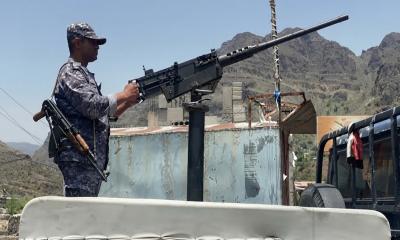
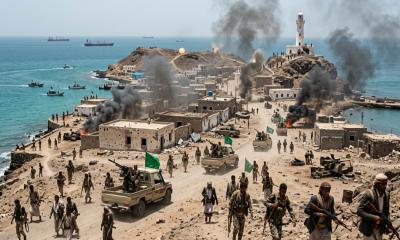
Houthi forces solidified territorial control over strategic islands in the southern Red Sea, consolidating authority across navigation routes leading directly into the Bab al-Mandeb Strait. On the mainland, intense ground combat erupted on the perimeter of the southwestern city of Taiz. Field reports confirmed that fighters aligned with the Ansar Allah Houthi movement breached established defensive frontlines held by the internationally recognized, Saudi-backed government forces, threatening administrative strongholds.
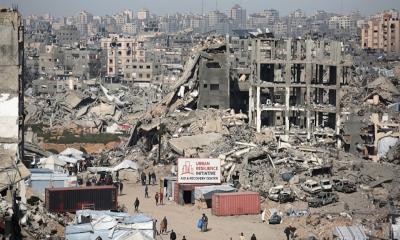
The escalation has triggered acute humanitarian fallout, displacing more than 85,000 Yemeni civilians as frontlines shift across residential districts.
Addressing the geopolitical ramifications, former United States intelligence official Scott Uehlinger observed that Washington may ultimately face pressure toward direct military engagement in the waterway. Although the White House has previously resisted wider conventional deployments, the consolidation of Houthi authority across vital shipping lanes and continuous strikes against Saudi territory heighten the likelihood of external naval intervention.