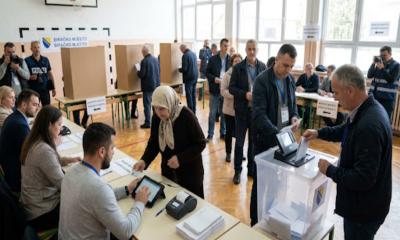
Citizens across Bosnia and Herzegovina went to the polls on Sunday to elect representatives across the state, entity, and cantonal administrations. More than 3.4 million eligible voters were registered to participate in the nationwide exercise, which determines the composition of the multifaceted governance system established under the country`s post-war settlement. Polling stations opened early across major urban centers and rural municipalities, drawing citizens seeking to define the country`s immediate political trajectory.
Administrative complexity defines the entire ballot.
Under the constitutional system, authority is split between two primary entities — the Bosniak-Croat Federation of Bosnia and Herzegovina and the Serb-majority Republika Srpska — alongside the neutral, self-governing Brcko District. Voters are selecting members of the collective three-member presidency, the state-level parliamentary assembly, entity legislatures, and regional cantonal councils. Campaign posters featuring candidates from various factions, including the People and Justice Party, lined the streets of the capital, Sarajevo, reflecting intense competition across all constitutional tiers.
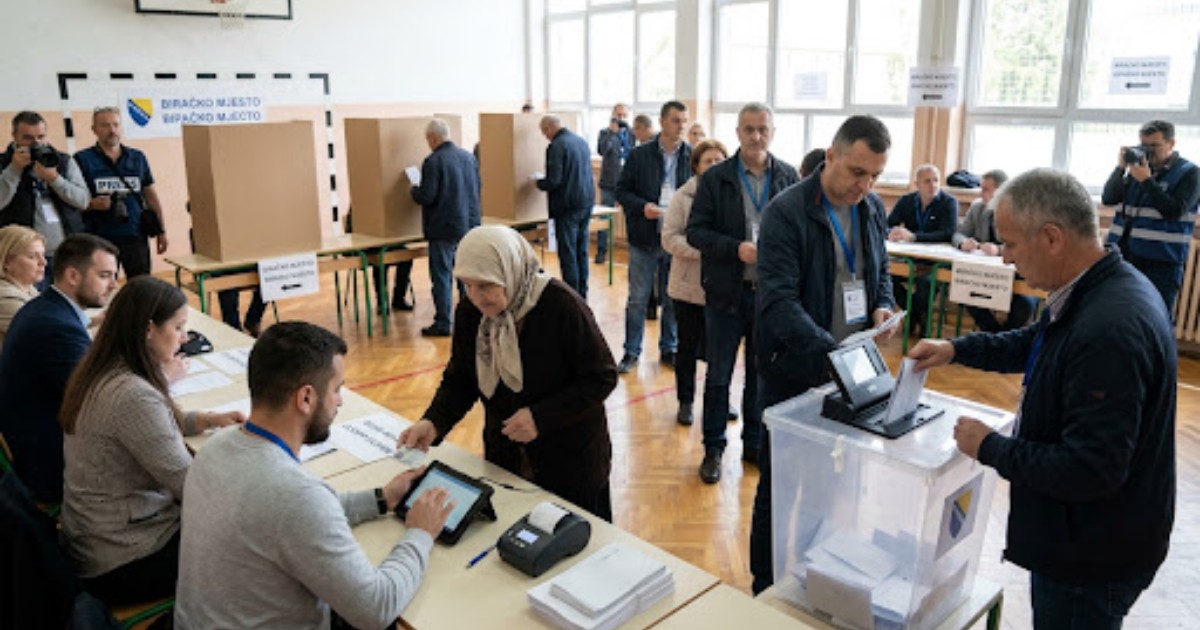
This election cycle features the deployment of modernized administrative technology aimed at curbing historical irregularities. Electoral officials implemented biometric authentication devices at designated polling locations to verify voter identities against centralized registries before ballots are issued. Furthermore, completed paper ballots are processed through automated optical scanners rather than deposited directly into conventional secure containers.
The modernization does not constitute a full shift to electronic voting machines. Ballots are still physically marked by voters on paper, preserving a verifiable physical record while allowing automated equipment to accelerate counting procedures and reduce discrepancies during precinct aggregation. Independent observers and international election monitoring delegations deployed across the country to assess whether the technical safeguards function as intended under field conditions.
Security personnel were stationed near polling venues to ensure public order throughout the voting hours. Official preliminary results are anticipated later in the evening as regional election commissions complete technical verification and transmit data to the central counting headquarters.