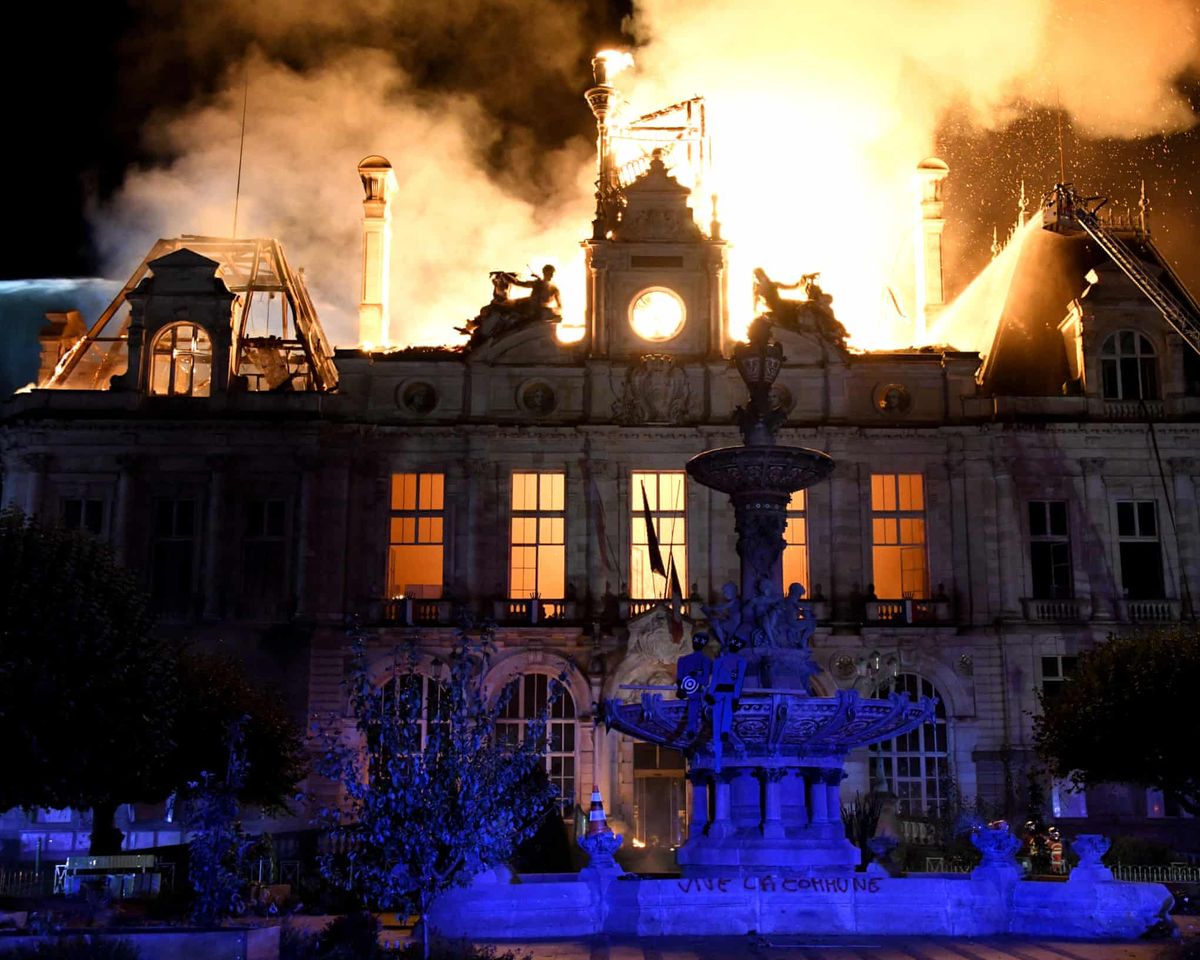
The French government held crisis talks on Sunday following one of the most violent days of unrest in years. The nationwide disturbances left public buildings burned, hundreds of shops destroyed and looted, and more than 2,000 people arrested.
Politicians from across the political spectrum demanded the resignation of Interior Minister Laurent Nuñez. Lawmakers argued the administration had been caught off guard by the scale of the violence. State buildings were stormed, bus stops smashed, roads barricaded, and commercial premises broken into.
President Emmanuel Macron, who is standing down next spring, prepared to address the nation on Sunday night. Writing on social media, he stated that there was no place for violence in France.
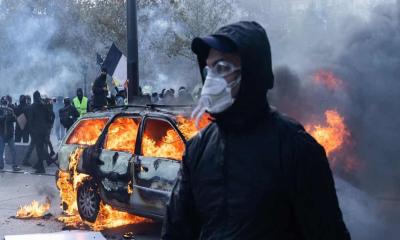
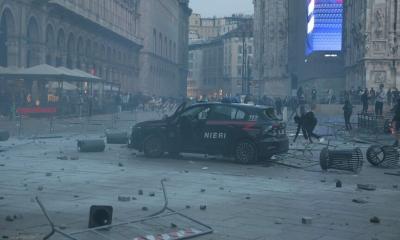
Alongside peaceful demonstrations, authorities were caught unawares by fast-moving gatherings, sporadic arson, street blockades, and clashes with police. Affected cities included Paris, Bordeaux, Nice, and Marseille.
In Paris, police reported a record 855 arrests. Charred remains of barricades constructed from bicycles and dustbins littered the capital’s streets on Sunday, alongside smashed shop windows and torched cars. Paris Socialist deputy mayor Lamia El Aaraje said the city experienced a level of violence never seen before.
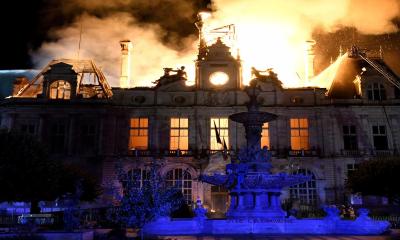
In Limoges, central France, the 19th-century town hall was burned down. Mayor Guillaume Guérin stated that the perpetrators were not demonstrators defending causes, but people organised for war. He added that rioters threatened a building caretaker with death and told elected officials they would burn the property, describing the situation as a colossal failure of the state.
Guérin said that municipal police ran out of ammunition during the clashes. Other town halls, including in Lille, were also targeted by rioters, prompting calls for a review of policing tactics.
Traders’ unions reported that over 1,500 shops and businesses had been ransacked, with damages costing tens of millions of euros. A shoe-shop owner in Paris said the looters had nothing to do with peaceful protesters and belonged to organised groups.
The interior ministry confirmed more than 2,000 arrests and stated that about 600 police officers, firefighters, and paramedics had been injured. In Saint-Étienne, a 17-year-old boy lost his right hand after a crowd-control grenade exploded.
Macron’s centrist government and far-right figures blamed the violence on ultra-left groups. Prime Minister Sébastien Lecornu stated that the government would not be intimidated by criminals and the ultra-left, rejecting criticism directed at police leadership as a dangerous and cynical reversal of responsibilities.
Radical-left presidential candidate Jean-Luc Mélenchon accused the administration of organisational failures that opened the door to chaos. President Macron was scheduled to deliver a televised address to the nation.