The ongoing military confrontation pitting the United States and Israel against Iran, coupled with the strategic closure of the Strait of Hormuz, has introduced massive economic shockwaves across the global landscape. Throughout Southeast Asia, national economies have faced near-total paralysis due to severe deficits in crude oil, liquefied petroleum gas, and secondary raw materials that typically transition through that vital maritime corridor.
The Philippines became the initial nation in the region to formally declare a comprehensive state of emergency in response to the crisis, though the administrative designation did little to immediately insulate local consumers from severe supply chains shortages and sudden price shocks. Consequently, urban centers across the archipelago have witnessed sustained public demonstrations and civilian unrest driven by escalating living costs. However, the true danger of this geopolitical conflagration extends far beyond immediate socioeconomic indicators.
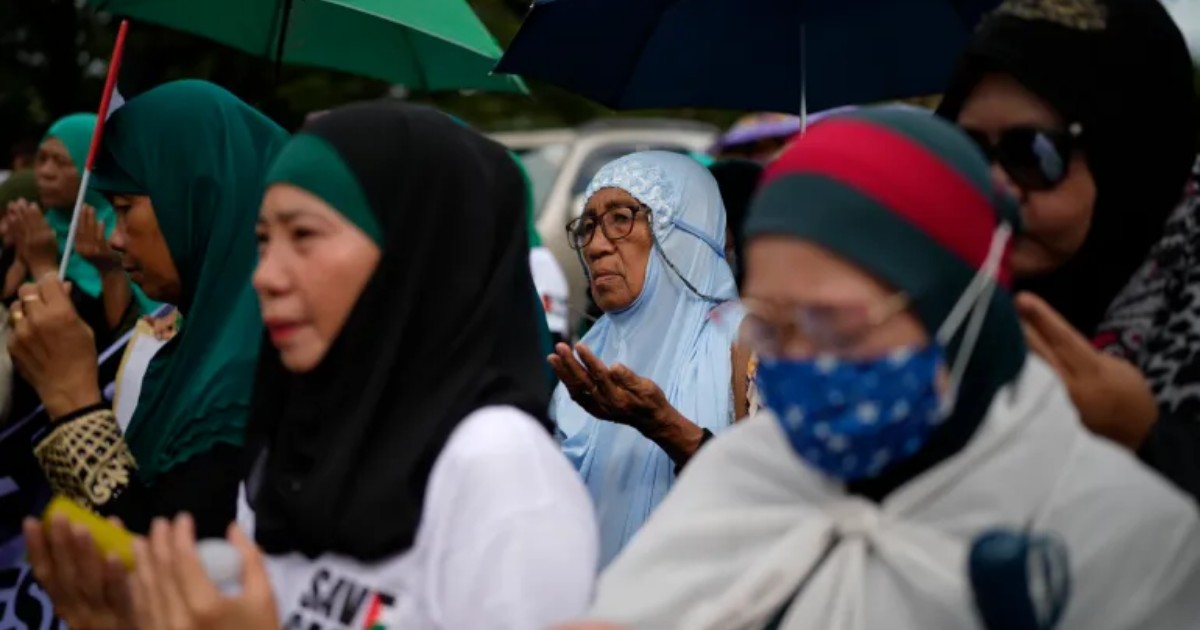
The conflict has actively permeated the internal social fabric of remote Muslim minority populations, specifically within the Bangsamoro Autonomous Region in Muslim Mindanao. This external proxy war is systematically driving a deep theological and ideological wedge through the local Islamic scholarship, threatening the fragile internal stability of a community navigating a sensitive post-conflict transition.
The Emergence of Fragmented Geopolitical Alignments Among the Ulama
When the military campaign intensified in the Middle East, the digital spaces and public forums of the Bangsamoro community experienced an immediate wave of ideological fragmentation. Two distinct, unyielding strategic camps rapidly emerged among local scholars and their respective followings. The first faction enthusiastically supports Iran’s retaliatory actions against Western forces, framing the Islamic Republic’s ballistic campaigns as a direct, necessary counterweight to prolonged imperial overreach.
Social media posts from this circle frequently assert that the collective prayers of the global Muslim community regarding the ongoing humanitarian devastation in the Gaza Strip are finally being answered through Tehran’s kinetic defiance. For this demographic, Iran`s military maneuvers represent a vital restoration of dignity and defensive capability for marginalized populations globally, viewing the state as an essential vanguard against unchecked Zionist expansion rather than an isolated sectarian entity.
Conversely, the opposing camp operates on a completely different interpretive framework, viewing Iran’s geopolitical expansion with deep-seated institutional hostility. Frontline scholars within this faction argue that because Iran is a predominantly Shia state, its strategic objectives are inherently incompatible with the survival and long-term security of Sunni communities across the globe.
This perspective was recently amplified by a prominent local theologian who declared during a public sermon that the Shia apparatus functions as a covert internal adversary, contrasting them against the visible external threat of Zionist colonialism. This specific framing posits that internal subversion remains significantly more dangerous to communal integrity than open external aggression. This rigid polarization has effectively dismantled the capacity of the local ulama to evaluate international crises through a neutral, objective political lens, forcing complex structural conflicts into narrow, zero-sum sectarian calculations that worsen the dynamic of the Iran war dividing Philippine Muslims.
Institutional Sourcing and the Fragility of Post-Conflict Identity
The current ideological fragmentation within the Bangsamoro religious leadership did not develop in a historical vacuum. Sociological assessments indicate that the foundational rifts became visible following the signing of the Abraham Accords, which established formal diplomatic ties between Israel and several Arab states. This marked the initial instance where a Middle Eastern diplomatic maneuver directly fractured the internal consensus of remote Southeast Asian Islamic institutions.
Historically, the Muslim populations of the southern Philippines maintained an unyielding, multi-generational tradition of solidarity with the Palestinian self-determination movement, regularly organizing joint civic rallies alongside secular human rights networks. However, following the normalization wave, certain localized scholars began introducing unprecedented narratives, publicizing claims that mass mobilization for Palestine was merely a covert Iranian operation designed to expand Shia influence. They argued that because prominent Palestinian resistance groups receive logistics from Tehran, they function merely as political instruments for an external theological power.
This narrative battle intensified dramatically following the military actions of October 7, 2023, and the subsequent total siege of the Gaza Strip. A specific segment of the Bangsamoro ulama rapidly adopted the strategic language of Western corporate media outlets, presenting the initial security breach as an isolated, unprovoked event while completely ignoring decades of systemic colonial enclosure and displacement managed by the occupying regime. This strategic omission alienated a massive portion of the local populace, who view supporting marginalized global communities as a core requirement of their historical faith.
Political analysts note that this dispute is not a genuine theological debate but a clear example of global statecraft co-opting domestic religious discourse. In a postcolonial environment where structural governance remains highly fragile, importing foreign politico-theological rivalries can have catastrophic consequences for communal survival.
The systemic origin of this intellectual divide is directly linked to the educational pathways of the anti-Iran scholastic faction. A significant majority of the theologians who actively criticize the Palestinian resistance and amplify sectarian rhetoric received their advanced scriptural training within state-sponsored academic systems inside specific Gulf monarchies.
Upon returning to the Philippines, these graduates systematically reproduce the state ideologies and geopolitical priorities of their respective host nations, superimposing external state interests onto the local religious discourse. This transfer creates an artificial authority dynamic where religious figures with minimal formal training in international relations or macroeconomics are trusted by millions of digital followers to dictate complex foreign policy alignments. This trend directly contradicts the classical Islamic principle of consulting specialized experts regarding specialized fields of knowledge, which emphasizes that scriptural literacy does not automatically confer expertise in contemporary global statecraft.
Since the early 1970s, the Muslim populations of the southern Philippines have endured intense physical and political marginalization, sacrificing thousands of lives to secure the right to self-determination and autonomous governance. The establishment of the Bangsamoro Autonomous Region marks a highly sensitive transitional milestone that demands absolute internal cohesion and a consolidated collective identity to succeed. By introducing external sectarian fractures, these scholars are actively compromising the internal architecture of their own community.
Labeling opposing intellectual factions as deviants creates a culture of exclusion that can easily accelerate local radicalization pathways among frustrated youth. If the Bangsamoro community is to protect its hard-won political gains, its civil and spiritual leadership must consciously decouple local institutions from foreign state propaganda. Grounding their collective solidarity in their own historical struggle against oppression remains the only viable path to preserving a unified, independent future.