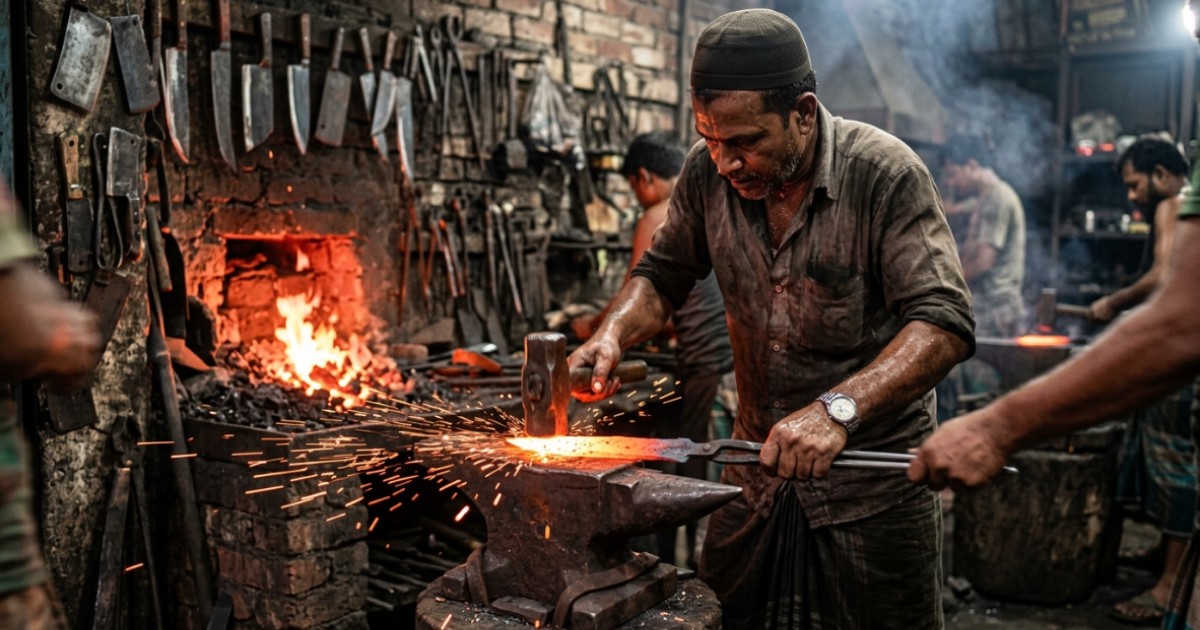
From dawn until late at night, the clanging of hammers and the glow of hot metal define the atmosphere in Dhaka’s blacksmith workshops. As Eid-ul-Adha approaches, craftsmen are working tirelessly to produce knives, cleavers, and axes. Residents are swarming these shops, both to purchase new equipment and to sharpen existing tools ahead of the upcoming festival of sacrifice.Blacksmith workshops across Dhaka are currently overwhelmed with orders.
Craftsmen report that this period is the most profitable time of the year, far exceeding regular business seasons. However, soaring prices for raw materials—including iron and coal—along with increased labor costs, have forced them to raise their prices. High-quality steel knives can now cost upwards of 4,000 BDT, while standard cleavers start from 1,200 BDT. Despite these hikes, the demand remains robust.
Sohail Karmakar, a blacksmith in the Kaptan Bazar area, notes that he has no time to catch his breath. The shops often remain open until 2:00 or 3:00 a.m. to meet the intense demand. He admits that while the workload is high, the rising cost of materials significantly eats into their profit margins, making this seasonal rush essential for their annual sustenance.
Although factory-made and imported tools have challenged the traditional blacksmithing industry, Eid-ul-Adha consistently revitalizes the sector. Artisans of all ages, from young apprentices to experienced masters, work in unison, hammering iron and sharpening blades on electric machines. Despite the physical toll of long hours, there is a sense of relief and purpose in the workshops.
For many craftsmen, this is the most critical period of the year. They remain fully focused on their work, driven by the seasonal demand.