British actress Lucy Davis has revealed she is living with incurable breast cancer that has spread to her bones, prompting health experts to issue renewed guidance on identifying early signs of the disease, according to BBC News. The 53-year-old performer, known for her role in the original UK television series The Office, shared that her initial symptom was not a traditional large lump but rather a tiny hard spot. Medical professionals emphasize that recognizing subtle structural changes in chest tissue is crucial for early diagnosis, as delaying treatment can significantly reduce options such as chemotherapy.
Guidelines published by the UK National Health Service recommend that individuals examine their chest and breast tissue approximately once every month. Regular self-examination allows people to become familiar with the natural contours and density of their body, making it easier to notice unexpected variations. Health authorities note that breast tissue naturally fluctuates in texture and volume across different stages of the menstrual cycle and changes gradually with age. Becoming aware of what is normal for one`s body ensures that any abnormal development is identified promptly.
Signs of breast cancer extend beyond the presence of a distinct mass or hard lump under the skin. According to the NHS, swelling in the breast, chest, or armpit area can serve as an early indicator of underlying changes. Skin alterations, including dimpling that resembles orange peel or localized redness, also warrant clinical evaluation. While redness may appear less pronounced on darker skin tones, changes in skin texture, warmth, or tightness remain critical symptoms that require professional attention from healthcare providers.
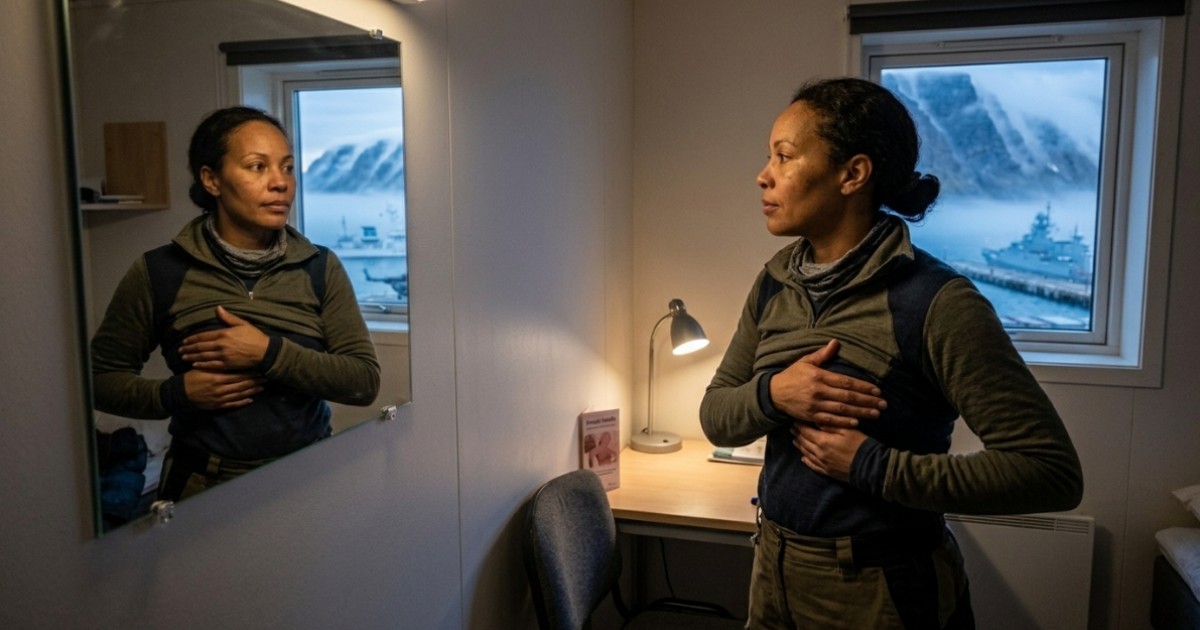
Unusual discharge from the nipple, particularly if it contains traces of blood and occurs outside of pregnancy or breastfeeding, represents a significant symptom. Structural changes to the nipple itself, such as turning inward or developing rash-like irritation similar to eczema, should also be evaluated by a doctor. Performing a self-examination involves standing before a mirror to observe the chest with arms lowered and then raised. Gently feeling around each side in circular motions from the collarbone to the underarm using varying degrees of pressure helps detect deeper tissue anomalies.
Patients are advised to consult a general practitioner immediately if they identify persistent swelling, uncharacteristic skin changes, or pain in the breast or armpit that does not resolve over time. Early medical intervention remains the single most effective factor in improving long-term health outcomes for cancer patients. Lucy Davis`s public account highlights the necessity of remaining vigilant about small, non-traditional physical changes. What remains unclear is how rapidly increased public awareness will translate into higher rates of routine self-examinations worldwide.