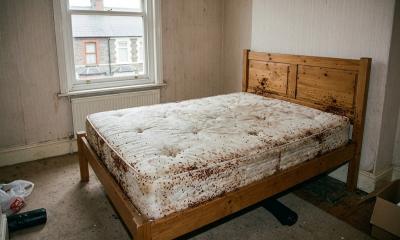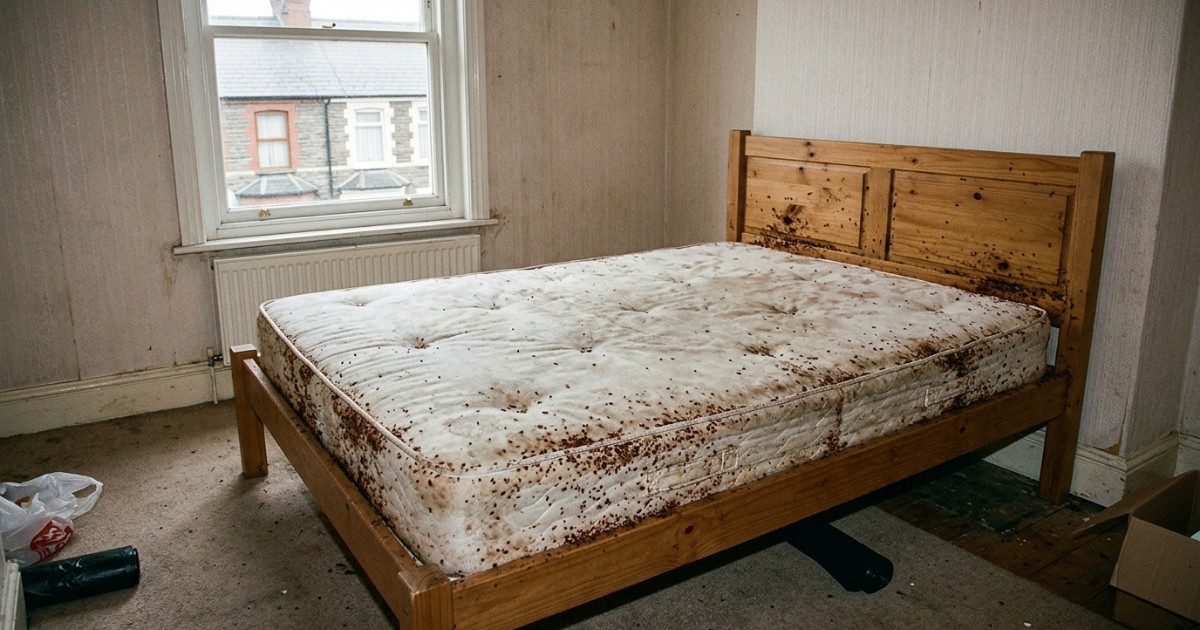
Pest control specialists in Cardiff encountered an unprecedented infestation involving millions of bedbugs spreading through a residential property in the Canton district. Technicians with thirty-eight years of field experience characterized the outbreak as the most severe incident recorded across their working careers. The density of the parasites forced operators to order the total incineration of bedroom furniture to halt further perimeter dispersion.
Eradication specialists described the structural contamination as extreme.
Lead operator Gareth Davies reported discovering hundreds of thousands of insects immediately upon lifting bedroom mattresses, with dense clusters emerging from wallpaper fissures and wall cavities. Technicians donned full protective biological suits, utilizing high-powered extraction vacuums to strip visible swarms from interior surfaces. After mechanical clearing, teams applied commercial-grade insecticides and sealed all mattresses along with timber bed structures into containment bags destined for high-temperature incineration facilities.
Institutional health guidelines note that infestations do not stem from poor domestic hygiene.
According to guidance issued by the National Health Service, bedbugs penetrate domestic environments via luggage, second-hand furniture purchases, or transferred clothing rather than accumulated dirt. Once inside, the parasites establish nesting colonies close to sleeping quarters, embedding themselves within mattress borders, timber joints, and concealed wall cracks. Bites typically manifest as irritated, itchy welts distributed in clustered lines, accompanied by distinct bloodstains or dark fecal spotting across bed linens.
Health authorities recommend aggressive thermal treatments to eradicate suspected fabric contamination, including washing affected linens at elevated temperatures and tumble-drying them for at least thirty minutes on high heat. Alternative domestic measures involve sealing delicate garments in plastic bags within domestic freezers for three to four days to neutralize residual eggs. Rigorous routine inspection remains the primary safeguard for detecting parasite colonies before structural migration occurs throughout shared residential quarters.