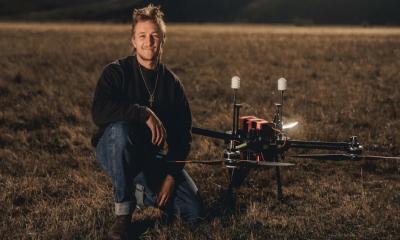
A commercial weather-modification trial in Alaska utilizing unmanned aerial drones has ignited a contentious debate regarding environmental monitoring and chemical transparency. California-based start-up Rainmaker conducted the operation above the coastal community of Homer, deploying aerial platforms to trigger precipitation across cloud formations. The company claimed the exercise stimulated approximately 19 million US gallons of water over a three-hour period.
Local residents were not informed prior to the atmospheric experiment.
Conservation advocates raised swift concerns regarding the lack of downstream chemical tracking following the dispersion of silver iodide compounds. Cooper Freeman, Alaska director for the Center for Biological Diversity, stated that private seeding operations fail to address core water scarcity while deflecting attention from regional conservation priorities. The dispute unfolds against a broader international water crisis, with United Nations Secretary-General António Guterres warning that global freshwater consumption continues to surpass natural replenishment rates across the driest river systems seen in decades.
Despite technical limitations that yield only fractions of an inch of surface moisture, more than 50 countries are actively funding weather modification initiatives. Rainmaker founder and chief executive Augustus Doricko defended the methodology, explaining that drones disperse only 20 grams of silver iodide per flight across expansive geographical areas. According to the company, resulting ground concentrations remain within minuscule thresholds permitted by environmental and health regulators. Rainmaker currently operates operations across Utah, Colorado, Idaho, and arid regions in Jordan.
Atmospheric researchers maintain that cloud-seeding technologies cannot create synthetic storms without preexisting cloud formations. Jon Meyer, an assistant state climatologist at the Utah Climate Center, noted that optimized seeding typically yields an incremental five to ten percent increase in precipitation.
Emerging start-ups are now investigating biological replacements to bypass heavy metal compounds entirely. San Francisco-based Recast Systems is experimenting with biodegradable amino acid proteins sourced from soil matter to nucleate ice within clouds. The organic compounds, currently undergoing academic validation at Texas A&M University, aim to deliver precipitation efficiency without the regulatory friction associated with silver iodide.