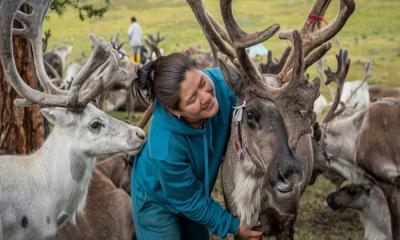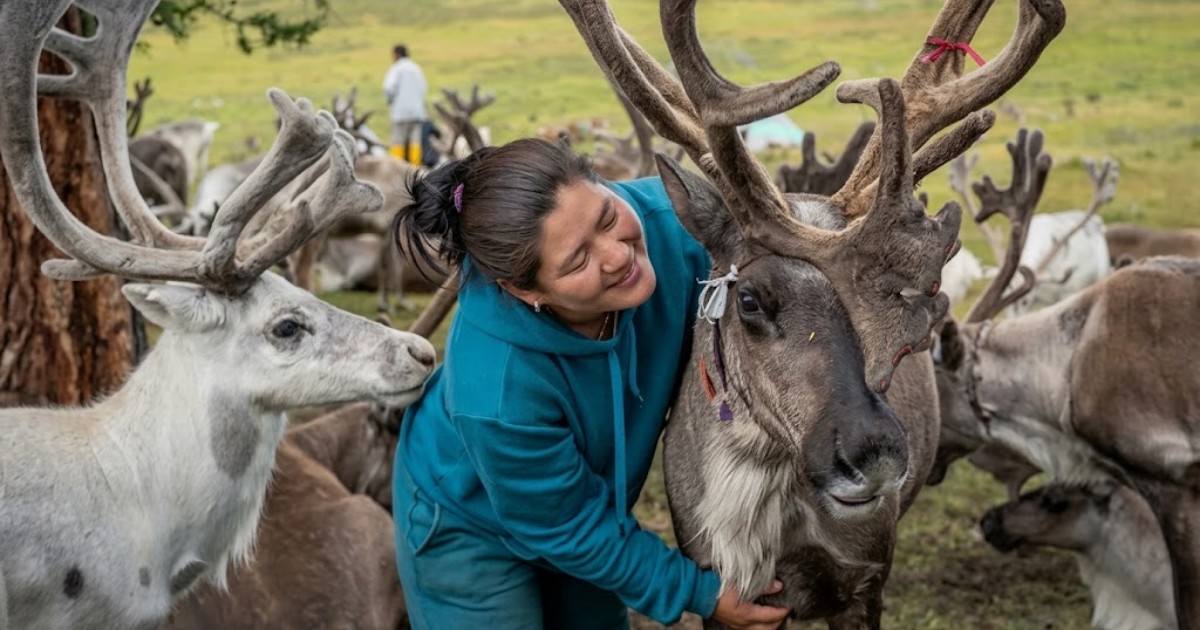
Reaching the reindeer-herding Tsaatan community deep in northern Mongolia`s sub-Arctic taiga requires navigating hundreds of miles across paved highways, trackless swamps, and alpine horse trails. Located within a restricted border sector adjacent to Russia, the settlement represents one of Central Asia`s most isolated indigenous groups. Around 80 Dukha families, known domestically as the Tsaatan, inhabit this rugged landscape, maintaining an ancient pastoral lifestyle centered entirely on their domesticated reindeer herds.
Unlike steppe pastoralists, these families migrate between six and 40 times each year.
The Tsaatan relocate constantly to secure fresh mountain lichen and suitable climatic conditions for their animals. Instead of conventional felt gers, they erect portable conical timber tents called ortz, designed to be quickly dismantled and moved across mountain passes. Tourism was once virtually nonexistent in the region until Zaya Oldov, an American-born Mongolian married into the community, helped establish the Tsaatan Community and Visitors Center. Through this initiative, international travelers can arrange home-stays directly with local families, providing essential income while observing nomadic survival routines.
Winter temperatures throughout the high taiga routinely plummet to minus 58 degrees Celsius.
Reaching the seasonal encampments involves a demanding multi-stage overland journey. Travelers depart Ulaanbaatar by car, covering 630 kilometers along paved roads to Murun, the administrative gateway to the north. Visitors must obtain mandatory border zone permits in Murun before embarking on a punishing two-day, 22-hour off-road traverse toward Tsagaannuur through roadless marshlands and river valleys. From wooden lakeside lodges at Tsagaannuur, the final leg requires a four-hour horseback ride across waterlogged terrain during the August peak season, though winter camp relocations can stretch that ride to 12 hours.
Accommodations consist of basic ortz structures fitted with narrow wooden beds encircling a central sheet-metal fireplace. The camps operate entirely off-grid without electrical wiring, running water, or non-portable furnishings. Daily sustenance relies heavily on reindeer milk transformed into cheese, butter, and salted tea. Because working reindeer are rarely slaughtered, meals center around sheep, with organ meats such as liver, kidneys, and stomach boiled immediately after slaughter due to the total absence of refrigeration.
Camp mornings begin with men hauling timber from distant forests while women milk bridled reindeer in the woods. Modern realities, including strict state hunting quotas and environmental shifts, have made traditional foraging difficult, prompting families to embrace regulated tourism for cash income. Guests often deliver barter items such as flour, salt, tea bricks, and standard batteries to support households. Local healthcare remains rooted in boreal herbalism, with Siberian pine and bear pine utilized for common ailments, while spiritual crises are brought before the clan shaman, who performs rituals using ribboned headdresses, eagle talons, and juniper incense.
Expeditions require a minimum itinerary of three days and two nights to ensure responsible pacing. Total costs average approximately 200 dollars or 151 British pounds per person, with payments funneling directly into community funds. Travelers coordinate their 4x4 transfers and horse arrangements by contacting Oldov via WhatsApp at +976 9977 0480.