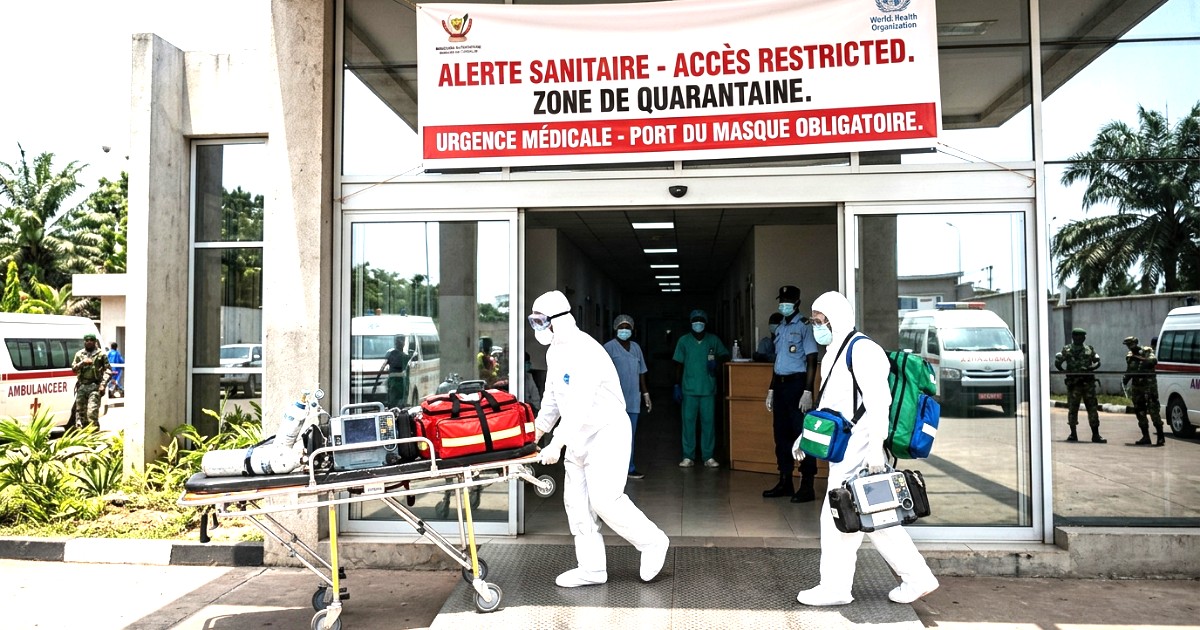
The World Health Organization has officially declared the ongoing Ebola outbreak in the Democratic Republic of Congo a public health emergency of international concern. Global health officials noted that while the situation in the eastern Ituri province warrants maximum international urgency, it does not currently meet the baseline criteria for a pandemic emergency. Official tracking records show approximately 246 suspected infections and 80 deaths have been reported within the affected zones.
The viral transmission has now reached the Congolese capital city of Kinshasa.
Health authorities believe the infected individual in the capital had recently returned from the primary hotspot in Ituri province. World Health Organization Director-General Dr. Tedros Adhanom Ghebreyesus warned that significant operational uncertainties remain regarding the true scale of geographic spread. This specific wave is driven by the Bundibugyo virus strain, a variant for which there are currently no approved clinical therapeutics or preventative vaccines. Early symptoms include acute fever, physical fatigue, muscle pain, and sore throats, which systematically progress to severe vomiting, rashes, and localized bleeding. Multi-organ failure remains a primary risk as the infection compromises broken skin barriers.
The pathogen has successfully breached international borders with two confirmed cases documented in neighboring Uganda. Ugandan health officials confirmed that a 59-year-old patient who died on Thursday tested positive for the lethal virus. The deceased individual was identified as a Congolese citizen, and his body has already been repatriated to DR Congo under strict protocols. Bordering nations face an exceptionally high risk of secondary transmission due to continuous regional trade, cross-border travel, and population mobility.
Ongoing security instability, an active humanitarian crisis, and a high density of informal medical facilities in urban centers have complicated control efforts. The health agency has formally advised both DR Congo and Uganda to activate specialized emergency operations centers to coordinate local tracking and prevention measures. Containment strategies dictate that confirmed patients must be strictly isolated until two separate strain-specific tests conducted 48 hours apart return negative. However, global administrators explicitly warned against sealing international borders or halting commercial transport, describing such panicked actions as unscientific.
First discovered in 1976 along the Congo river basin, Ebola is widely understood to circulate naturally within native bat populations. This current state of emergency represents the 17th documented outbreak inside the country, where the historical average fatality rate hovers near 50 percent. Africa CDC Executive Director Dr. Jean Kaseya expressed severe concern regarding rapid urban transmission inside gold-mining hubs like Mongwalu, Bunia, and Rwampara. Over the past five decades, the hemorrhagic illness has claimed roughly 15,000 lives across various African nations. The deadliest documented wave occurred between 2018 and 2020, resulting in the deaths of nearly 2,300 people across the region.