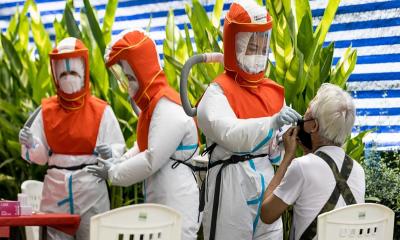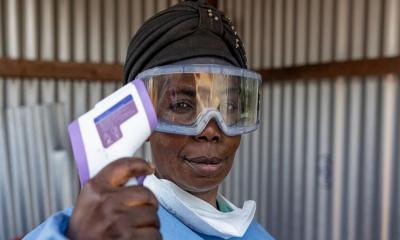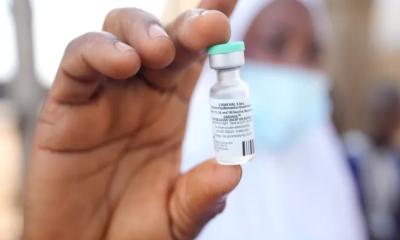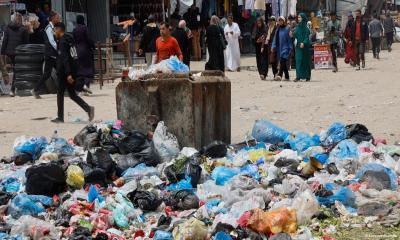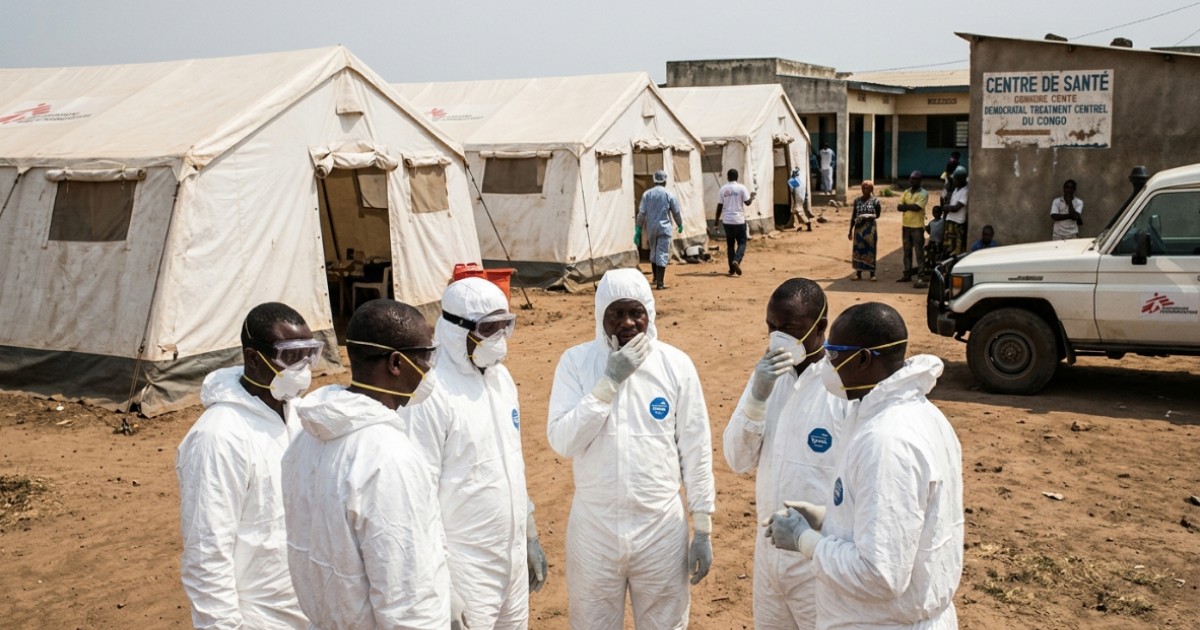
The Democratic Republic of Congo is currently battling a massive and deadly new Ebola outbreak that health authorities completely failed to detect for weeks. The earliest known victim of this specific crisis, a local health worker, died on April 24 in the town of Bunia. Before his death, the unnamed medical professional suffered from a severe high fever, violent vomiting, and uncontrollable haemorrhaging. Despite these glaring and horrific tell-tale signs of the disease, it took international officials another three weeks to finally confirm the presence of the virus and officially declare an international public health emergency.
That critical delay allowed the infection to spiral completely out of the government`s control.
Public health experts warn that the virus was able to spread widely and silently across Central Africa due to a dangerous and compounding mix of armed conflict, severely reduced international aid, and inadequate testing infrastructure. Hundreds of people are already feared to have contracted the virus across the DRC. The rapidly deteriorating situation has transformed this crisis into one of the largest Ebola outbreaks ever recorded in history. The death toll continues to rise exponentially as massive funeral gatherings remain unchecked across the affected provinces.
Grieving relatives routinely touch and wash the highly contagious bodies of the deceased before burial. These traditional mourning rituals have effectively acted as devastating super-spreader events across the entire region.
The highly infectious disease has now breached crowded urban centers and even crossed international borders into neighboring Uganda. Nations as far away as the United States are aggressively tightening their border security and screening protocols in response to the growing global threat. Officials suspect there are currently over 500 active cases and at least 130 deaths linked to the outbreak. However, significant uncertainty still clouds the actual casualty figures on the ground. Efforts to fully grasp the true scale and trajectory of the epidemic remain strictly in the preliminary stages.
The crisis is heavily concentrated in the volatile northeastern province of Ituri.
Testing Failures and Lab Errors
Medical authorities and international observers expect the outbreak to rage for many months, and possibly several years, before it can be fully extinguished. The DRC`s standard disease precautions collapsed under the crushing weight of bureaucratic errors, absent testing kits for this specific viral strain, and the harsh realities of operating a functional health service inside an active war zone. Ituri is a remarkably remote and impoverished region that has been fractured by endless cycles of ethnic violence. The central government in Kinshasa wields almost no actual authority over the heavily armed militias currently dominating the area.
Prominent Congolese virologist Professor Jean-Jacques Muyembe has extensively tracked the disease since its very first emergence back in 1976. He expressed deep frustration and outright anger over the massive gaps in the country`s disease tracking protocols. Speaking to local media outlets, he flatly stated that the national surveillance system had entirely failed the population.
World Health Organization representative Dr. Anne Ancia revealed the specific chain of medical errors that blinded doctors. When the first infected patients arrived in Bunia, local medics immediately ran standard Ebola tests that surprisingly returned negative.
Those specific testing kits were exclusively designed to catch the Zaire strain of the virus.
The Zaire strain was notoriously responsible for 15 of the country`s 17 previous disease outbreaks. Because the tests failed to trigger, doctors mistakenly assumed they were dealing with a severe, but far less contagious, combination of Malaria and salmonella. Bleeding persistently continued in these patients after five days, finally prompting doctors to fly the blood samples to distant laboratories for more rigorous analysis. Scientists eventually confirmed the presence of the much rarer Bundibugyo virus strain.
Dr. Ancia noted a fatal four-week gap between the actual start of the outbreak and the official laboratory confirmation. The highly transmissible virus spread rapidly and silently through the region during that unmonitored window of time.
Authorities have not yet identified the true index case, commonly referred to as patient zero. However, Congolese Health Minister Samuel Roger Kamba publicly confirmed that the April 24 victim was the very first known case. Mourners had packed tightly into a local funeral gathering immediately after his tragic death. Everyone touched the body, and according to the minister, that is the exact moment the case numbers started to explode.
The local population desperately turned to traditional folk remedies to cure the mysterious illness.
Researcher Leandre Murhula Masirika from the Lwiro Natural Sciences Research Centre said church leaders and families continued hosting public ceremonies for Ebola victims because they had absolutely no idea what was actually killing people. Residents even began boiling guava leaves, hoping the traditional medicine would somehow halt the agonizing symptoms. Blunders at the local Bunia laboratory ultimately compounded the sprawling tragedy. Technicians inexplicably set the negative samples aside instead of immediately escalating them to better-equipped facilities in Kinshasa or Goma for emergency investigation.
When the crucial specimens finally shipped out, the entire logistical process was severely botched.
War Zones and Aid Cuts
The delicate medical samples arrived at 17 degrees Celsius when they strictly needed to be preserved at 4 degrees Celsius. The laboratory also shipped them in remarkably tiny quantities, which severely limited the types of tests that researchers could conduct. Furthermore, contact tracers are finding it nearly impossible to track exposed individuals. Thousands of terrified civilians are actively fleeing their homes to escape the ongoing warfare tearing through Ituri.
Bob Kitchen, the vice-president for emergencies at the International Rescue Committee, warned that cheaper inter-city transport and conflict-driven displacement have drastically elevated the transmission risks. He noted that greater communication links simply encourage panicked residents to flee town the moment they sense danger.
A confirmed Ebola case has also officially emerged in the nearby city of Goma. The strategic urban center is currently controlled by the heavily armed M23 rebel group. Fighting between the Rwanda-backed rebels and the official Congolese army persists furiously this year. The violence continues unabated despite Donald Trump`s earlier claims of having brokered a lasting peace deal to end the war.
Severe and sudden cuts to international aid budgets have effectively paralyzed the local medical response.
Not only had regional health facilities been decimated by the armed conflict, but international aid cuts slashed local health spending by a staggering 73 percent. Officials on the ground reported that these financial reductions were having a tremendous and deadly impact on survival rates. The United States notably cut its spending, yet it still bears the massive responsibility of providing 61 percent of all available medical funds. Dr. Ancia bluntly summarized the grim reality, stating that medical teams simply do not have the funds required to do everything they need to do.