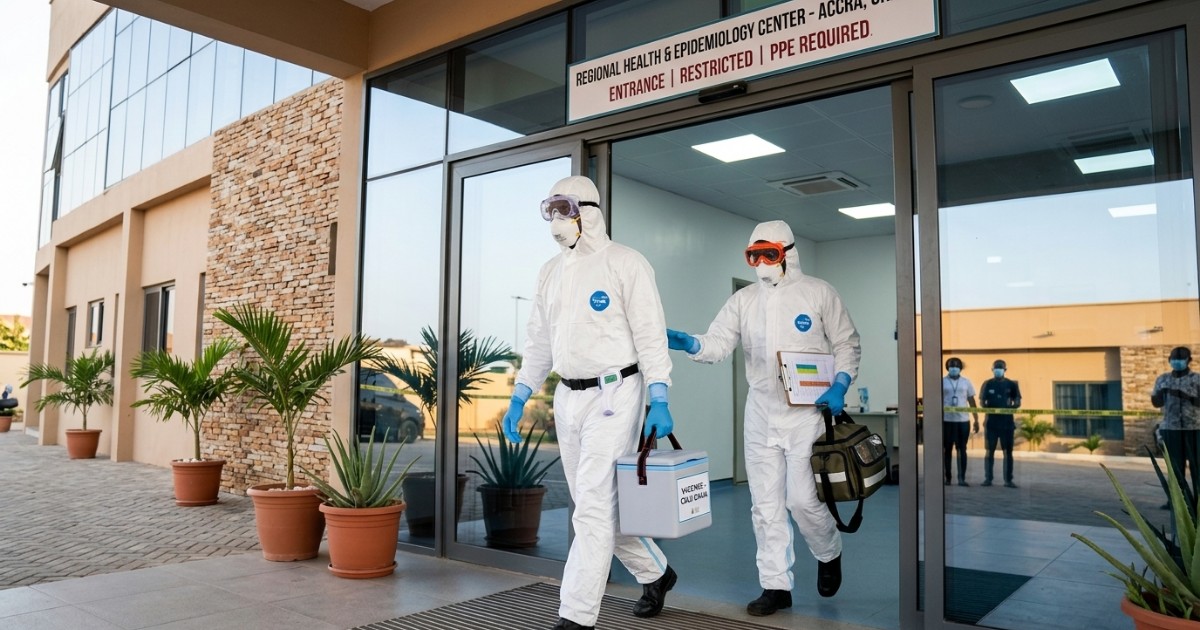
The World Health Organization has officially declared the ongoing Ebola outbreak in the eastern Ituri province of the Democratic Republic of Congo a public health emergency of international concern. The international health agency noted that while the situation warrants urgent global attention, it does not currently meet the technical criteria for a pandemic emergency.
Official reports indicate approximately 246 suspected cases and 80 deaths have been recorded in the affected region.The current surge is driven by the rare Bundibugyo virus strain.
This specific variant complicates response efforts as there are currently no approved vaccines or targeted therapeutics available. World Health Organization Director-General Dr. Tedros Adhanom Ghebreyesus warned of significant operational uncertainties regarding the exact number of infections and the true geographic spread of the disease. Laboratories have officially confirmed eight cases across three distinct health zones. These hotspots include the provincial capital of Bunia alongside the gold-mining hubs of Mongwalu and Rwampara.
The viral outbreak has successfully breached borders with two confirmed cases now documented in neighboring Uganda. Ugandan health authorities confirmed that a 59-year-old male patient died on Thursday after testing positive for the virus. Given the intense cross-border trade, travel, and high population mobility, neighboring nations face an elevated risk of secondary transmission. In response, the health agency has urged both DR Congo and Uganda to establish specialized emergency operations centers to streamline contact tracing and infection control.
The Geneva-based health organization explicitly advised against border closures or restrictive trade measures targeting the affected nations. Officials emphasized that such sweeping restrictions are typically implemented out of panic and lack a solid scientific foundation. Instead, the focus remains on the immediate isolation and clinical management of confirmed patients. Isolation protocols mandate that infected individuals remain segregated until two separate strain-specific tests return negative results at least 48 hours apart.
Ebola was initially identified in 1976 within the borders of modern-day DR Congo with fruit bats suspected to be the natural reservoir. The current emergency represents the 17th documented outbreak of the hemorrhagic virus inside the country. Transmission occurs primarily through direct physical contact with infected bodily fluids or compromised skin barriers, frequently culminating in severe internal bleeding and multi-organ failure. Early clinical manifestations include acute fever, debilitating muscle fatigue, headaches, and sore throats, which later progress to systemic vomiting, diarrhea, rashes, and external hemorrhaging.
According to historical tracking from global health bodies, the average fatality rate of the virus hovers around 50 percent. The Africa CDC highlighted acute concerns regarding community transmission within the densely populated urban layouts of Bunia and the active mining colonies of Mongwalu. Over the past five decades, Ebola outbreaks have claimed more than 15,000 lives across the African continent. The most destructive wave struck DR Congo between 2018 and 2020, resulting in nearly 2,300 fatalities, while a separate remote outbreak last year claimed 45 lives.