The World Health Organization warns it could take up to nine months to develop a vaccine for the specific strain responsible for the current Ebola outbreak in the Democratic Republic of Congo. Two candidate vaccines targeting the rare Bundibugyo species are currently under development in global laboratories. However, WHO advisor Dr. Vasee Moorthy confirmed on Wednesday that neither option has successfully passed through clinical trials yet.
Health officials acknowledge the severe logistical challenges involved in containing this specific viral threat.
WHO Director-General Dr. Tedros Adhanom Ghebreyesus revealed that authorities are tracking 600 suspected cases alongside 139 suspected deaths. The DRC has officially confirmed 51 cases, primarily concentrated in the eastern Ituri and North Kivu provinces. Neighboring Uganda has recorded two confirmed cases in its capital, Kampala. Both Ugandan patients had recently traveled directly from the DRC, and one has already died from the virus.
The WHO officially declared a public health emergency of international concern on Sunday.
Despite the emergency declaration, Tedros clarified that the situation has not yet reached the level of a global pandemic. The organization’s emergency committee assesses the epidemic risk as exceptionally high at the national and regional levels, but relatively low globally. The UK government quickly responded by announcing a 20-million-pound funding package to support frontline health workers and improve critical disease surveillance.
The current Ebola outbreak initially started with a single healthcare worker in the provincial capital of Bunia.
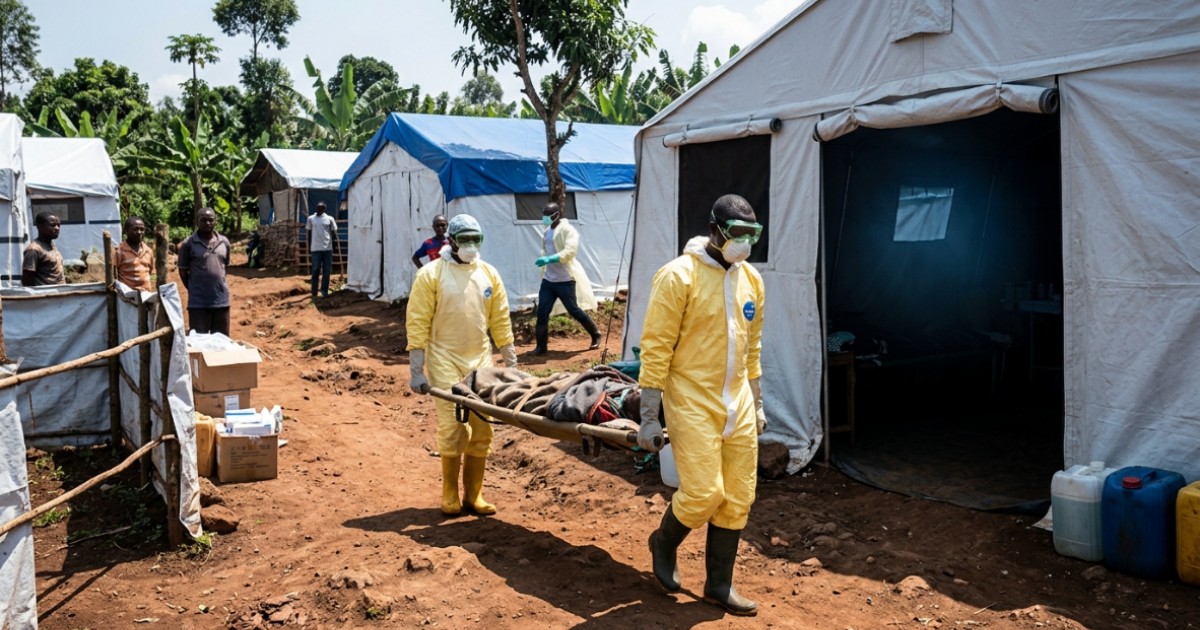
A local nurse developed severe symptoms and died on April 24, after which her body was transported to the gold-mining town of Mongwalu. That transfer triggered a chain of rapid transmission that quickly overwhelmed the fragile local medical infrastructure. Trish Newport, an emergency program manager for Medecins Sans Frontieres, told the AFP news agency that health facilities are completely full of suspected cases and lacking basic physical space.
Fear has fundamentally altered daily life and social customs for residents in the affected zones.
Bunia resident Araali Bagamba told the BBC that people have completely stopped shaking hands to avoid any potential transmission. The virus spreads rapidly through direct contact with bodily fluids, ultimately causing severe internal bleeding and multiple organ failure. The DRC is facing its seventeenth recorded Ebola crisis, but the return of the Bundibugyo strain after more than a decade presents unique medical hurdles.
There are currently no approved drugs or targeted treatments available for this specific viral strain.
The Bundibugyo species previously caused outbreaks in Uganda in 2007 and the DRC in 2012, killing roughly a third of those infected. Moorthy explained that a second possible vaccine is being manufactured based on the AstraZeneca platform originally used for Covid-19. However, he cautioned that there is absolutely no animal data available yet to support its true medical effectiveness.
Initial symptoms closely mirror common regional illnesses like malaria and typhoid, causing dangerous delays in early detection.
The United States criticized the WHO for being slightly late in identifying the threat, though Tedros dismissed the comments by highlighting the rapid response in a highly complex environment. Decades of relentless armed conflict in eastern DRC further complicate the already fragile medical containment efforts.