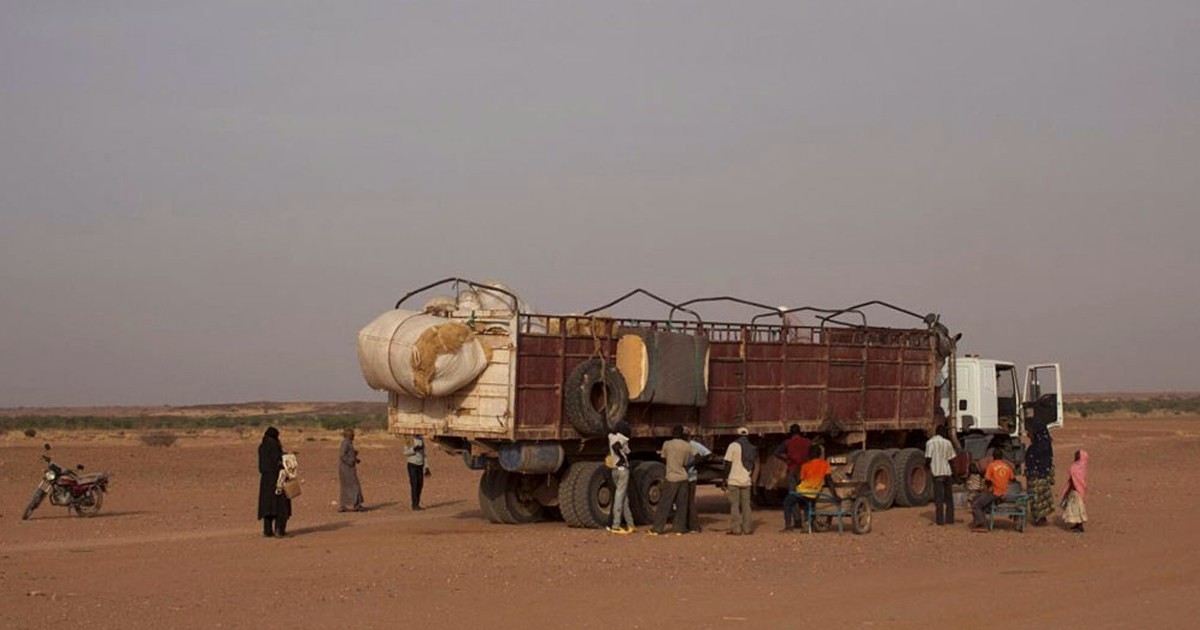
At least 49 people have died of thirst after their truck broke down and they were stranded for days in the harsh expanse of the Sahara Desert in northern Niger. According to reports from the Associated Press and Reuters, the victims were traveling back from a religious festival in Mali when their vehicle experienced a mechanical failure approximately 80 kilometers west of the border town of Assamaka. Local authorities stated that the passengers were exposed to extreme temperatures and a complete lack of water supply points, leading to a rapid and tragic decline in their health.
The governor’s office for the Agadez region confirmed that the truck had been traveling from the Malian town of Talhandek. Despite repeated attempts by the driver, the apprentice, and the passengers to repair the vehicle, their efforts were unsuccessful. The remote nature of the location meant that the stranded group remained without access to emergency services or supplies for an extended period. When recovery teams eventually arrived at the scene, they discovered the lifeless bodies scattered under and around the immobile truck, a scene officials described as emotionally exhausting to process.
Two survivors managed to escape the ordeal by trekking more than 50 kilometers to a nearby water source before continuing their journey to Assamaka, where they finally alerted local authorities. Their desperate actions sparked a search and rescue operation that led to the recovery of the bodies. The victims were buried in mass graves at the site in accordance with local customs. During the same mission, military-led recovery teams discovered another stalled truck carrying over 60 passengers who had been trapped for three days. These individuals were provided with immediate medical and logistical support, allowing them to continue their journey safely.
This tragedy highlights the perilous nature of the transit routes that crisscross the Sahara Desert. For many in West Africa, these routes serve as essential but dangerous paths for travel, economic migration, and access to regional festivals. The Sahara is well-known for its hostile environment, where extreme heat and the absence of infrastructure make even minor vehicle breakdowns potentially fatal. International humanitarian organizations have long documented the dangers of these routes, noting that thousands of people risk their lives annually while traversing the desert.
Regional authorities emphasized that this incident serves as a stark reminder of the realities faced by those who rely on desert transport. The Agadez region, which acts as a gateway to the desert, frequently sees travelers attempting these crossings with little margin for error. As the investigation into the specific cause of the breakdown continues, there are renewed calls for increased monitoring, improved support services, and better awareness regarding the hazards of desert travel. Without more reliable infrastructure or accessible aid stations, the crossing of the Sahara will remain one of the most dangerous journeys for travelers and migrants alike, with tragic consequences for those who encounter misfortune in the heart of the wasteland.