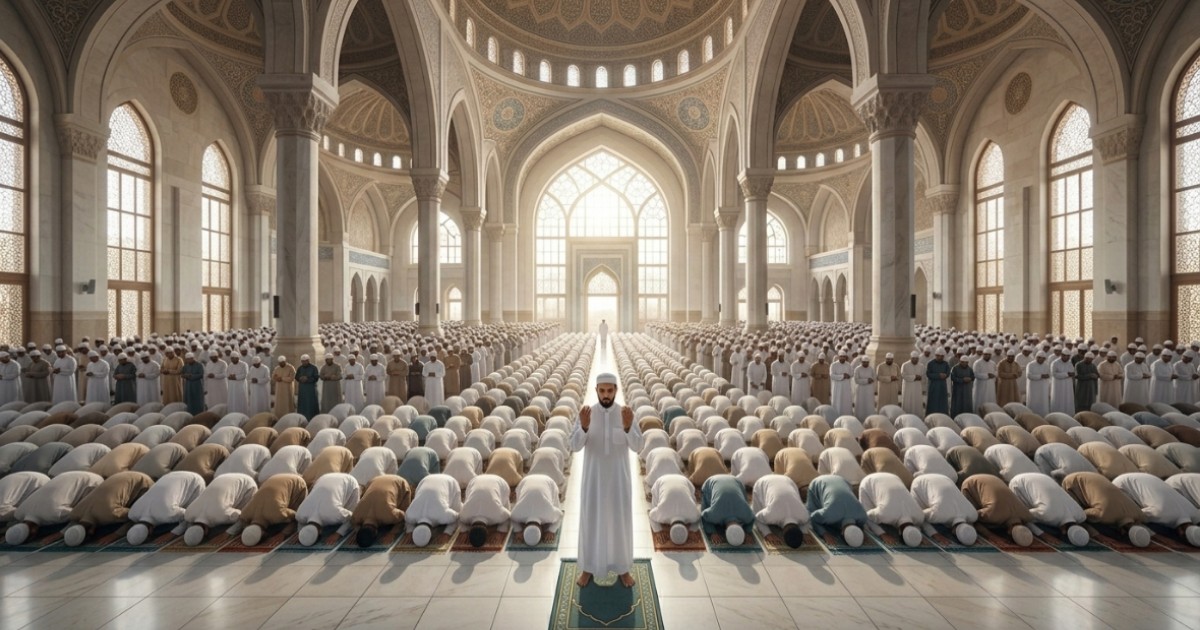
Eid al-Adha is one of the most significant celebrations in the Islamic calendar, with congregational prayer serving as the focal point of the morning rituals. Islamic jurisprudence defines the two-unit Eid prayer as a mandatory obligation for those who are eligible. However, due to various unforeseen circumstances, individuals may occasionally arrive late to the congregation or miss portions of the essential Takbirs. Classical texts of Fiqh provide detailed guidance on how to rectify these situations to ensure the prayer remains valid.The Eid prayer includes six extra Takbirs that are considered wajib (obligatory) for the congregation.
If a latecomer joins the congregation after the Imam has already recited the additional Takbirs, they are not required to raise their hands or perform them separately. If the Imam is currently reciting the Quran, the newcomer should simply join with the intention of the prayer and perform the Takbirs silently to catch up with the congregation. Similarly, if the individual joins while the Imam is in the bowing position (Ruku), they should perform the Takbirs silently without raising their hands before joining the bow. Once the Imam rises from the bowing position, the opportunity to perform the missed Takbirs effectively expires.
In scenarios where a person misses the first unit of the prayer, they must stand up after the Imam completes the final peace (Salam) and finish their remaining unit individually. During this makeup unit, the individual should recite Surah al-Fatiha followed by another portion of the Quran. Crucially, before proceeding to the bowing position, they must perform the three extra Takbirs. Each Takbir should be performed with the hands raised, followed by letting the arms rest after each, before performing the final Takbir to enter the bowing position.
If an entire congregational prayer is missed, one should first make an effort to locate another local mosque or Eidgah conducting a later session. It is important to note that the Eid prayer has no makeup (Qada) equivalent, and there is no provision for performing it alone. In the absence of an available congregation, reliable Hanafite scholarly texts recommend performing four units of optional (Nafl) prayer as a virtuous substitute. As cited in classical jurisprudence, Abdullah ibn Mas`ud (RA) advised that those who miss the formal Eid prayer should observe four units of prayer instead.
Finally, it is essential to remember that the Eid prayer requires no formal call to prayer (Adhan or Iqamah). Timely attendance at the congregation remains a primary duty for every believer. Furthermore, listening attentively to the post-prayer sermon (Khutbah) delivered by the Imam is considered an obligatory act, making it inappropriate to depart early or engage in idle conversation. By adhering to these procedural guidelines, individuals ensure that their observance of this holy day remains complete and spiritually rewarding.