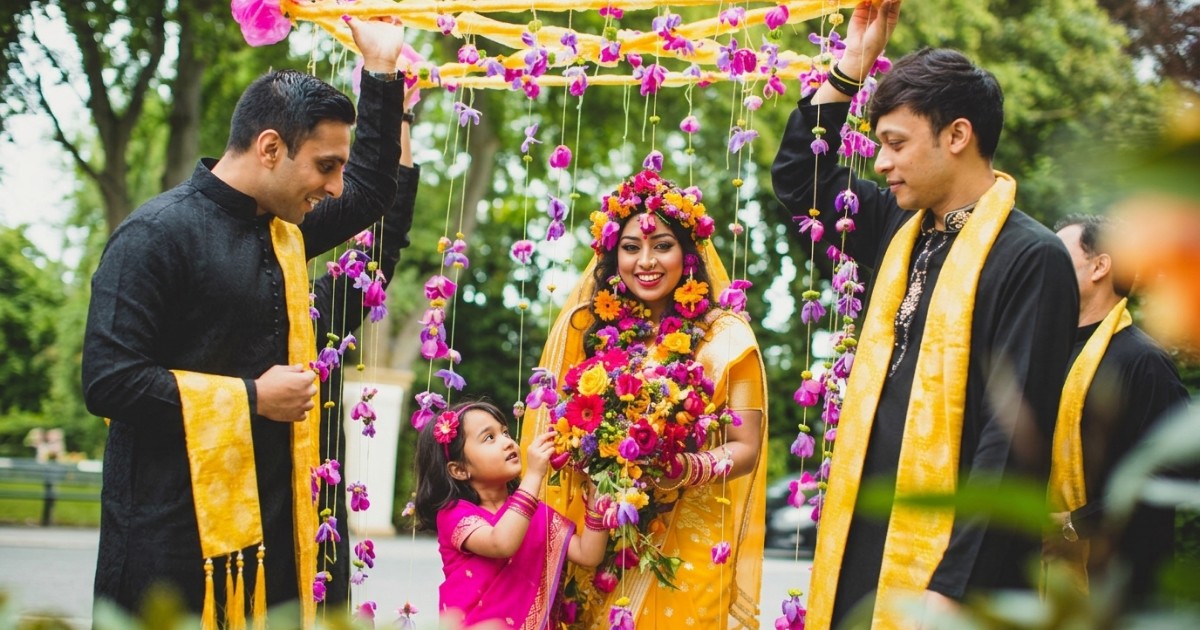
The traditional Bengali pre-wedding ceremony known as Gaye Holud once evoked images of home courtyards, hand-painted alpona, and the sweet aroma of raw turmeric. Intimate family dynamics and separate ancestral rituals between the bride and groom`s households defined this historical milestone. However, the foundational fabric of this centuries-old folk heritage is currently undergoing a massive structural transformation.
Urban time constraints have completely altered the festive environment.
The nostalgic separate home gatherings have increasingly been replaced by luxurious convention centers and open-air commercial resorts. Modern couples are choosing to organize a singular joint Gaye Holud event where both families share a single centralized stage. Enhanced by professional event management groups, these functions have largely evolved into stylized corporate pre-wedding shows featuring dramatic fog effects, synchronized laser setups, and complex color palettes. Traditional marigold decorations have given way to elaborate theme-based setups utilizing magenta, green, and blue artificial accents.
This contemporary modernization has heavily impacted the catering menus as well. Historically, these pre-wedding gatherings prioritized specialized regional sweets and hand-crafted traditional pithas designed to formally welcome visiting relatives. Today, those culinary customs are replaced by live stations serving street foods, kebabs, and heavy continental delicacies. Premium beverage arrangements now frequently feature cold coffees and fusion desserts, shifting the atmosphere from a familial gathering toward a commercial corporate party.
The focus has shifted entirely toward creating a perfect photogenic aesthetic.
The most noticeable structural shift is visible within the central ritual of applying turmeric paste to the couple. To preserve heavy professional makeup and avoid staining expensive designer outfits, both the couples and their invited guests execute the ritual with extreme caution. The ancient custom of covering the bride or groom in turmeric is now largely limited to a symbolic touch on the cheek for media coverage. The raw, unfiltered emotional expression that once defined this bonding experience has been replaced by structured mechanical poses.
Furthermore, traditional folk wedding songs have virtually vanished due to the dominance of heavy electronic sound systems. The communal practice of family elders singing together has been abandoned for coordinated stage dances choreographed by professional trainers over several weeks. While cultural evolution remains a natural societal process, the complete erasure of local heritage risks detaching the younger generation from their cultural roots. The true essence of these celebrations lies in balancing modern comfort with ancestral authenticity.